Introduction
The global sleep aid market is entering an explosive growth phase. The QYResearch global sleep aid market report clearly identifies this as a high- speed growth track, with both market size and penetration climbing fast. The 2026 China Sleep Economy Report reveals a deeper shift on the demand side. On social media, topics like “early sleep check-in,” “sleep aid good finds,” and “sleep ritual” have become trending conversations, as younger consumers turn “a good night’s sleep” into a shareable, aspirational lifestyle.
The industry side is accelerating too. Eight Sleep, powered by its AI smart mattress cover, surpassed 500 million dollars in sales in 2025, reaching a valuation of 1.5 billion dollars, with Elon Musk and Mark Zuckerberg among its users. In 2025, China’s National Standardization Administration Committee released a national standard for smart beds, signaling that sleep products are evolving from single-function tools toward intelligent, scenario-driven systems. Wellness Scorecard industry data confirms sleep health is one of the fastest-growing sub-segments in the wellness category.
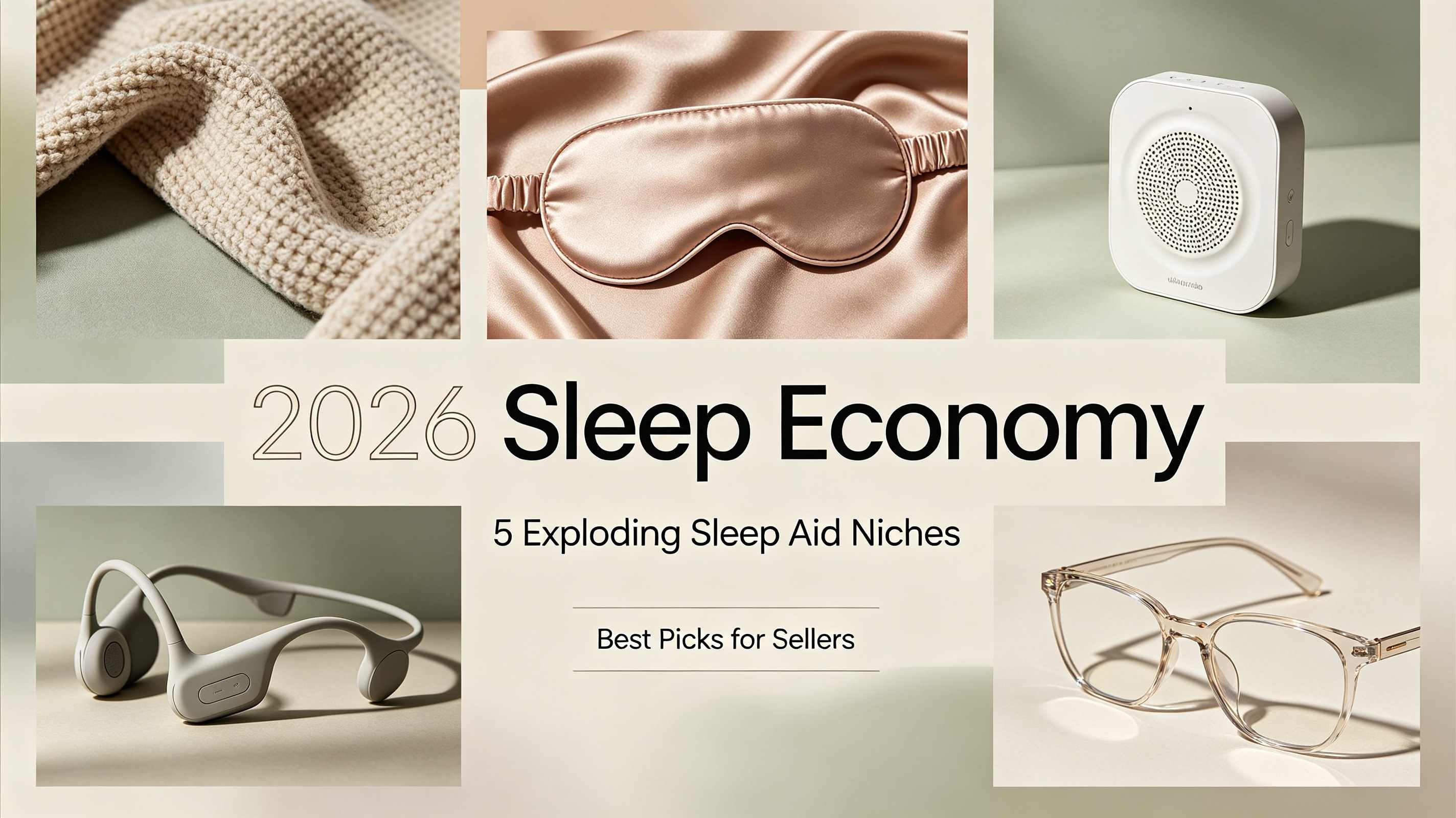
For independent store owners, the sleep niche is attractive because demand is rigid and growing, premium pricing space is large, and products naturally lend themselves to scenario-based bundling. Below we break down five exploding sleep aid directions, covering entry-level to intelligent price tiers.
Weighted Blanket
The weighted blanket is the most iconic evergreen winner in the sleep category. The 1688 sourcing price is 80 to 150 RMB, about 11 to 21 dollars, while Amazon prices range from 39.99 to 79.99 dollars, with profit margins of 40 to 55 percent. It uses deep pressure stimulation to help users relax, simulating the feeling of being held, which improves sleep onset. It remains a strong seller through 2026.
Core selling points to focus on include multiple weight options from 7 to 15 pounds (to match different body weights), glass bead filling (finer and quieter than plastic pellets), and a removable washable cover. A standout mention goes to cooling fabric versions. Summer is traditionally a slow season for weighted blankets, but versions made with cooling ice-silk fabric actually sell well in summer, effectively smoothing seasonal fluctuations.
For marketing, position the weighted blanket around “scientific sleep aid” rather than simple warmth. Use a layered structure diagram on the product page showing the fabric layer, filling layer, and weighting layer, plus a weight selection guide (recommended weight is about 10 percent of the user’s body weight). Given the higher ticket price, offer installment payments or a free trial option to lower the decision barrier.
Silk Sleep Mask
The silk sleep mask has the highest profit margin in the sleep category and is perfectly suited for gifting. The 1688 sourcing price is 15 to 35 RMB, about 2 to 5 dollars, while Amazon prices range from 9.99 to 24.99 dollars, with margins reaching 60 to 75 percent. The reference market price ranges from 30 to 200 RMB, giving flexible room for positioning.
Its core selling points are 3D contour cut and mulberry silk material. The 3D cut means the mask does not press on the eyes or lashes and stays in place for side sleepers. Mulberry silk feels smooth and reduces friction around the delicate eye area, which strongly appeals to skincare-minded buyers. These two traits lift it above ordinary blackout masks and give it a premium foundation.
The silk mask is ideal for gift box sets. Pair it with a storage pouch, a bottle of lavender essential oil, or a pair of earplugs to form a “sleep ritual kit,” and the average order value can double. Its other advantage is a high repurchase rate. Many buyers purchase one for themselves, then come back for a partner or family member, and sometimes buy in bulk as gifts. We recommend setting up “buy two get one free” or bundle discounts to amplify this behavior.
White Noise Machine
The white noise machine is a steadily growing mid-tier product in the 2026 sleep category. The 1688 sourcing price is 50 to 120 RMB, about 7 to 17 dollars, while Amazon prices range from 24.99 to 49.99 dollars, with margins of 45 to 60 percent. Accio supplier data shows that the 2024 portable white noise machine was a hot new release, and the trend continues into 2026.
Its selling points are rich: over 30 sound options (white noise, nature sounds, fan sounds), timer shutdown (30, 60, or 90 minutes), a baby soothing mode designed for new parents, and a portable design for travel. The baby soothing mode is a high-value sub-scenario. New parents have an extremely strong willingness to pay for products that help infants fall asleep, and they actively recommend them in parenting communities.
For content marketing, the white noise machine fits “bedtime ritual” themed videos. A sequence of dimming the lights, turning on the machine, switching sound modes, and pulling up the blanket precisely targets both insomnia sufferers and parents. We recommend producing separate creatives for two scenarios, one for adult sleep aid and one for baby soothing, to avoid audience confusion and scattered conversion.
Smart Sleep Device
The smart sleep device is the most imaginative high-end direction in the sleep niche. The 1688 sourcing price is 60 to 150 RMB, about 8 to 21 dollars, while Amazon and independent store prices range from 29.99 to 69.99 dollars, with margins of 45 to 60 percent. At CES 2026, smart sleep devices became a hotspot, signaling the category is moving from concept to mass market.
The industry signal is clear. Eight Sleep surpassed 500 million dollars in sales in 2025 with a 1.5 billion dollar valuation, proving that intelligent sleep has real and massive paying demand. While independent store owners cannot directly replicate the Eight Sleep product form, they can enter a lighter smart sleep aid device direction. Core selling points include bone-conduction white noise (audible without earbuds, no pressure for side sleepers), Bluetooth app connectivity (for sleep data recording), and sleep monitoring (heart rate, toss count).
Buyers in this category are typically tech enthusiasts or severe insomnia sufferers. They are sensitive to specs and willing to pay a premium for intelligence. We recommend dedicating a page to app interface screenshots and sample data reports so buyers can directly feel the value of “data-driven sleep.” Also emphasize safety certifications such as FDA or CE to build medical-grade trust.
Blue Light Blocking Glasses
Blue light blocking glasses are the lowest-barrier, highest-margin traffic product in the sleep category. The 1688 sourcing price is 10 to 25 RMB, about 1.5 to 3.5 dollars, while Amazon prices range from 9.99 to 19.99 dollars, with margins of 65 to 80 percent. The spread of remote work and the habit of scrolling on phones before bed together sustain demand for this product.
Its selling points are simple and direct: blue light blocking (reducing the suppression of melatonin by screen blue light), lightweight (no pressure during long wear), and fashionable frames (doubling as a daily accessory). Because the barrier is low and the look matters, it is perfect as a traffic entry point for a “sleep kit.” Pair it with a silk mask to form a “pre-sleep eye care set,” using the glasses to drive traffic and the mask to lift margin.
For content marketing, blue light glasses suit “comparison demo” content. A video showing the color temperature difference on a screen before and after wearing the glasses, or the change in eye comfort when using a phone at night, is more persuasive than any copy. Given the low ticket price, use it as a traffic entry for ad testing, then guide repurchases of higher-ticket sleep products through bundles and email marketing.
Final Thoughts
The explosion of the sleep economy is, at its core, a collective craving for quality rest. From the bodily comfort of weighted blankets, to the auditory shielding of white noise machines, to the data-driven management of smart sleep devices, sleep products are undergoing a full upgrade from single functions to scenario-based, intelligent systems. Eight Sleep’s 500 million dollars in sales proves the commercial potential of this track, and the release of national standards shows the market is maturing and regulating. For independent store owners, the strategic recommendation for the sleep niche is scenario-based combination. Do not sell single items. Build sets around the “bedtime ritual,” such as mask plus earplugs, white noise machine plus weighted blanket, or blue light glasses plus silk mask. Scenario-based bundles raise average order value while lowering the buyer’s choice cost, making them the most effective growth lever in the sleep category.