Introduction
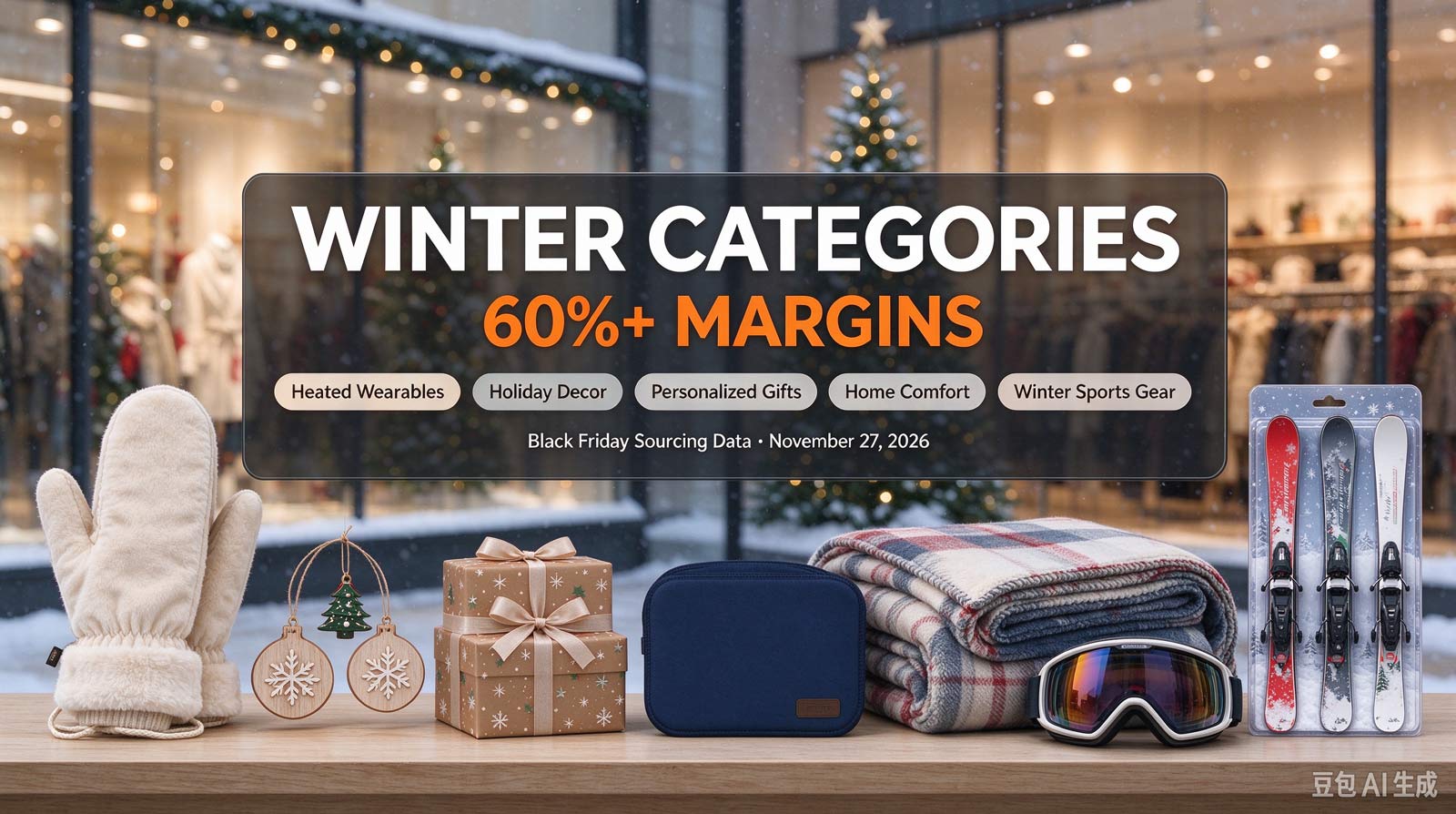
NRF data shows US holiday season spending hits new records annually, with 2025 winter holiday spending projected to exceed $980 billion. The cardinal rule of seasonal products is simple: be early. Google Trends data clearly shows winter product searches beginning to climb in September, peaking October through November, and dropping sharply after December. Sellers must complete product selection and stocking by July-August, begin advertising and content accumulation in September, and have listings optimized with reviews before demand peaks. While the profit window for seasonal products spans only 3-4 months, concentration is extreme, with monthly sales reaching 5-10 times daily averages. For Shopify independent store sellers, the winter holiday season is the most critical sales window of the year. The following five directions have been validated by search trends and sales data, combining profit potential with content virality across different price tiers and usage scenarios.
Heated Gloves
Heated gloves are essential for winter outdoor sports and commuting. The 1688 sourcing cost is ¥40-100 ($5.5-14), Amazon prices range from $29.99 to $59.99, and profit margins reach 45-60%. Core features include USB power bank charging, 3-level temperature adjustment, and touchscreen- compatible fingertips. Heating elements cover the back of the hand and all fingers, with 4-8 hour battery life. Google Trends shows “heated gloves” searches surging in October and peaking November-December. Target users include skiers, winter cyclists, outdoor workers, and seniors. Verify battery capacity and runtime accuracy, even heating element distribution, and waterproof rating. Gender-neutral colors reduce SKU management complexity.
LED Christmas String Lights
LED Christmas string lights are among the top-selling holiday decoration items. NRF reports show continued growth in US holiday decoration spending, with average households spending over $200 on decorations. The 1688 sourcing cost is ¥8-25 ($1.2-3.5), Amazon prices reach $9.99-$24.99, and profit margins are 55-70%. Differentiating features include app-controlled color and brightness adjustment, music-synchronized flashing, and IP65 waterproofing for indoor and outdoor use. US markets prefer warm white and multicolor, while European markets favor cool white and minimalist designs. Offer multiple lengths from 10 to 30 meters with remote controls. Complete product page optimization before October, as consumers begin purchasing decorations in late October to early November. Safety certifications like UL or CE significantly boost conversion rates and reduce safety dispute risks.
Smart Hand Warmer
Smart hand warmers represent the quintessential winter impulse purchase: compact, instant heat, moderately priced, and highly conducive to TikTok- driven buying impulses. The 1688 sourcing cost is ¥15-35 ($2-5), Amazon prices reach $14.99-$29.99, and profit margins are 55-70%. Products double as power banks with 5000mAh capacity, dual-sided heating, 3-second rapid warm-up, and 4-6 hour battery life. TikTok winter warmth recommendation videos go viral every October-December. This product is perfect for short video demonstrations showing the “pull from pocket and instantly warm” scenario against winter outdoor backdrops. Verify safe surface temperature (ideally below 55 degrees Celsius) and power bank output. Offer multiple macaron colors to enhance gift appeal.
Holiday Themed Socks
Holiday themed socks carry the highest profit margins in the winter category as a traffic-driving product. The 1688 sourcing cost is ¥3-8 ($0.5-1.2), Amazon prices reach $9.99-$16.99 per 3-pair pack, and profit margins hit 65-80%. Products feature Christmas themes (reindeer, snowflakes, Christmas trees, Santa Claus) with plush fleece lining. The low price point makes this the perfect traffic driver and bundling accessory. Combine socks with other winter products into “holiday gift boxes”: one pair of socks plus a hand warmer plus a scarf, priced at $29.99-$39.99, yields margins far exceeding individual sales. Verify fabric composition (recommend 80%+ cotton to avoid pilling and allergies) and size compatibility. Logistics costs are minimal, making bulk stocking and shipping stress-free.
Window Snowfall Projector
Window snowfall projectors are among the fastest-growing holiday decoration products in recent years. The 1688 sourcing cost is ¥30-70 ($4-10), Amazon prices reach $19.99-$39.99, and profit margins are 50-65%. Products use LED projection technology to cast dynamic falling snow effects onto window glass, usable both indoors and outdoors. TikTok “Christmas house decoration” videos go viral annually, with creators showcasing their window snowfall projections, with individual videos reaching millions of views. The content virality is exceptional. Sellers should film decoration effect videos in September and run TikTok ads, accumulating exposure and reviews before the search peak. Verify projection brightness and clarity (directly determining visual effect), coverage area for standard window sizes, and installation simplicity. Bundle with window suction cup mounts to reduce user installation barriers.
Final Thoughts
The winter holiday season is the most critical profit window for e-commerce sellers, but also the most time-pressured sales cycle. The five products span price gradients from $3 traffic drivers to $60 profit cores, meeting different independent store positioning needs. Three critical timeline milestones must be observed: complete product selection and ordering by July-August (accounting for production and shipping cycles), finish page optimization and content creation with test ad campaigns in September, and go all-out on advertising and inventory management in October-November. Holiday season return rates are generally lower than everyday categories due to more forgiving consumer mindsets, but logistics timing requirements are extreme. Prioritize overseas warehouse shipping models. Finally, do not rush to liquidate inventory after the season ends. Retain stock for resale the following year, avoiding profit-eroding January fire sales.