Introduction
The global yoga accessories market is entering a period of rapid growth driven by the awakening of health consciousness and the normalization of home fitness. According to Coherent Market Insights, the global yoga accessories market is estimated at USD 4.57 billion in 2026 and is expected to reach USD 8.19 billion by 2033, representing a compound annual growth rate of 8.7%. Technavio’s report predicts that the market will increase by USD 7.93 billion between 2025 and 2030, with an annual growth rate of 7.3%. North America dominates with a 41.7% growth share, benefiting from the region’s deep-rooted yoga culture and high disposable income levels.
Growing in parallel with the yoga accessories market is the meditation supplies segment. Future Market Report data shows that the global meditation cushion market was valued at approximately USD 45.5 million in 2025 and is projected to reach USD 195.8 million by 2033, with a remarkable compound annual growth rate of 20.01%, far exceeding the overall yoga accessories market growth rate. India leads with a 15.7% market share, while Zafu cushions account for 42.3% of the segment. This data reflects that consumer investment in meditation equipment is rapidly climbing, as Zen and mindfulness practices have transitioned from niche lifestyles to mainstream health trends.
Notably, the yoga accessories market is experiencing a clear trend toward product premiumization. Technavio notes that premiumization driven by innovative design in yoga accessories is one of the core growth drivers. Natural cork materials, organic cotton, and recyclable materials are becoming key purchase decision factors for consumers. For Shopify sellers, the yoga and meditation accessories category offers four major advantages: moderate average order value, abundant visual content material, a target audience with strong purchasing power, and high repurchase intent. The following four product directions demonstrate significant growth potential and profit margins in 2026.
I. Cork Yoga Block
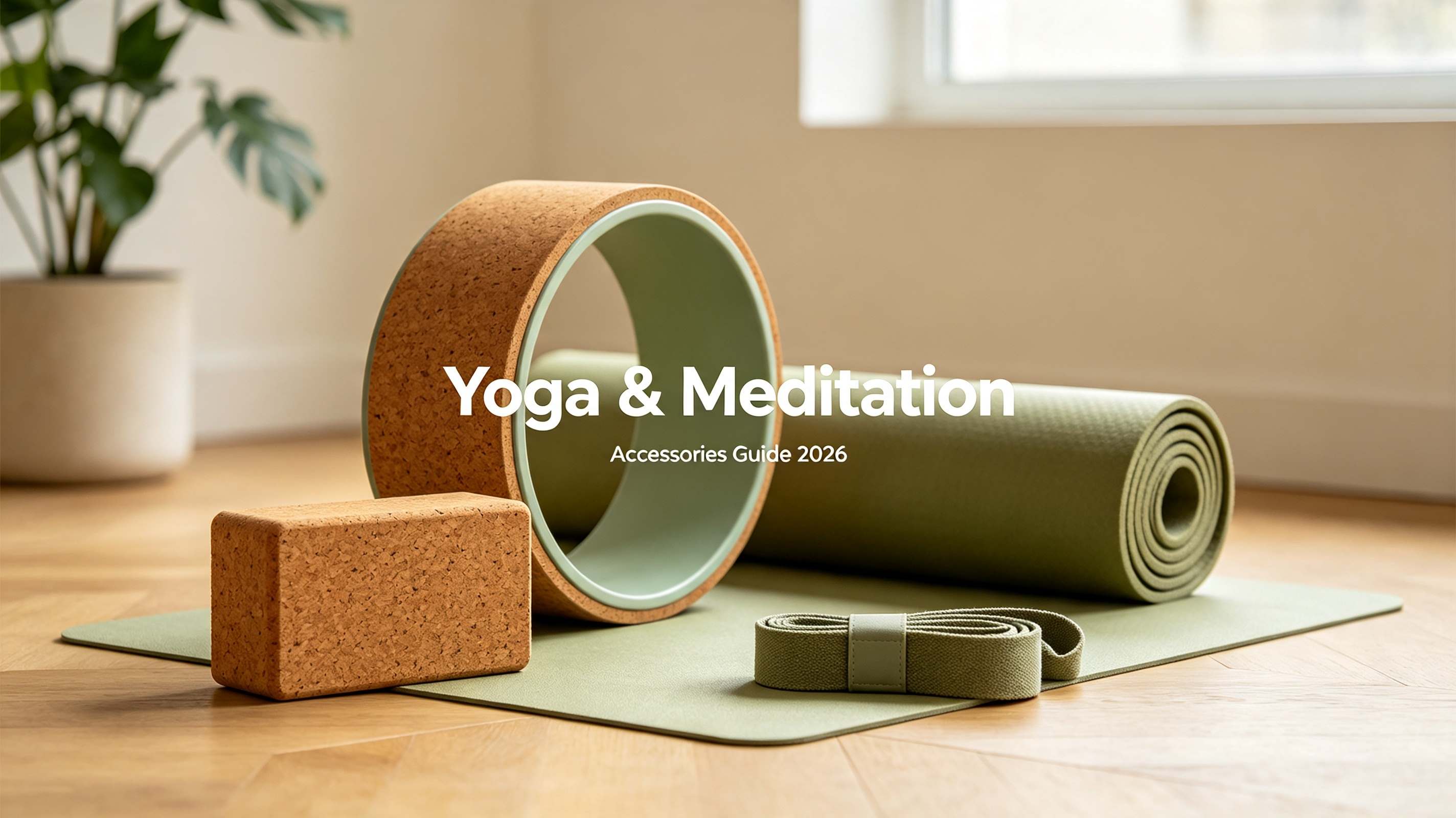
The 1688 sourcing price ranges from 13 to 18 RMB (approximately USD 1.8 to 2.5), with Made-in-China wholesale prices as low as USD 1.50 to 3.80. Amazon selling prices range from USD 20 to 35 (typically sold as a two-piece set), yielding a profit margin of approximately 85% to 92%. The core selling points of cork yoga blocks include the eco-friendly attributes of natural cork material, the sturdy support provided by high-density construction, and the safety of the anti-slip surface. Compared to traditional EVA foam blocks, cork material offers significant advantages in visual quality and environmental positioning, perfectly aligning with consumer preferences for sustainable products in 2026. For content marketing, we recommend publishing yoga pose tutorials on Instagram and TikTok that demonstrate the block’s supportive role in poses such as Half Moon, King Pigeon, and Seated Forward Fold, while also creating educational content comparing cork versus foam materials. When sourcing, verify that the cork is sourced from natural Portuguese cork bark, with a single-block density of no less than 750 grams, recommend rounded edge chamfering to prevent discomfort, and offer laser logo customization services to enhance brand recognition.
II. Yoga Wheel
The 1688 and Alibaba sourcing price ranges from 20 to 50 RMB (approximately USD 2.8 to 7), with DHGate wholesale prices around USD 16 to 34. Amazon selling prices range from USD 25 to 45, yielding a profit margin of approximately 75% to 85%. The core selling points of yoga wheels include deep backbend assistance, gentle stretching of the thoracic spine and spinal column, and back pain relief functionality. Products typically feature an ABS inner core with a TPE or cork outer layer, a standard diameter of 12 inches, and a weight capacity requirement of 300 pounds or above. For content marketing, backbend tutorials have powerful visual impact on social media. We recommend shooting before-and-after flexibility comparisons using the yoga wheel, and creating series content such as “5-Minute Back Pain Relief Practice” and “30-Day Backbend Progression Challenge.” When sourcing, focus on weight capacity testing (recommend static load capacity of no less than 150 kilograms), prioritize TPE or cork outer materials to balance comfort and grip, ensure inner core thickness of no less than 5 millimeters for stability during use, and select odor-free eco-friendly materials.
III. Meditation Cushion (Zafu)
The 1688 sourcing price ranges from 30 to 60 RMB (approximately USD 4.2 to 8.3), with Taobao retail prices ranging from 108 to 118 RMB. Amazon selling prices range from USD 25 to 45, with the Retrospec Sedona Zafu cushion priced at approximately USD 37 on Amazon, yielding a profit margin of approximately 70% to 80%. The core selling points of meditation cushions include traditional futon-style design, the adjustable support provided by buckwheat hull filling, and ergonomic seated posture guidance. Zafu cushions hold 42.3% of the meditation cushion market, making them the most mainstream product form. For content marketing, we recommend creating tutorial content such as “Mindfulness Meditation Beginner’s Guide” and “10-Minute Morning Meditation,” demonstrating the cushion’s support across different sitting positions (full lotus, half lotus, kneeling), and cross-promoting with yoga practice content. When sourcing, verify that the filling is natural buckwheat hulls (adjustable fill volume for personal preference), the cover uses organic cotton or linen material and is removable for washing, the cushion height is between 12 and 15 centimeters to accommodate most practitioners, and multiple color options are available to satisfy different aesthetic preferences.
IV. Yoga Strap
The 1688 sourcing price ranges from 8 to 15 RMB (approximately USD 1.1 to 2.1), with cross-border high-quality resistance straps wholesaling at approximately 8.8 RMB. Amazon selling prices range from USD 10 to 20, yielding a profit margin of approximately 80% to 90%. The core selling points of yoga straps include assisted stretching and deeper pose engagement, improved practice experience for those with limited flexibility, and lightweight portability for everyday use. Products typically use pure cotton or polyester fiber material, with a standard length of 6 to 8 feet, and are equipped with metal D-rings or plastic adjustment buckles. For content marketing, we recommend shooting tutorials for different flexibility levels, such as “3 Hamstring Stretches” and “Shoulder Mobility Improvement Exercises,” while creating compilation content like “10 Ways to Use a Yoga Strap” to increase the information density of individual videos. When sourcing, verify that the strap body is made of high-strength pure cotton weaving (breaking strength no less than 200 kilograms), metal buckles are stainless steel to prevent rust, the strap is printed with length markings for precise positioning, and consider bundling with yoga blocks as a set to increase average order value.
Final Thoughts
In summary, the growth drivers for the yoga and meditation accessories market in 2026 stem from the popularization of healthy lifestyles, consumer preference upgrades toward natural and eco-friendly materials, and the transformation of meditation practice from spiritual discipline to mainstream health habit. Cork yoga blocks and yoga straps, with their extremely low sourcing costs and high profit margins, are ideal traffic-driving products for market entry. The yoga wheel, with its unique functionality and visual appeal, is well-suited as a star product for content marketing. The meditation cushion, benefiting from a market growth rate exceeding 20%, represents the direction with the greatest growth potential. We recommend that sellers build a product matrix around the core theme of “mind-body balance, establish professional trust through instructional content, and then increase average order value and repurchase rates through bundled set sales.