Introduction
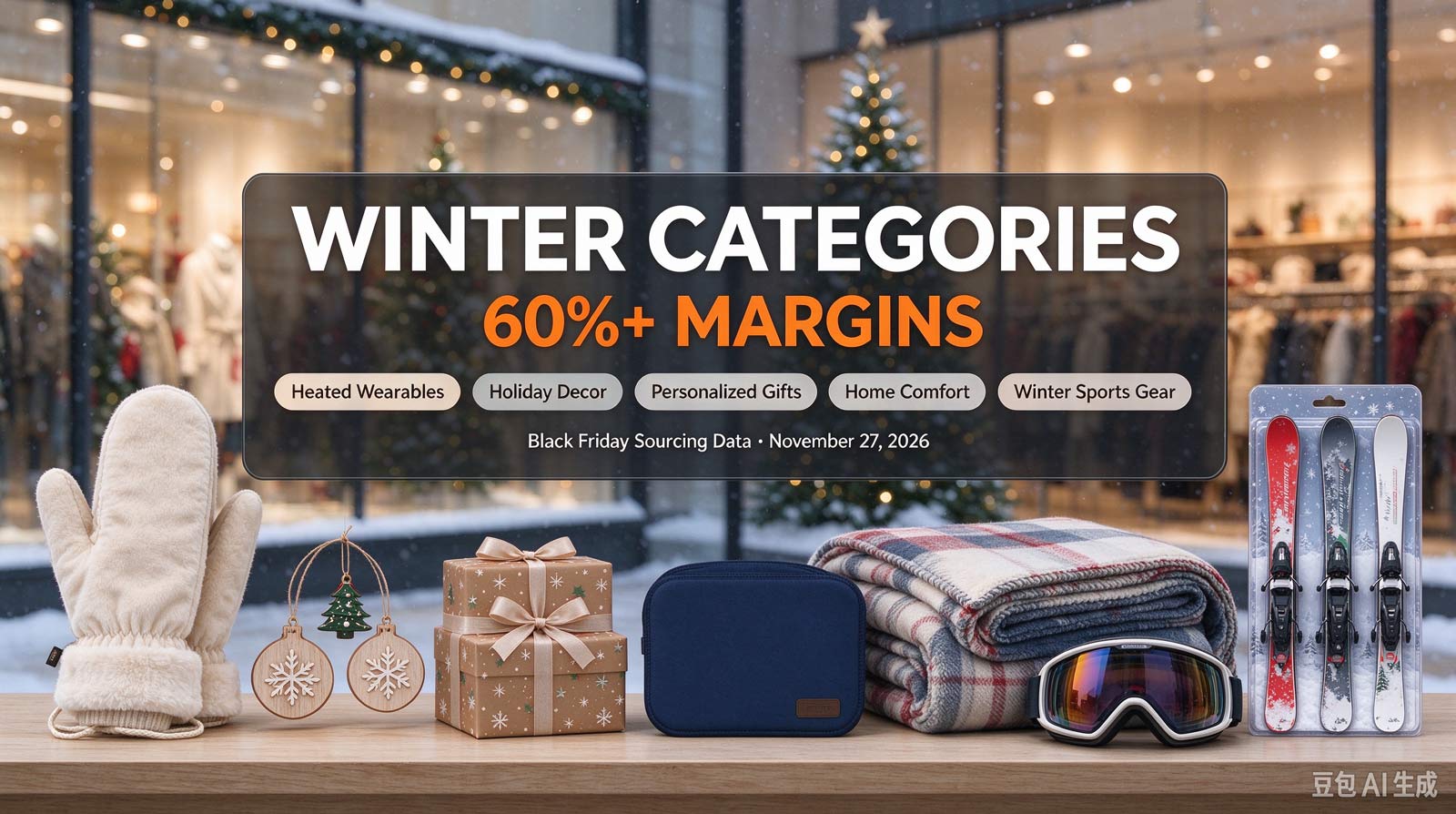
Black Friday lands on November 27, and the sellers who win Christmas 2026 are sourcing right now. We pulled live sales and competitor data across five winter categories — every one holding margins above 60%, and every one still open to new entrants. Here are the five winners, the numbers behind them, and the deadlines that matter.
1. Smart Winter Wearables
Heated wearables are the clearest early mover in our Winter 2026 data. Rechargeable heated scarves and gloves cost $9–14 on major B2B platforms and retail for $35–49, leaving margins of 60–68%. Search interest for "heated scarf" started climbing in September and historically peaks the week before Black Friday. Competitor data shows sellers who list before mid-October capture top organic positions; November entrants pay 2–3x more per click for the same placement.
What buyers expect in 2026:
-
USB-C fast charging — older micro-USB models are already getting returned
-
8+ hour battery life for full-day wear
-
Machine-washable fabric with removable battery packs
Sourcing notes: Prioritize suppliers with CE/FCC battery certification — uncertified lithium listings are the leading cause of heated wearable removals in December. Request samples this week; sea freight cutoff for pre-Christmas arrival is early November, and air freight rates typically jump 40% after Black Friday week.
2. Eco-Friendly Holiday Decor
Sustainability is no longer a niche angle in holiday decor — it's the default expectation for a growing share of buyers. Recycled fabric gift wrap, wooden ornaments, and plug-in LED string lights cost $2–6 at source and retail for $15–35, with margins of 60–75%. "Wooden Christmas ornaments" search volume doubles every October and stays elevated through mid-December.
What's selling this season:
-
Reusable fabric gift wrap in neutral, gift-ready palettes
-
FSC-certified wooden ornaments (personalizable = higher AOV)
-
LED string lights with replaceable bulbs — buyers increasingly reject throwaway sets
Sourcing notes: Order samples by early October. Decor is lightweight and ships well by air, so you can run a first small batch and reorder before Black Friday without committing deep inventory. Avoid unbranded plastic-heavy listings — marketplace algorithms are increasingly downranking them under sustainability filters.
3. Personalized Gift Sets
Personalization carries the highest perceived value of any category on this list. Monogrammed skincare sets, engraved jewelry, and bespoke gourmet baskets cost $10–18 to produce and retail for $39–69 — margins of 60–70%, plus repeat buyers every single December.
Why they convert:
-
Gifting anxiety: buyers will pay a premium to avoid "generic gift" embarrassment
-
Emotional appeal drives social shares — free marketing from unboxing content
-
Endless sub-niches (pet lovers, new parents, coworkers) keep competition fragmented
Sourcing notes: Customization adds 10–15 days of production time, so lock in your supplier by mid-October at the latest. Keep engraved and print-on-demand SKUs separate: engraving needs a manufacturing partner, while print-on-demand gift boxes can be fulfilled dropship with 5–7 day turnaround — ideal for testing designs before committing to bulk.
4. Home Comfort Essentials
Cold weather keeps buyers indoors, and "comfort" is the season's strongest buying trigger. Cordless mug warmers, weighted blankets, and aromatherapy diffusers cost $6–25 at source and retail for $29–89, holding margins of 60–70%. Search demand for "cozy gift" spikes in late November and peaks the first week of December — later than other categories, which means you can still enter this one in early November and catch the wave.
Buyers are prioritizing:
-
Cordless, rechargeable mug warmers over plug-in versions (desk and bedside use)
-
Machine-washable weighted blankets in organic cotton
-
Diffusers with auto-shutoff — a now-standard safety expectation
Sourcing notes: Mug warmers are the standout — small, cheap to ship, and ideal bundle fodder with blankets or loungewear. Target a first sea shipment leaving before November 10; comfort categories don't peak until early December, so a mid-November air-freight top-up is a viable backup.
5. Winter Sports Gear for Beginners
The beginner segment is where the winter sports money is in 2026: experienced skiers upgrade in-store, but first-timers buy online, research-heavy, and price-sensitive. Insulated gloves, starter ski kits, and beginner snowboards cost $11–45 at source and retail for $45–129, with margins of 60–65% on entry-level bundles.
What's driving demand:
-
Ski resorts reporting record early-season bookings for 2026
-
Short-form content ("first ski trip" videos) pushing first-timer interest every November
-
Beginners need full kits — natural bundle and upsell economics
Sourcing notes: Never compromise on safety certification — helmets and protective gear need CE or ASTM compliance, full stop. Bundle strategy wins here: price a "first day on snow" kit (gloves + goggles + hand warmers) slightly below the sum of separate items and watch AOV climb. Get listings live before Thanksgiving, when "beginner ski gear" searches start their annual climb.
Conclusion
Five categories, all holding 60%+ margins, all still winnable — but not on the same clock. Heated wearables need listings live by mid-October. Personalized gift sets need suppliers locked by mid-October, plus 10–15 days of customization lead time. Decor and winter sports gear should be live before Thanksgiving. Home comfort is the one category where a disciplined early-November entry still catches the December peak.