Introduction
The global beauty tools market is growing steadily at 8% to 10% annually, and the rise of DTC beauty tool brands is reshaping a market traditionally dominated by large consumer goods conglomerates. Consumers increasingly prefer purchasing professional-grade beauty tools to enhance their daily skincare and makeup routines rather than relying solely on fingers or basic implements. This trend is driven by the proliferation of social media beauty tutorials, where influencers and makeup artists continuously demonstrate the dramatic difference professional tools make, sparking purchase desire among everyday consumers. For cross-border ecommerce sellers, beauty and skincare tools offer highly attractive commercial characteristics, small size, lightweight, non-fragile, high repeat purchase rates, and rapidly improving consumer willingness to pay brand premiums for branded tools. Makeup brush sets, facial cleansing devices, LED makeup mirrors, silicone face cleansers, and travel makeup bags currently sit at a critical transition point from traditional channels toward DTC ecommerce, presenting significant entry opportunities for independent store and marketplace sellers.
Makeup brush sets
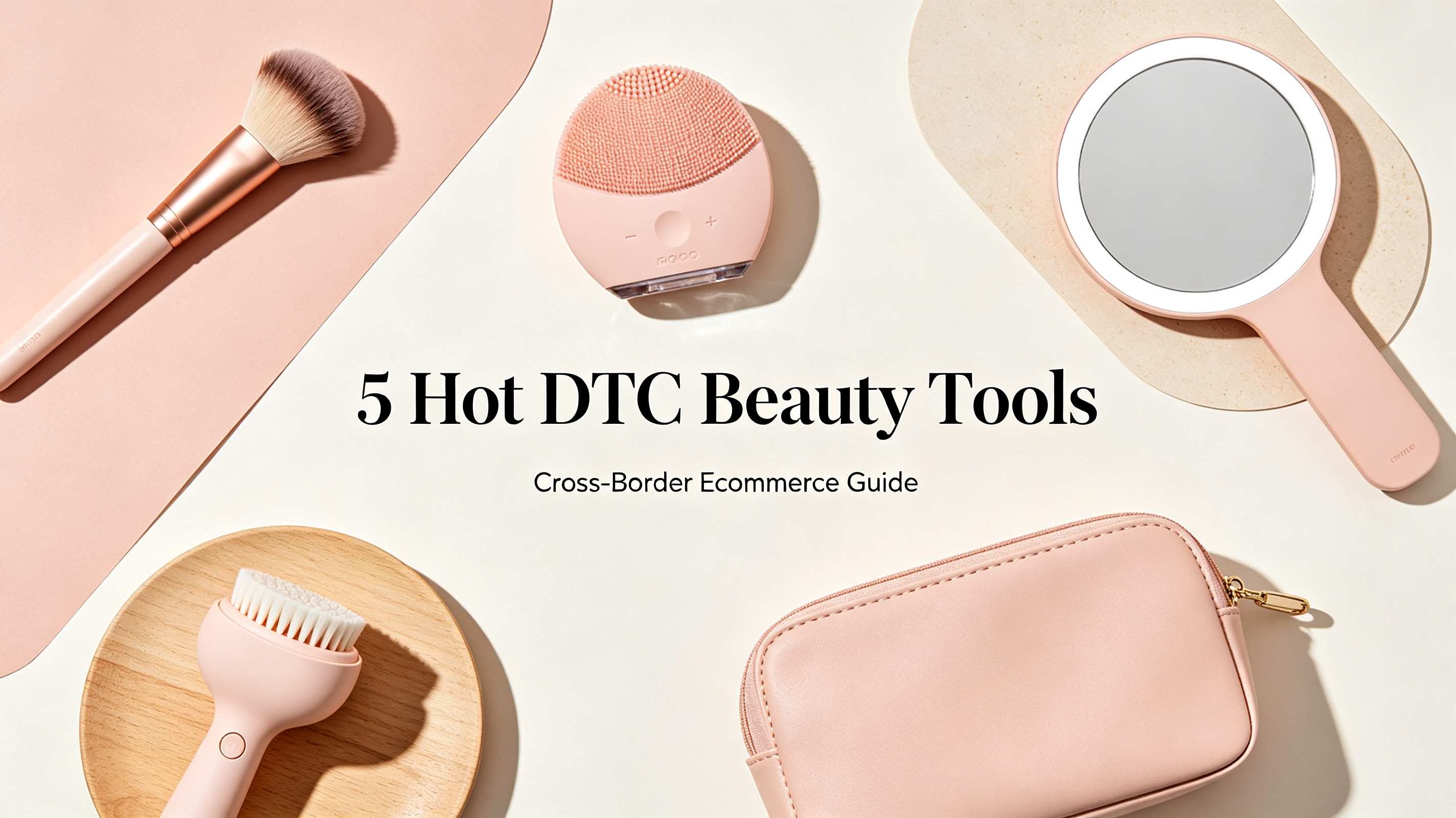
Makeup brush sets rank as the most recognized and lowest education-cost products in the beauty tools category, virtually every makeup user owns one or multiple sets. Innovation in this category centers on bristle materials, handle design, and functional specialization. Traditional synthetic and animal hair is shifting toward more eco-friendly, easier-to-maintain bio-mimetic fibers, while brush shapes are increasingly optimized for specific makeup steps, such as fan brushes designed for liquid highlighter and detail eye brushes shaped for Asian eye contours. On 1688, a mid-to-high-end set containing ten or more brushes with premium bio-mimetic fiber bristles and solid wood handles costs approximately 35 to 65 RMB, depending on bristle density and handle craftsmanship. Overseas, branded makeup brush sets span a wide price range, mass-market products fall between 19.99 and 29.99 dollars, while designer sets with brand storytelling and elegant packaging reach 49.99 to 79.99 dollars. At a mid-range price of 34.99 dollars, net margins after packaging, logistics, and platform fees typically reach 45% to 55%. This category delivers exceptional visual marketing potential, close-up bristle shots, application comparisons, and storage displays all represent high-engagement content formats on social media.
Facial cleansing devices
Facial cleansing devices represent one of the lowest-barrier yet most visually effective products in personal care electronics. Unlike high-end sonic cleansers costing hundreds of dollars, the current market has seen an explosion of affordable, elegantly designed entry-level devices using sonic vibration or rotating brush technology to effectively enhance cleansing efficiency while delivering comfortable massage experiences. The core components are micro motors and silicone brush heads, with mature supply chains readily available. On 1688, a rechargeable facial cleansing device with multiple vibration modes and medical-grade silicone bristles costs roughly 28 to 48 RMB. Overseas, these retail for 24.99 to 39.99 dollars, with upgraded versions featuring hot or cold compress functions pricing above 49.99 dollars. At a standard version price of 29.99 dollars, overall net margins typically reach 50% to 60%. Facial cleansers naturally suit video demonstrations, before-and-after cleansing comparisons, different vibration mode showcases, and waterproof performance tests all make for highly persuasive content.
LED makeup mirrors
LED makeup mirrors have become one of the most popular vanity upgrades in recent years. Traditional mirrors rely on ambient room lighting, where uneven illumination and inaccurate color temperature frequently lead to makeup mishaps. LED makeup mirrors provide uniform, bright natural light simulation through surround lighting strips, with some premium models offering brightness adjustment, color temperature switching, and touch controls. From a supply chain perspective, core costs center on LED quality, mirror craftsmanship, and housing materials. On 1688, a medium-sized LED mirror approximately 20 centimeters in diameter with touch dimming and USB power costs roughly 45 to 85 RMB, while premium versions with magnification or wireless charging bases run 100 to 160 RMB. Overseas, these sell for 29.99 to 49.99 dollars, with design-forward or feature-rich models reaching 59.99 to 89.99 dollars. At a mid-range price of 39.99 dollars, net margins typically fall between 40% and 50%. This category particularly suits gift positioning, with demand rising significantly around Valentine’s Day, Mother’s Day, and Christmas.
Silicone face cleansers
Silicone face cleansers rank as the gentlest and most popular choice among manual cleansing tools. Compared to nylon bristles, medical-grade silicone resists bacterial growth, cleans more easily, and feels soft enough for sensitive skin. Product forms have evolved from early single large brush heads to today’s multi-shape designs targeting different facial zones, such as small brushes for T-zones and pointed tip brushes for nose creases. On 1688, an FDA-certified silicone face cleanser with finger-grip design costs approximately 6 to 15 RMB, depending on silicone thickness and shape design. Overseas, these retail for 9.99 to 16.99 dollars, with multi-piece sets or versions including stands and storage cases reaching 19.99 to 24.99 dollars. At a single-piece price of 12.99 dollars, this lightweight product delivers extremely attractive margins, with unit net margins typically between 65% and 75%. Given its minimal sourcing cost and weight, silicone face cleansers work excellently as traffic drivers or add-on items bundled with other beauty and skincare tools.
Travel makeup bags
Travel makeup bags represent a necessity strongly tied to the travel scenario within beauty storage categories. Modern women own extensive makeup collections, and organizing and transporting them during business trips or vacations has long posed challenges. Professional travel makeup bags solve the pain points of cosmetics breaking, leaking, and becoming difficult to find during travel through smart compartment design, waterproof materials, and portable sizing. Current innovation directions include transparent PVC materials for easy security checks, hanging designs for hotel convenience, and removable dividers adapting to different capacity needs. On 1688, a medium-sized waterproof nylon travel makeup bag with multiple layers and a carrying handle costs roughly 25 to 45 RMB, while premium fabric versions or those with branded custom hardware run 50 to 80 RMB. Overseas, these sell for 19.99 to 29.99 dollars, with design-forward and functionally distinctive products pricing above 34.99 dollars. At a mid-range price of 24.99 dollars, net margins typically reach 50% to 60%. This category’s consumption scenarios are clearly defined, enabling precise target audience reach through partnerships with travel bloggers and lifestyle influencers.
Final Thoughts
The beauty and skincare tools category is undergoing a social-media-driven democratization revolution. Advanced tools once accessible only to professional makeup artists are now entering everyday consumers’ makeup bags through DTC ecommerce channels. Makeup brush sets, facial cleansing devices, LED makeup mirrors, silicone face cleansers, and travel makeup bags represent the most commercially valuable entry points in this revolution. For cross-border ecommerce sellers, success in this category hinges on creating visually distinctive product aesthetics and packaging, because beauty consumers are fundamentally visual-driven, they will impulse-buy for a product’s looks and pass on a functionally excellent product that lacks aesthetic appeal. In supply chain management, sellers should prioritize factories offering eco-friendly materials and cruelty-free certifications, which are not merely compliance requirements for European and American markets but increasingly valued brand attributes among modern beauty consumers. For content marketing, tutorial videos and user-generated content prove the most effective conversion tools for this category, encouraging customers to share before-and-after results builds product credibility in the most authentic way possible.