Introduction
Six months ago, someone shipped 5,000 pet grooming brushes from a factory in Yiwu to a Shopify store you've never heard of. That shipment was recorded, filed, and made public. The store just launched the product last week with a $50/day ad budget — and by the time you saw the ad, the opportunity to beat them to market had already sailed.
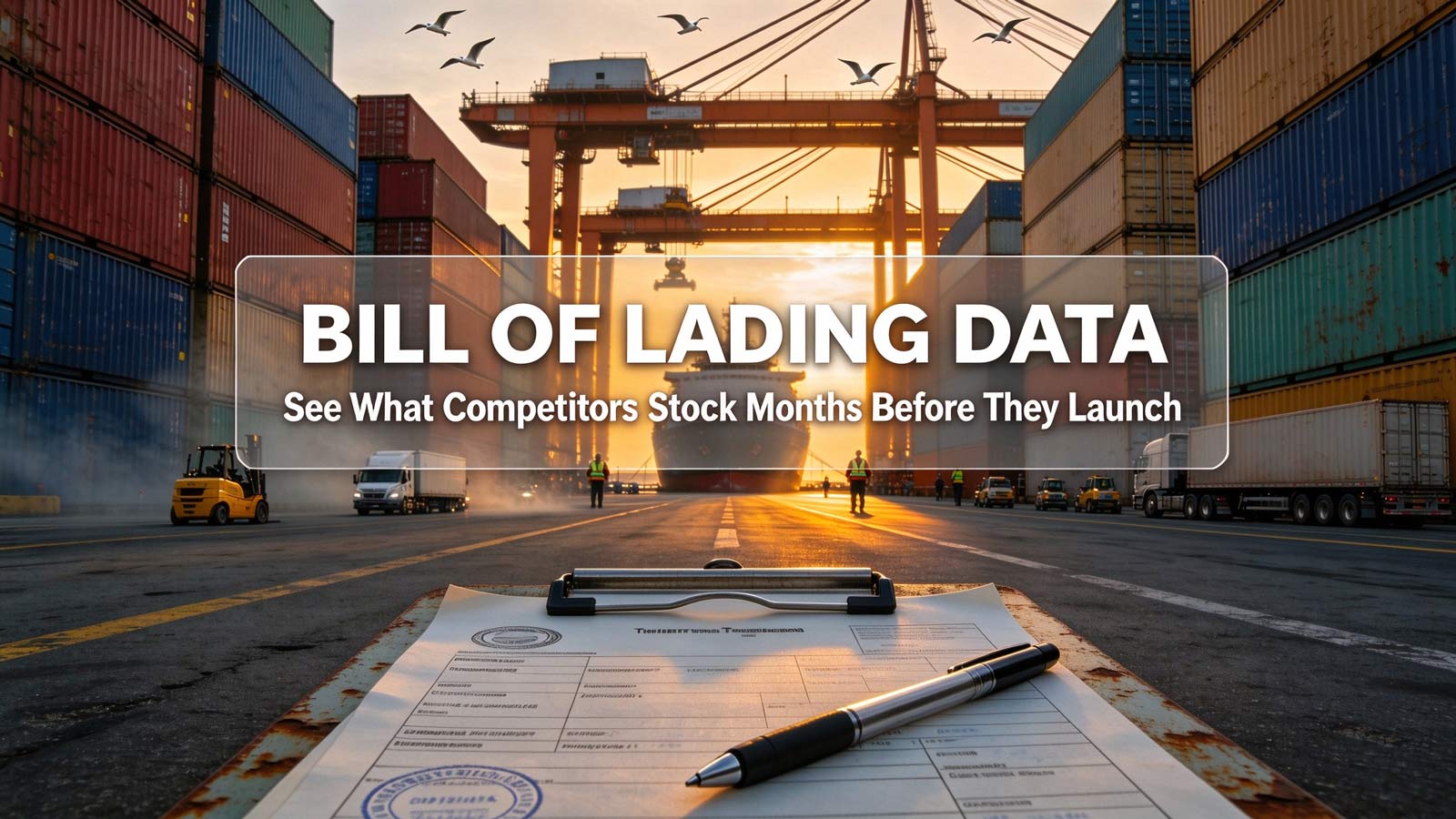
That record is called a bill of lading, and it's one of the most underused competitive intelligence tools in e-commerce. Every ocean shipment into the US leaves one. They're publicly accessible. And they tell you what your competitors ordered, from which factory, in what quantity — months before the product page exists.
This article covers what a BOL actually contains, the three signals worth watching, and exactly how to pull this data yourself today.
What's Actually Inside a Bill of Lading
A bill of lading is a shipping document, but forget the logistics textbook definition. What matters for intelligence purposes is what it records:
-
Shipper — the factory or exporter sending the goods, often with a real company name and address
-
Consignee — who received it, usually your competitor's company or their freight forwarder
-
Product description — the cargo as declared to customs, sometimes vague ("plastic goods"), often surprisingly specific ("LED dog collar, rechargeable")
-
Quantity and weight — piece counts and shipment size, which let you estimate unit volume
-
Ports of origin and arrival — where the goods left and where they landed, with dates
Every field is a clue. The shipper name reveals the factory, which means you can find the same supplier. The quantity reveals how confident they are. The arrival date tells you roughly when the product will go live — most stores list new stock within 4–8 weeks of a container clearing customs.
The Three Signals Worth Watching
Not every shipment matters. Here's what to actually look for:
-
New product lines — a first-ever shipment from a new factory, or a new product description from an existing one, signals a launch in the pipeline. This is the highest-value signal.
-
Volume spikes — a competitor who normally imports 2,000 units suddenly receiving 10,000 is preparing for something: a big promotion, a wholesale push, or a bet on a trend they've seen in their own data.
-
New destinations — shipments to a warehouse in a country they don't sell in yet means market expansion is coming. If you sell in that market, you'll soon have company.
One BOL is a rumor. A pattern of BOLs is a strategy. The value comes from watching the same competitor over time, not from any single record.
How to Actually Pull This Data
You don't need a customs broker or a corporate budget. Here's the realistic path:
-
Start with free tools. ImportYeti is free and covers US import records well — search any company name and see their shipment history immediately. ImportGenius and Panjiva offer deeper data on paid tiers if you get serious.
-
Search smart, then read the shipper field. Search the competitor's brand name, their legal company name (check the terms page or privacy policy — it's often different from the brand), and their freight forwarder. Once results appear, go straight to the shipper column: it names the factory, which you can search independently — sometimes the same supplier's other consignees reveal products you didn't even know were trending.
-
Track over time, not snapshots. Save what you find and check monthly. The first shipment of a new product is your early warning; the second and third tell you whether it sold well enough to reorder.
-
Cross-reference with launch timing. When the product eventually appears on their store, note the gap between arrival date and listing date. Most stores run a consistent 4–8 week pipeline — once you know a competitor's rhythm, you can predict their launches from shipment dates alone.
What This Looks Like in Practice
Here's a composite of a pattern sellers report regularly: a dropshipper noticed a mid-size home-goods brand they follow had begun receiving monthly shipments from a kitchenware factory they'd never used before. The product description said "silicone" and "storage." Volume was modest — 1,500 units — suggesting a test order, not a bet-the-company launch.
The seller did three things. They found the same factory, requested samples, and discovered the product: a foldable silicone food storage set. They listed their own version with a different angle (stackable design, brighter colors) three weeks later. And when the original brand finally launched with a $40/day ad campaign, the seller was already ranking for the same keywords with 40 reviews.
The BOL didn't hand them a winning product. It handed them a six-week head start — which, in e-commerce, is usually the whole game.
A Quick Word on What's Fair Game
BOL data is public information filed with customs authorities — reading it is legal. The line you don't cross: anything obtained through non-public channels, misrepresenting yourself to access data, or using shipment details to interfere with a competitor's operations (contacting their factory to sabotage orders, for example). Stay on the public-records side, act on market intelligence rather than inside information, and you're on solid ground. When in doubt, your sourcing agent or a trade lawyer can answer in one email.
Conclusion
Your competitors' supply chains are writing their launch calendar in public, one container at a time. The sellers who read it stop discovering products through Facebook ads — which is when the margin is already gone — and start seeing them at the factory gate.
Pull the BOL records on your top five competitors this week. If even one of them has a new shipper on file, you now know something their own customers don't. And if you want to know what they do with that inventory once it lands, pair this with price history tracking: the bill of lading tells you what they're bringing in — the price chart tells you how it's selling.