Introduction
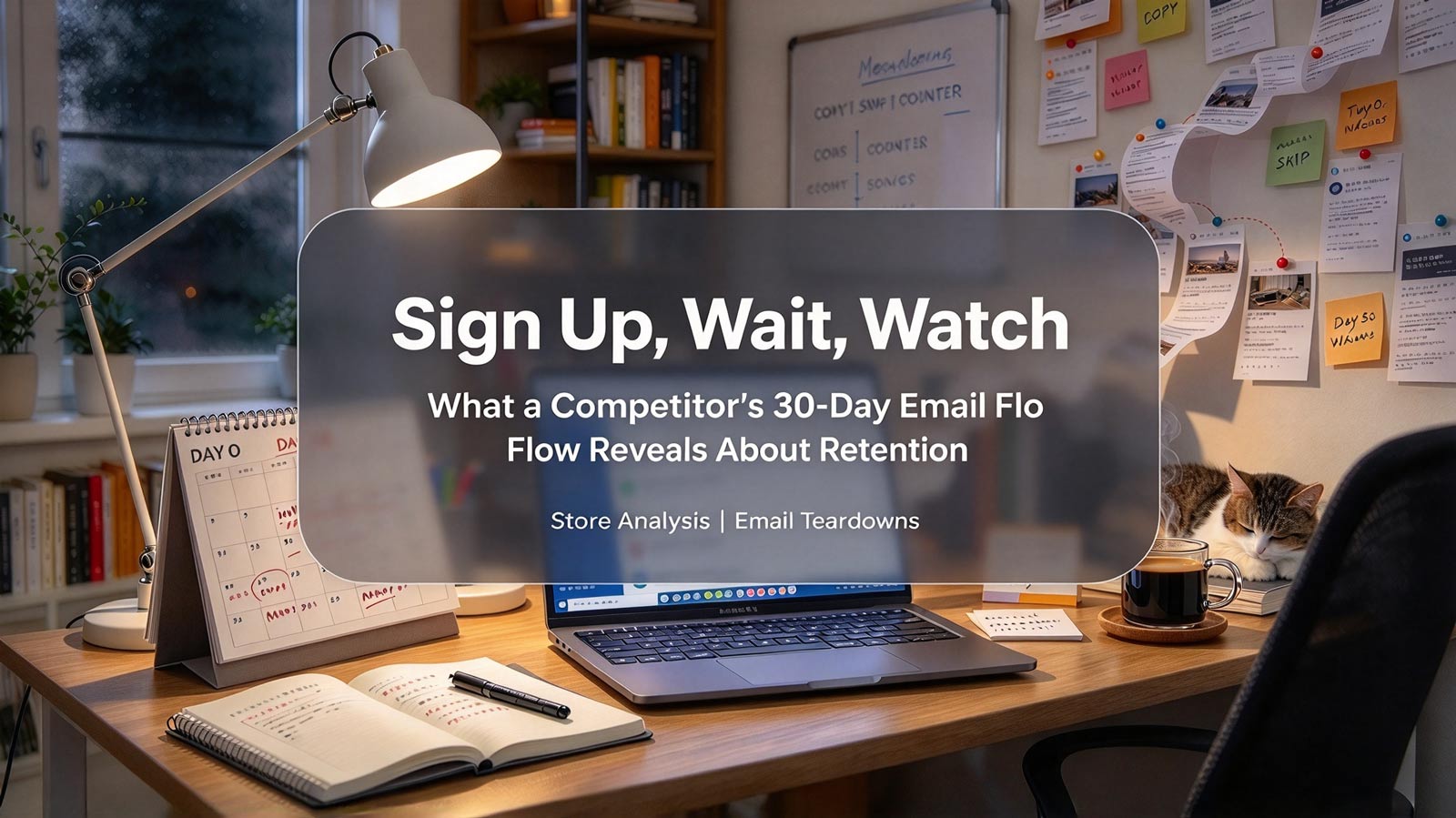
The cheapest competitive intelligence tool in e-commerce costs nothing: a spare email address, thirty days, and a habit of saving every message a competitor sends. Sign up for their list, buy nothing, and watch. Their welcome timing, discount cadence, education content and winback triggers form a working blueprint of their retention strategy — and every message reveals what they know about their customers, what they're afraid of, and where they're leaving money on the table.
Day 0: The Welcome Email Tells You Their Priority
The first message arrives within minutes or not at all — and the gap is the first data point. A competitor firing an email immediately has automation infrastructure in place; a brand that waits a day is likely running manual batch sends, which usually means email is an afterthought, not a retention engine.
Read the welcome closely:
-
Sender name: brand name signals a faceless funnel; a founder's name signals a relationship-first strategy.
-
Subject line: a name-merge and a soft hook ("you're in") targets opens; an immediate percentage discount targets fast conversion.
-
The offer itself: a welcome discount of 10% or more on Day 0 usually signals weak organic conversion — they're buying the first order. No discount at all suggests confidence in product or audience quality.
Also note where the links land. A CTA pointing to a bestseller page says they're optimizing for quick revenue; one pointing to a story or quiz says they're segmenting early.
Days 2-7: The Nurture Phase Exposes Their Data Maturity
Now the cadence question resolves itself. Count the emails. A competitor sending three or more messages a week is either confident in content quality or burning list equity to hit short-term revenue — either way, it's a signal. One email a week or fewer often means the flow was built once and abandoned.
Watch for segmentation tells, because this is where real data maturity shows:
-
If you browsed a category before signing up and the follow-up emails mirror that category, they have behavioral tracking wired in.
-
If every subscriber gets identical content, they're broadcasting, not nurturing — and their personalization is probably limited to the first name.
Content choices matter too. Educational how-tos and customer stories suggest a retention mindset: they're building the confidence a first purchase needs. Product-only blasts suggest a traffic-dependent store leaning on email as a second ad channel.
Days 10-20: The Conversion Push Reveals Margin Pressure
Somewhere in this window, most competitors escalate. The exact day and the shape of the escalation reveal more than the offer itself.
-
A discount appearing early — around day ten — usually means cash-flow pressure or aggressive growth targets.
-
Escalating urgency ("48 hours," "last chance") on every message suggests a list being milked, not nurtured.
-
An abandoned-cart-style email sent even though you never added anything to a cart is a tell: their automation is triggered by browse behavior, and their thresholds are loose.
Also track the offer depth over time. If the discount grows from 10% to 20% across the window, you've watched a margin surrender in real time. That competitor is likely discount-dependent — which means their non-sale price points may be soft, and their customers may be trained to wait.
Days 25-30: The Winback Shows How They Value a Subscriber
The final stretch separates retention-driven brands from list-driven ones. A competitor that goes quiet after the conversion push has written non-buyers off. One that sends a genuine winback — a "still thinking it over?" message, a new angle on the product, a last meaningful offer — is playing a longer game.
The winback's tone is diagnostic: apologetic or generous winbacks suggest healthy margins and a customer-first posture; panicked or guilt-laden winbacks suggest quarter-end pressure. Either way, this is the message most worth screenshotting, because winback economics are where retention either compounds or dies.
Copy, Skip, Counter: The 30-Day Verdict
Copy: immediate welcome delivery, behavioral mirroring in nurture content, a single well-timed first offer, a genuine winback with a fresh angle.
Skip: discount-on-arrival welcomes, escalating urgency loops, daily sends, cart-abandonment triggers fired by casual browsing.
Counter: where the competitor broadcasts, segment; where they discount early, hold price and add education; where their winback panics, make yours generous — their trained-to-wait customers are your easiest conquesting audience.
Conclusion
Thirty days of passively receiving emails answers questions that paid tools approximate: how mature their automation is, how much margin they're willing to burn, and whether they treat subscribers as assets or inventory. The competitor's outbox is the one dataset they hand you voluntarily. Read it like an analyst, and every message becomes either a tactic to adopt, a weakness to exploit, or a mistake to avoid repeating.