Introduction
Open any consumer's credit card statement and count the subscriptions. Streaming, meal kits, pet food, razor blades, cloud storage — the average household now juggles more recurring charges than it can track, and the exhaustion has a name: subscription fatigue. The data has turned. Churn rates across subscription e-commerce are climbing, "save and exit" flows are converting at record rates, and shoppers increasingly treat every new recurring charge as a decision to defend, not a convenience to accept. This guide breaks down why the recurring model is losing its grip, and why bundled one-time value has become the format that converts fatigued buyers in 2026.
Why the Recurring Model Is Now a Harder Sell
The subscription pitch was built on a simple promise: set it and forget it. That promise has inverted. What shoppers now feel is set it — and then audit it, justify it, and eventually cancel it.
The shift shows up in three places:
-
The cancellation reflex. Consumers have become disciplined about pruning recurring charges, and the habit is spreading from software subscriptions into physical-product subscriptions. Every new recurring line item now competes not with competitors, but with the buyer's own appetite for one fewer monthly obligation.
-
The value interrogation. "Am I actually using this?" has replaced "how convenient is this?" as the default question. Subscriptions that can't demonstrate ongoing consumption — the unopened box, the piled-up refills — trigger guilt, and guilt churns.
-
The flexibility premium. Buyers increasingly prefer to pay more per unit for the right to stop. Flexibility itself has become a feature worth paying for, and the lock-in that once justified subscription discounts now reads as a liability.
None of this means subscriptions are dead. It means the default advantage has moved. The model that once sold itself on convenience must now prove consumption — and most can't.
The Bundle Advantage: Convenience Without the Commitment
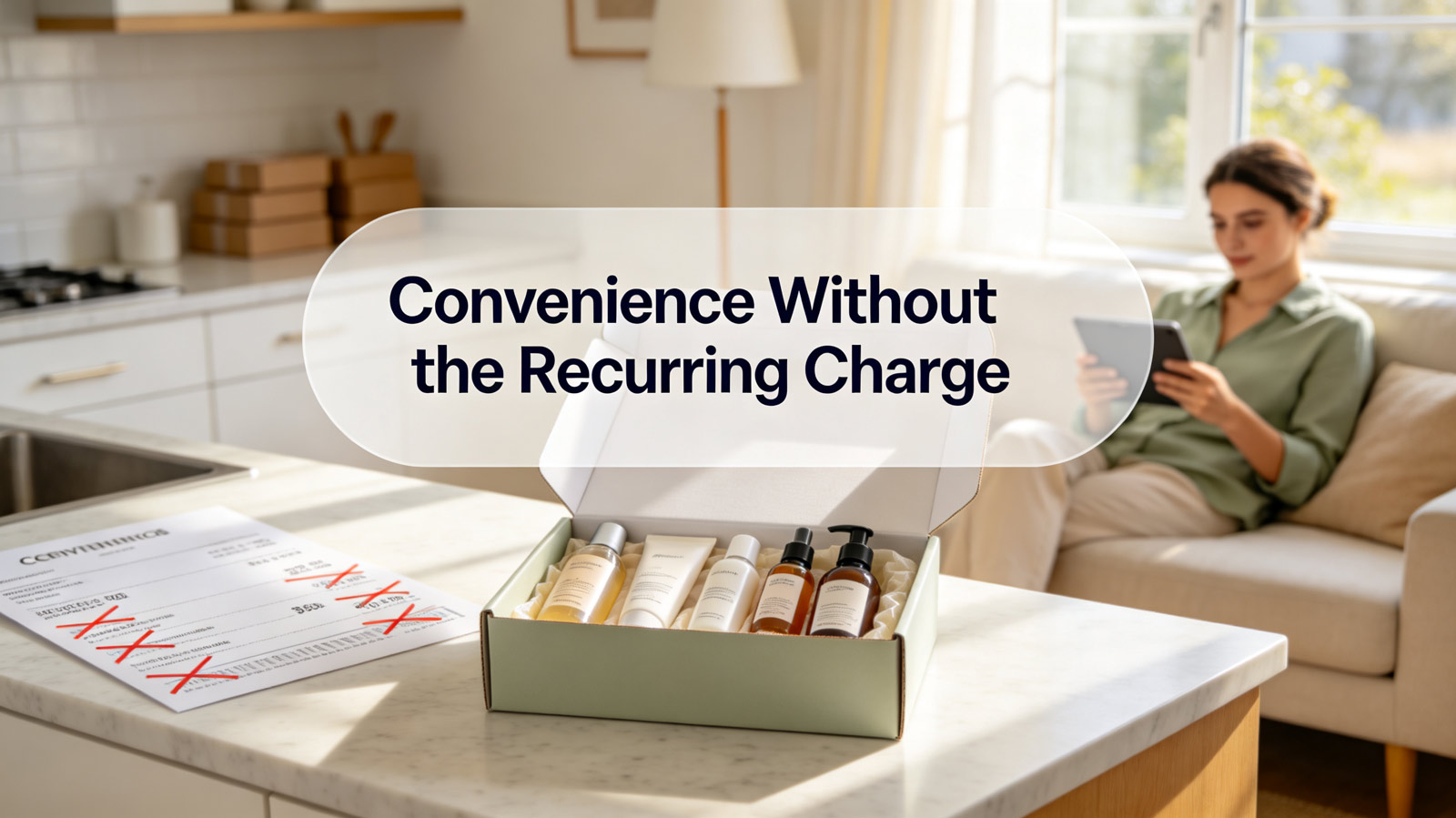
This is where bundling changes the equation. A well-constructed bundle delivers the two things shoppers actually wanted from subscriptions — convenience and savings — without the thing they've grown to resent: the recurring commitment.
The mechanics:
-
Value is visible up front. A bundle prices its total worth in a single transaction. No spreadsheet of monthly charges, no "what am I actually paying per year" math. The deal is legible at the moment of purchase, which is exactly when legibility converts.
-
Consumption pressure disappears. Nobody feels guilty about a box that arrived once. The psychological tax of unused recurring inventory — the silent accusation of the unopened refill pack — simply doesn't exist in a one-time bundle.
-
Gifting and trial both get easier. Bundles are naturally giftable and naturally trial-sized. A curated starter pack converts buyers who would never commit to a subscription but happily test the relationship once.
-
Average order value rises without lock-in. The bundle lifts AOV through curation and perceived completeness rather than through commitment mechanics, and a buyer who returns does so by choice — which is the only kind of loyalty that compounds.
Scoring your offer: if your product's core value is consumption replenishment, subscriptions still win for heavy users. If your value is discovery, variety, or occasion-based use, bundling now converts the much larger middle of buyers who want the convenience and none of the commitment.
What the Shift Looks Like in Practice
A realistic scenario based on typical patterns: a personal-care brand sells a monthly subscription box at $24 with a 38% six-month churn rate — solid by historical standards, but acquisition costs keep climbing because every ad must overcome the recurring-charge objection before it can sell the product.
The brand tests a one-time "complete routine" bundle at $39 — same products, curated as a single kit with a clear shelf price against the component total. Within one quarter: conversion rate on cold traffic rises meaningfully, because the objection landscape shrinks from "another subscription" to a simple, comparable purchase. Repeat purchase doesn't collapse — it restructures. Buyers return on their own schedule, often at higher basket values, and the brand's support inbox stops filling with pause-and-cancel requests. The product never changed. The commitment structure did, and that alone moved the economics.
Reading Your Category
The shift also works as a competitive audit. Scan the leaders in your niche with a store intelligence tool like ShopFindBiz and map their offer structures:
-
Everyone leads with subscription. The recurring-charge objection is unserved in the category — the gap a bundle-first challenger fills.
-
Leaders bundle, the middle doesn't. The differentiation is already proven; the opportunity is to bundle better and price it more legibly.
-
Nobody explains the value clearly. Even among bundlers, most bury the total-worth comparison. The brand that makes the math obvious at the top of the page wins the comparison shoppers are already running in their heads.
Conclusion
Subscription fatigue isn't a trend to wait out — it's a preference shift that rewards formats matching how buyers now want to commit: fully, once, and on their own terms. Bundled value delivers the convenience the subscription promised without the recurring charge buyers now audit, resent, and cancel. Audit your offer structure, price your bundles legibly, and stop asking fatigued shoppers for a commitment they're no longer willing to give. In 2026, the brands that win aren't the ones holding buyers on a billing cycle — they're the ones buyers return to by choice.