Introduction
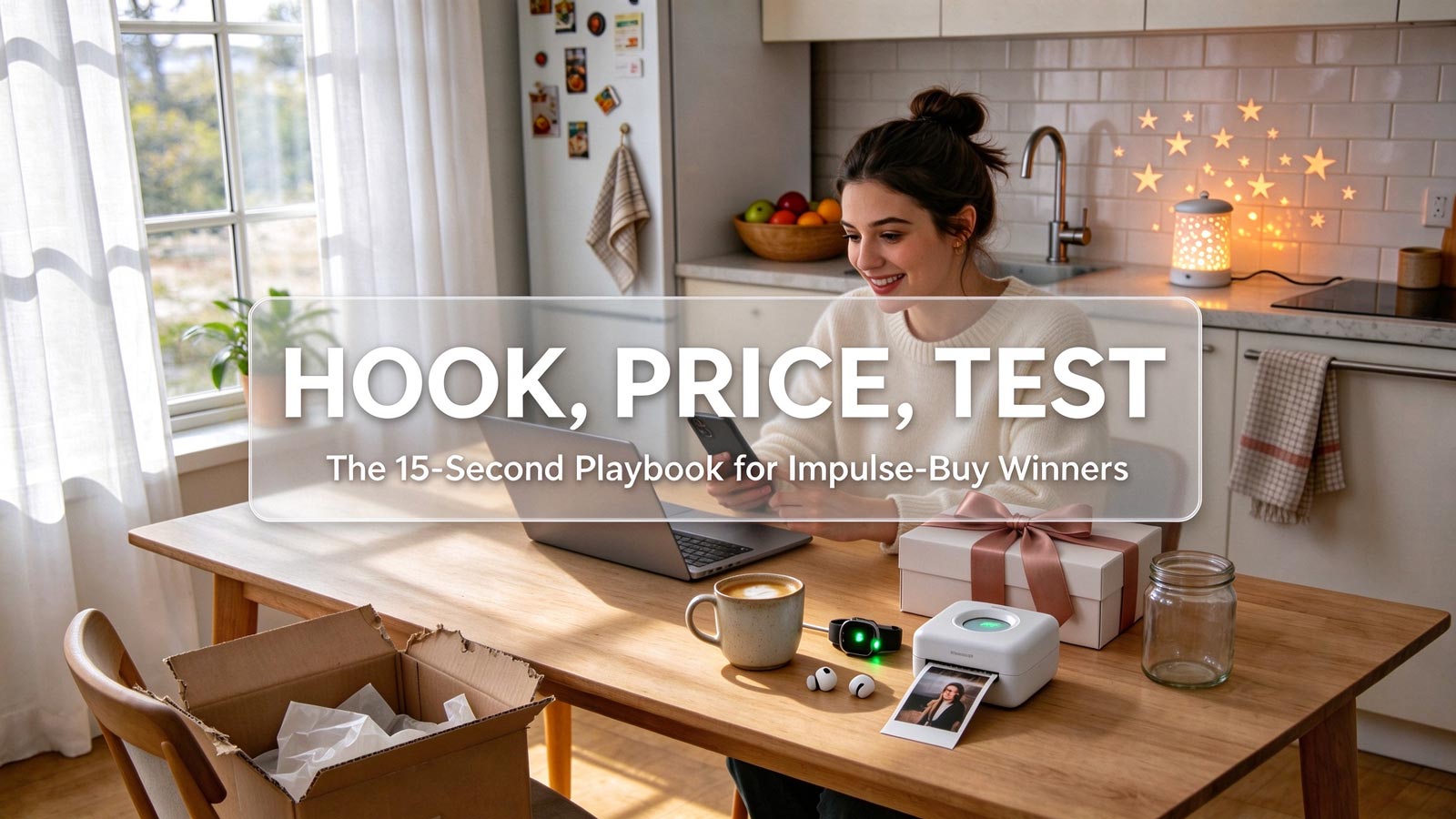
In the fast-paced world of e-commerce, capturing a customer's attention is more challenging than ever. A widely cited Microsoft study found that the average human attention span online has dropped to around eight seconds — meaning your product has roughly one scroll's worth of time to make its case. Smart sellers have turned this limitation into a strategy: the 15-second rule. If a product can't trigger desire almost instantly, it doesn't belong in an impulse-driven store.
In this article, we'll break down four impulse-buy winning products that consistently convert scrollers into buyers. For each one, we cover exactly why it hooks people within seconds, how to price it for maximum margin, and how to test it fast before committing real inventory budget.
The Psychology Behind Impulse Purchases
Impulse buyers don't compare spec sheets — they react. The products below work because they trigger one or more of these four psychological levers:
-
Problem-solving: An "I need this" reaction to a frustration the shopper already has
-
Instant gratification: A visible, immediate payoff (results they can picture in seconds)
-
Novelty: An emotional jolt — surprise, humor, or "I've never seen this before"
-
Urgency: Built-in scarcity from seasons, trends, or limited-time positioning
Every product on this list pulls at least one of these levers hard enough to survive the 15-second test.
Product 1: The 3-in-1 Foldable MagSafe Charging Station
The trigger: Problem-solving
Tangled cables and dead batteries are universal pain points, and this product solves both in a single glance. A foldable charging station that powers a phone, watch, and earbuds simultaneously sells itself the moment a shopper sees it — no explanation required.
Why it passes the 15-second test: One product shot tells the whole story: three devices, zero cables. Pair it with a "before" image of a messy nightstand and the value is obvious before the shopper reads a single word.
Pricing strategy: Source at $6–9, retail at $29.99–39.99. Anchor against the $100+ branded versions by emphasizing identical functionality at a third of the price. Offer a 2-pack bundle at a 15% discount to lift average order value — this product is inherently giftable.
Fast-testing: Run three short video ads (15 seconds each: problem, product, result) on TikTok with a $20–30/day budget. If you don't see add-to-carts within 72 hours, kill it and move on. Winning creatives here almost always feature the fold-unfold motion in the first two seconds.
Product 2: The Heatless Curling Kit
The trigger: Instant gratification + visual payoff
Hair damage from heat styling is a top complaint, and a heatless curling kit promises salon results overnight with zero damage. The before-and-after potential alone makes it one of the most viral beauty products on TikTok.
Why it passes the 15-second test: The transformation is the ad. A split-screen video — hair wrapped at night, perfect curls by morning — delivers a complete story in under ten seconds.
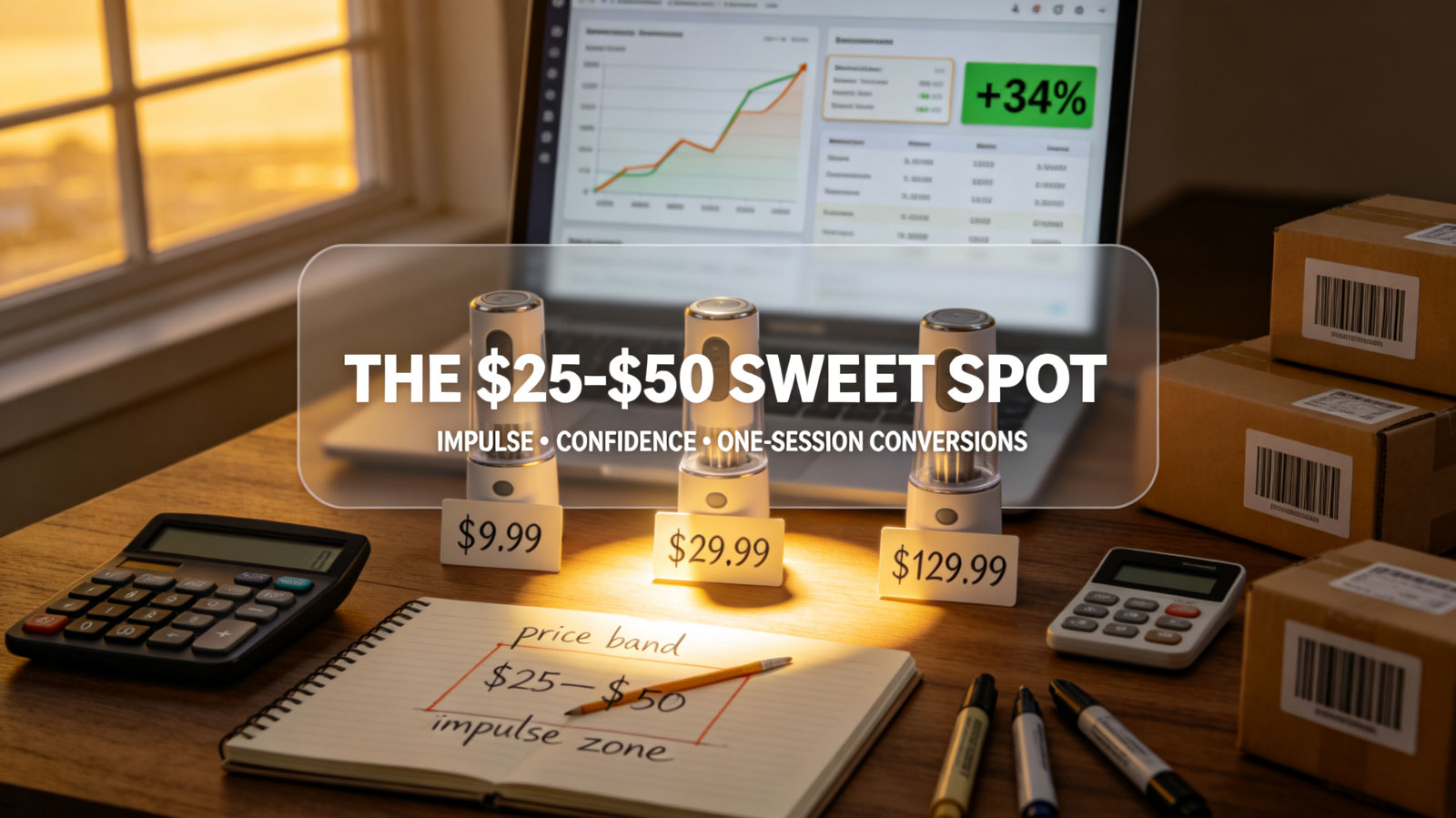
Pricing strategy: Source at $3–5 (kit with rod, scrunchies, and claw clip), retail at $24.99–34.99. Beauty impulse buys live in the $20–40 sweet spot: high enough for healthy margin, low enough for zero deliberation. Add a satin pillowcase upsell at checkout for an easy AOV bump.
Fast-testing: This product lives and dies on user-generated content. Test with three micro-influencer seedings ($50–100 total) before spending on paid ads — if the organic duets and stitches come, paid amplification will pay off. No organic traction in a week means the angle, not the product, needs work.
Product 3: The Mini Thermal Pocket Printer
The trigger: Novelty + shareability
A pocket-sized printer that turns phone photos into sticker-ready prints hits a rare triple: it's cute, it's useful, and everything it produces is inherently shareable on social media. It appeals to journalers, students, parents, and gift-buyers simultaneously.
Why it passes the 15-second test: Watching a photo slide out of a tiny printer triggers a genuine "wait, that's adorable" moment — an emotional reaction that bypasses rational price comparison entirely.
Pricing strategy: Source the printer at $12–18, retail at $49.99–59.99. The real margin engine is consumables: refill paper rolls (source at under $1, sell at $9.99 for a 3-pack) create repeat purchases and subscription-style revenue. Bundle printer + 3 rolls as the hero offer.
Fast-testing: Lead with the "print it, stick it" demo on Instagram Reels and TikTok. Test two angles — journaling/craft niche vs. gift-for-her niche — at $25/day each for five days. The journaling angle typically wins on engagement; the gift angle typically wins on conversion. Pick your margin accordingly.
Product 4: The LED Holiday Projection Light
The trigger: Urgency + seasonal relevance
With Q4 in full swing, window projection lights that bathe a house in animated Halloween or Christmas scenes ride a built-in deadline: the holiday doesn't wait. Shoppers aren't browsing — they're hunting, and hunting shoppers convert fast.
Why it passes the 15-second test: A nighttime photo of a house transformed by animated projections delivers instant wow-factor, and the calendar does the urgency work for you. "Order by Nov 20 to have it up before Thanksgiving" is a real deadline, not a marketing gimmick.
Pricing strategy: Source at $8–14 depending on pattern count, retail at $39.99–49.99. Seasonal impulse items support higher margins because buyers comparison-shop less. Layer a countdown timer and low-stock indicator on the product page — for trend-driven seasonal goods, these trust and urgency signals measurably lift conversion. (For more on how trust signals reduce buyer hesitation, see our guide: Count the Badges: What Trust Signals Reveal About a Store's Conversion Anxiety.)
Fast-testing: Speed beats perfection here. Get the listing live, run $50/day on broad-interest targeting ("home decor," "Christmas decorations"), and judge within 96 hours. Any seasonal winner must pay back its test budget before the shipping cutoff — set a hard rule: no profitability by mid-November, cut losses and pivot to the Christmas angle.
How to Present Any Impulse Product
Whichever product you test, the presentation formula stays the same:
-
First 2 seconds: The problem or the wow-moment (no logo intros, no "Hey guys")
-
Seconds 3–10: The product in action, shown from the customer's perspective
-
Final 5 seconds: The payoff — result, price anchor, or social proof (review count, orders shipped)
Static product pages should mirror this: hero image shows the product in use, the first line of copy states the outcome, and review widgets sit above the fold. If a shopper has to scroll to understand why they want it, you've already lost the 15-second window.
Conclusion
The 15-second rule isn't about dumbing down your store — it's about respecting how modern shoppers actually behave. The four products above work because each triggers a distinct psychological lever: the charging station solves, the curling kit transforms, the pocket printer delights, and the projection light creates urgency. Match the right product to the right trigger, price it in the impulse sweet spot, and test it with small, fast budgets before scaling. In a scroll-heavy world, your product doesn't need to appeal to everyone — it just needs to stop the right someone in their tracks.