Introduction
Installment checkout used to be a niche feature bolted onto high-ticket stores. It is now a default expectation sitting inside the payment step of nearly every serious storefront. Shoppers have stopped asking whether they can split a payment; they ask why a store won't let them. The shift arrived without a press release: no platform mandate, no consumer revolt, just a quiet rewiring of what "normal checkout" means. What follows is where installment behavior is going, why the absence of BNPL now costs more than its fees, and how stores should treat payment options as a positioning decision rather than a technical one.
The Installment Era Arrived Quietly
Nobody announced the transition, and most stores missed the moment it happened:
-
The Normalization Effect: Splitting a $60 order into four payments no longer signals financial distress—it signals a standard way to manage cash flow. Younger shoppers in particular treat installments the way previous generations treated credit cards: unremarkable infrastructure.
-
The Basket-Size Unlock: Installments don't just rescue expensive carts; they enlarge ordinary ones. When the perceived price of an item becomes "a quarter of the price," adding one more product to the cart stops feeling like a decision.
-
The Silent Walk-Away: The cost of missing BNPL doesn't appear in any report a store runs by default. Shoppers who expect installments and don't find them rarely complain—they simply check out somewhere that offers them.
The stores that adopted installments early didn't gain a feature; they removed a reason to leave.
Why Checkout Now Decides Conversion
Payment options have migrated from the bottom of the page to the center of the buying decision:
-
Payment as a Trust Signal: A recognizable installment badge functions like a trust badge. It tells the shopper the store is established enough to pass a provider's underwriting—a signal the store never had to earn on its own.
-
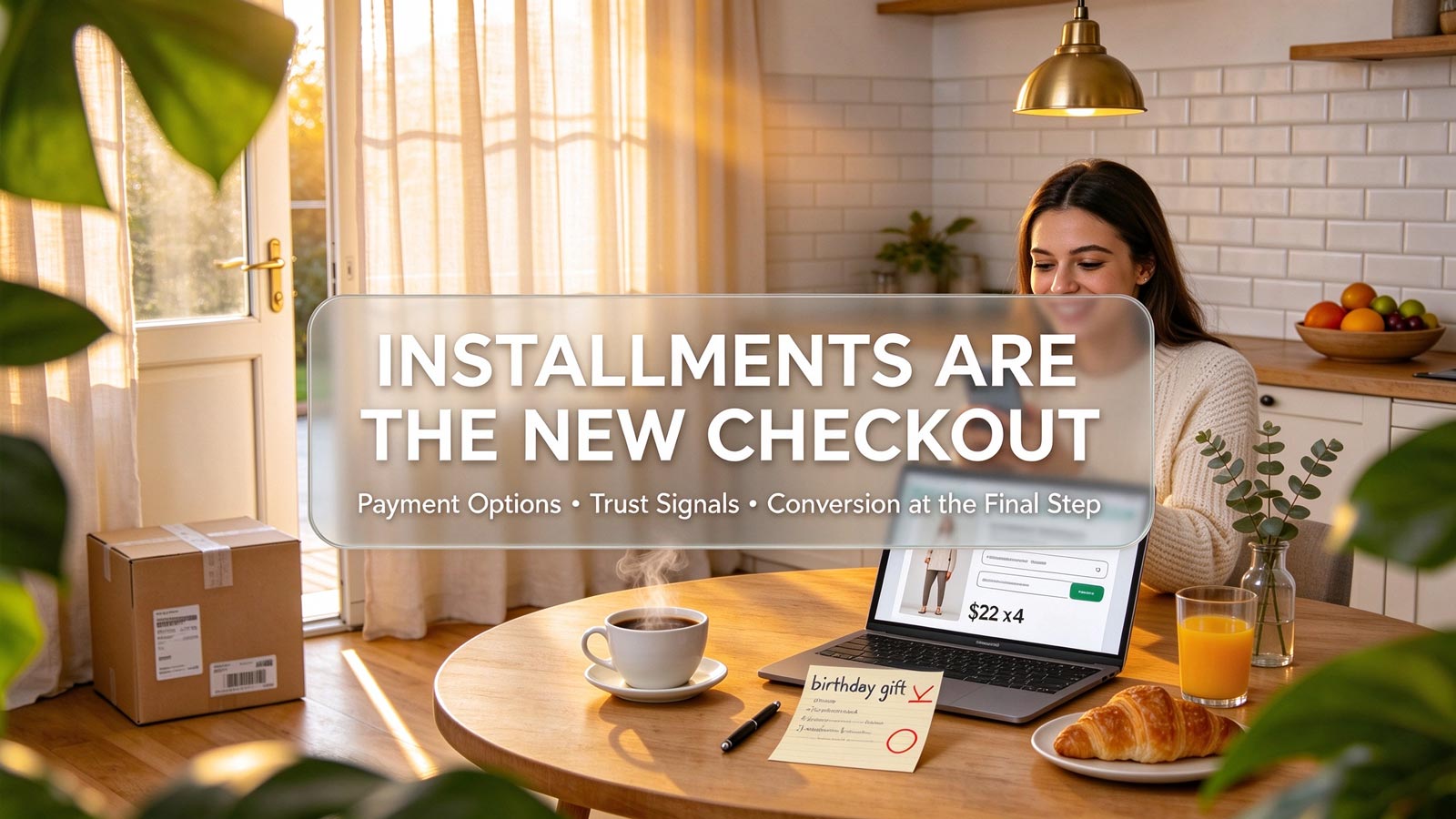
The Price-Anchor Reset: "Four payments of $22" frames a product differently than "$88." The number the shopper commits to memory is smaller, which softens price comparison against competitors and dulls the sting of shipping fees at the final step.
-
The Final-Step Rescue: Cart abandonment concentrates at payment. Shoppers who hesitate at the total often convert the moment a lower per-payment figure appears. Installments don't attract traffic; they close the traffic a store already has.
Checkout is no longer the end of the funnel. It is the point where the sale is won or lost, and payment options are its primary lever.
The Fee Math: What Installments Really Cost
Installments are not free growth, and the costs hide in places stores rarely audit:
-
The Merchant Fee Shift: Installment providers charge the store a premium over standard card processing—often double. On thin-margin products, the fee difference is the entire profit of the order. Blindly enabling BNPL on every SKU quietly donates margin on items that never needed it.
-
The Return Multiplier: Installment shoppers return at different rates than card shoppers. Every returned installment order generates refund handling, provider reconciliation, and customer service overhead that most return policies were never designed for.
-
The Underwriting Squeeze: Providers are tightening approval standards. A store's approval rate is now partly a function of its own order quality—high dispute rates and chargebacks degrade it, raising declines at checkout for everyone.
The fee conversation shouldn't be "can we afford BNPL?" It should be "which products, at what margin, justify which provider?"
The BNPL Playbook: How to Deploy It Deliberately
The winners treat installments as merchandising, not plumbing:
-
Match Provider to Product Tier: High-AOV items justify premium providers with high approval rates; low-AOV items may only support lightweight pay-in-4 options. Running one provider across the whole catalog leaves both margin and conversion on the table.
-
Surface It Early, Not Just at Checkout: Installment pricing shown on product pages reframes the price before the shopper reaches the total. Revealing it only at the last step wastes most of its anchoring power.
-
Audit the Approval Rate: A declining approval rate is an early-warning signal for checkout conversion. Providers, product mix, and dispute rates all feed it—and it degrades quietly until the revenue line notices.
-
Watch the Margin Line, Not Just the Conversion Line: Enable installments where they lift conversion more than they cost in fees and returns. A store that measures BNPL by conversion alone will eventually measure it by lost profit.
Installments reward operators who run them like a pricing strategy and punish those who toggle them on and forget.
Conclusion
BNPL didn't change what shoppers buy; it changed how they decide they're allowed to buy it. Checkout is now a persuasion layer, and payment options are its language. Stores that treat installments as an afterthought will keep paying for traffic that quietly leaks at the final step, while stores that deploy them deliberately will convert the same visitors at a higher rate—and a controlled cost. The question is no longer whether to offer installments. It's whether the store's checkout is speaking the payment language its customers already think in.