Introduction
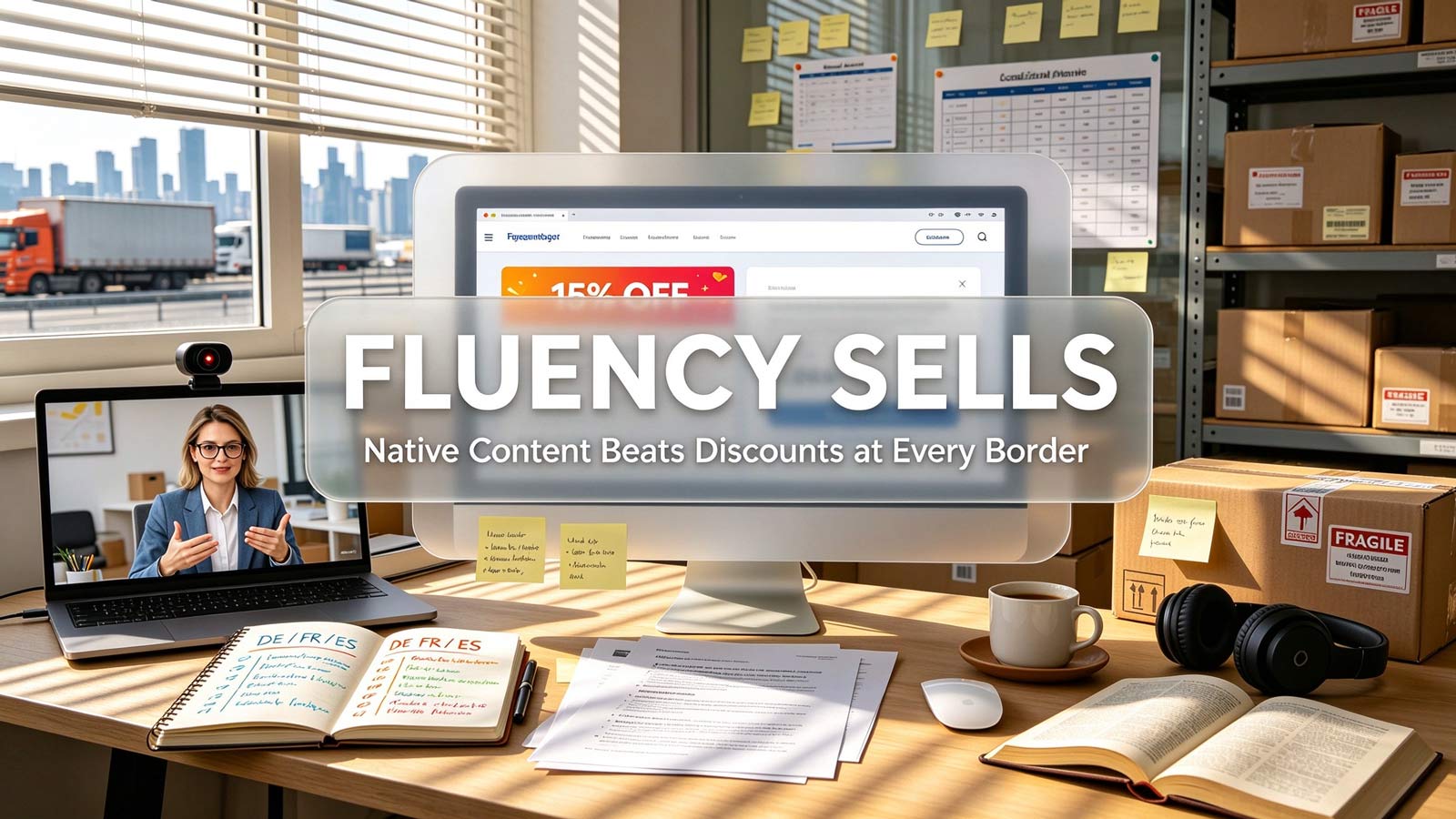
A shopper in Germany finds your store through an ad. The product is right, the price is competitive — but the checkout page is in English, the sizes run in US measurements, and the support link opens a translated FAQ nobody maintains. She leaves. Not because your offer was weak, but because reading it felt like work. In 2026, with cross-border e-commerce more crowded than ever, language has quietly become a conversion lever that outperforms discounting. This article explains why native content now sells more than markdowns, where most sellers get localization wrong, and how to capture the language premium without rebuilding your entire operation.
Why Language Beats Price at the Border
Discounts lower your margin; localization lowers the buyer's effort. That trade matters because effort, not price, is what kills most cross-border conversions. A study by CSA Research found that 75% of consumers prefer to buy products in their native language, and 60% rarely or never buy from English-only websites — even when they speak English. The same research shows 64% consider localized content more trustworthy than price promotions.
The mechanism is simple. Reading in a second language slows decision-making and magnifies every doubt. A shipping policy in fractured English reads like a risk; the same policy in fluent German reads like a promise. Native content removes the cognitive tax of the purchase, which is why it converts shoppers that no 15% coupon could reach. And unlike a discount, the asset appreciates: every localized page, email, and support article keeps working after the campaign ends.
-
Trust transfer: Fluent, locally idiomatic copy signals the store is established in that market, not passively accepting its traffic.
-
Friction removal: Native sizing, currencies, date formats, and address fields cut checkout errors and cart abandonment.
-
Search visibility: Localized keywords put your pages in front of buyers who never search in English at all.
The Hidden Costs of Translation Tools
Many sellers assume a translation widget closes the gap. It does not. Machine-translated product pages produce awkward phrasing that native speakers register instantly — often as a scam signal. Worse, plugins rarely localize what actually drives the decision: return policies, warranty terms, delivery estimates, and error messages at checkout.
The gap shows up in the numbers. Stores that localize only their storefront but not their checkout and post-purchase flow typically see abandonment spike at exactly those steps. Full-funnel localization — from ad creative to order confirmation email — is what separates stores capturing the premium from those paying for traffic that leaks away at the last click.
There is also a subtler cost: brand voice. Translation engines flatten tone. A playful, confident brand can emerge from machine translation as stiff and corporate — or worse, slightly off in a way buyers cannot name but definitely feel. Native content protects not just comprehension but personality, and personality is what turns a one-time border crossing into a repeat customer.
How to Capture the Language Premium
Localization does not require translating everything at once. Sequence it by revenue impact.
-
Start at checkout: Translate payment fields, shipping options, and error messages first — this is where conversion is won or lost.
-
Localize your winners: Full native treatment for the top 20% of products that drive 80% of international revenue beats thin coverage of the entire catalog.
-
Hire native review: Have a native speaker edit machine drafts for idiom and tone. Fluency, not literal accuracy, is what builds trust.
-
Localize proof, not just copy: Translate reviews, answer local questions, and display region-specific testimonials — social proof in the buyer's own language compounds the effect.
-
Adapt, don't just translate: Idioms, humor, and cultural references rarely survive direct translation. Rewrite key messages for the market instead of converting them word by word.
Choose markets deliberately. Entering five languages with 70% coverage undermines the trust you are trying to build; three markets with full-funnel fluency compound it. Watch where your traffic already comes from, where cart abandonment by locale is highest, and start there.
Measuring What Language Delivers
Treat localization as a measurable investment, not a cost center. Track conversion rate by locale before and after native rollout, and watch support tickets from those markets — a drop in "where is my order" inquiries is a direct savings signal. Monitor organic traffic from local-language keywords, which grows as localized pages rank in regional search engines.
Three metrics tell you the premium is real: conversion rate lift by locale, declining support-ticket volume per international order, and growing share of organic sessions from local-language queries. Review them quarterly, and expand localization into the next market only when the current one holds its gains.
Compare the economics honestly. A 10% discount on every international order costs margin forever; localized content is built once and compounds. Stores measuring both usually find the language premium arrives faster — and stays longer — than any promotional lift.
Conclusion
Global buyers have more choices than ever, and they increasingly choose the store that speaks to them directly. Native content converts because it removes effort, builds trust, and reaches customers discounts never touch — while protecting the margin those discounts would have sacrificed. The sellers winning cross-border in 2026 are not the ones shouting the loudest offers. They are the ones writing the clearest sentences, in the buyer's own language, at every step from first click to final delivery.