Introduction
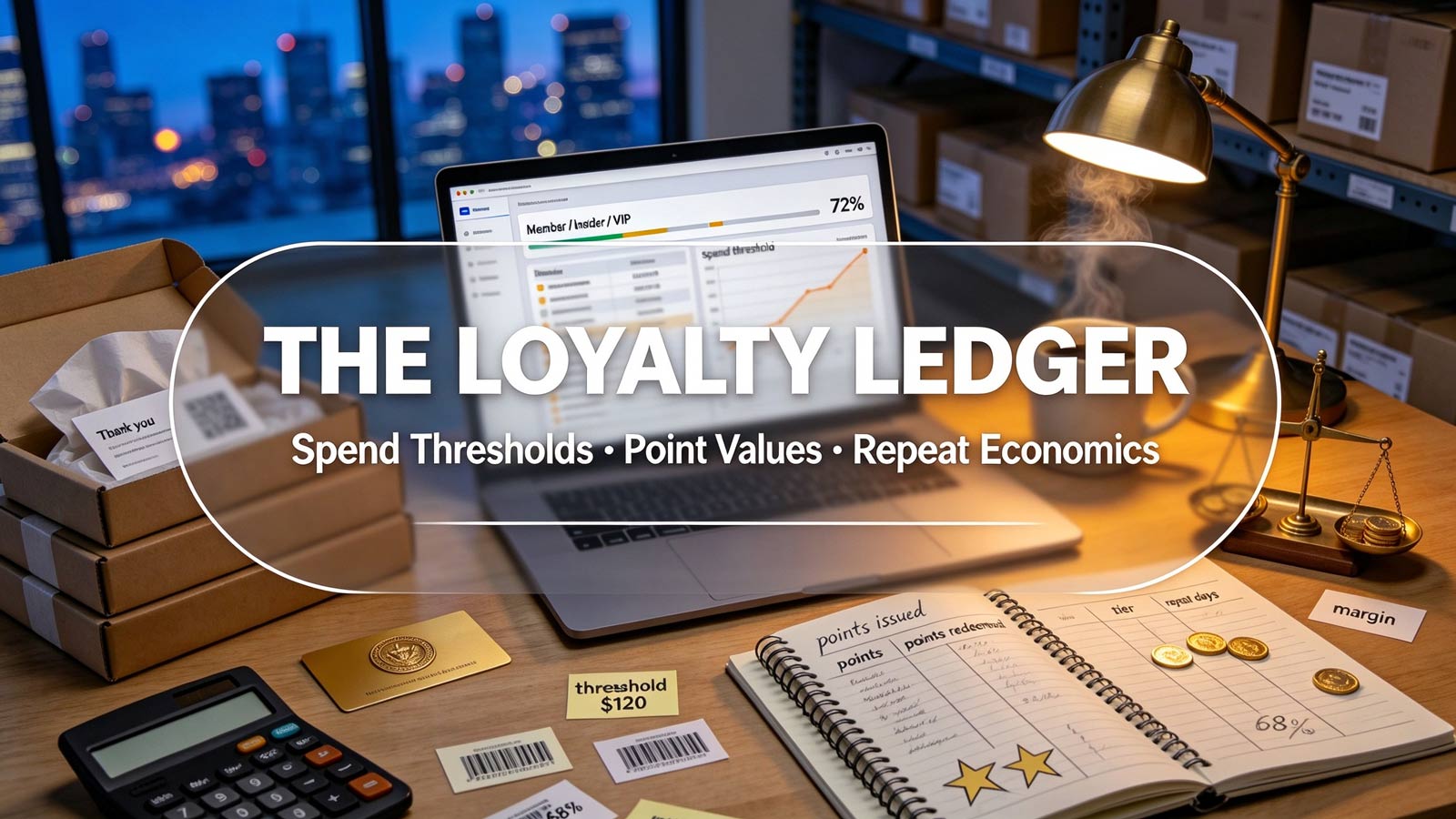
Every store publishes its prices. Few publish the math behind keeping a customer, yet that math is sitting in plain sight inside the loyalty program. Spend thresholds, point values, redemption rates, and tier names form a ledger that records what the store actually believes about its customers: what they are worth, how often they return, and how much margin it is willing to burn to prevent them from leaving. Two stores can sell identical products while running opposite retention strategies, and the difference shows up first in their reward architecture. One store sets a $100 threshold because its repeat customers naturally spend $85 and it wants one more item in the basket. Another sets it at $300 because anything lower would train discount seekers to wait for points instead of paying full price. This article examines how loyalty tiers expose a store's real repeat customer economics, why spend thresholds reveal more than average order value reports, and how to read reward structures as a diagnostic instrument rather than a marketing decoration.
Three Forces That Make Reward Tiers an Economic Ledger
-
Thresholds encode real order behavior. A store does not choose a spend threshold at random. It observes where existing orders cluster and places the threshold just above that cluster, forcing a deliberate decision: add another item or walk away from the points. That placement reveals the store's actual AOV distribution more honestly than any dashboard, because the threshold is a bet on observed behavior, not an aspiration.
-
Point values expose margin tolerance. A program that awards five points per dollar is promising the customer a fixed share of future revenue. The store has already calculated how much margin it can surrender per repeat purchase and still profit. Generous point values signal comfortable margins or retention pressure. Stingy values signal thin margins or confidence that the product itself will drive the return visit.
-
Tier names reveal who the store thinks it serves. "Member," "Insider," and "VIP" describe customer identities. A store whose tiers are named after access and status is selling belonging. A store whose tiers are named after savings and credits is selling transactions. The naming convention predicts which retention levers the store will pull first when growth slows.
What the Loyalty Economics Look Like
The economics of a reward program rest on one trade: predictable margin sacrifice in exchange for a measurable lift in repeat purchase frequency.
-
Average order value: Thresholds set slightly above the natural order cluster typically lift AOV by 8-20% among participating customers, because the points make the extra item feel like a return rather than an expense. The lift is strongest in consumable and replenishment categories where adding one more unit is low-risk.
-
Repeat purchase rate: Well-structured programs commonly move one-time buyers to second purchases 20-40% more often, with the largest effect appearing in the sixty days after the first order. The points function as a stored reason to return, and a reason is exactly what most first-time customers lack.
-
Redemption rate: A healthy program sees 60-80% of issued points eventually redeemed. Lower rates indicate that customers either do not understand the program or have judged the rewards as worthless. Both outcomes damage trust. A point that never converts is a promise the store made and did not keep.
-
Margin structure: Loyalty costs typically consume 2-5% of revenue when the program is disciplined and 8-12% when points are issued faster than repeat behavior justifies. The difference between those two ranges is the difference between a retention tool and a disguised discount channel.
-
Tier concentration: The most revealing metric is where customers sit. When more than 70% of members stall in the lowest tier, the gap between tiers is too wide or the benefits of climbing are invisible. The program is not retaining; it is filtering.
Five Signals a Store's Reward Tiers Are Working as Intended
-
Thresholds sit just above the natural order value. The customer must add something meaningful but small to cross the line. Thresholds far above typical carts are decoration; thresholds below them are giveaways. The correct position is visible in the ledger: one step past where most orders already land.
-
Points expire slowly enough to build, fast enough to matter. Expiry windows of six to twelve months create urgency without punishing occasional buyers. Immediate expiry signals desperation. No expiry at all quietly inflates the store's future liability, because unredeemed points remain a debt on the books until they are used or written off.
-
Higher tiers offer access before discounts. Early product releases, extended return windows, and priority support cost the store little and mean something to the customer. When the only upgrade is a larger percentage off, the program is training its best customers to wait for rewards instead of buying at full price.
-
Redemption is easy to find and complete. A reward that requires three screens, a code, and a minimum cart is a reward designed to go unused. High-performing programs treat redemption as a checkout feature, not a buried account page. Friction at this step converts goodwill into frustration precisely when the customer is most engaged.
-
The program changes customer behavior, not just customer sentiment. The ledger test is simple: compare repeat purchase intervals of members and non-members. If members return faster, the program is economics. If they return at the same speed but report liking the brand more, the program is decoration—and decoration does not survive a margin squeeze.
The New Operational Bar
Reading reward tiers as a ledger is only useful if the store acts on what it finds. Four capabilities separate a disciplined loyalty program from an expensive habit:
-
Threshold calibration: Review actual order distributions every quarter and reposition thresholds where the data cluster sits, not where last year's plan assumed it would. A threshold that made sense at a $62 average cart may be invisible at a $58 one.
-
Point liability management: Track outstanding points as a financial liability, the same way gift card balances are tracked. Issue points against observed repeat behavior, not against every transaction, and avoid inflationary promotions that flood the ledger without changing purchase frequency.
-
Tier benefit design: Build tier upgrades around low-cost, high-perceived-value benefits: shipping upgrades, early access, service priority. Reserve percentage discounts for the lower tiers where the goal is converting first-time buyers into second-time buyers, and wean the highest tier off price cuts as quickly as loyalty is established.
-
Behavioral measurement: Instrument the program so that member and non-member cohorts can be compared on repeat rate, time between orders, and full-price share of revenue. A loyalty program that cannot demonstrate a behavioral difference is a cost center wearing a retention costume.
Conclusion
A loyalty program is often described as a marketing feature, but it functions as an accounting document. Every threshold records where orders cluster. Every point value records how much margin the store will surrender for a return visit. Every tier name records who the store believes its customers are. Read together, these numbers reveal the real repeat customer economics of the business: how much of revenue depends on people already won, how much it costs to keep them, and how much margin disappears when the program drifts from retention into subsidy. Stores that calibrate thresholds against actual order data, manage points as a liability, reward access over discounts at the top, and measure behavior rather than sentiment will keep their ledgers honest. The reward tier was never the prize. It is the record of what the store is willing to pay for loyalty—and whether that price is buying anything at all.