Introduction
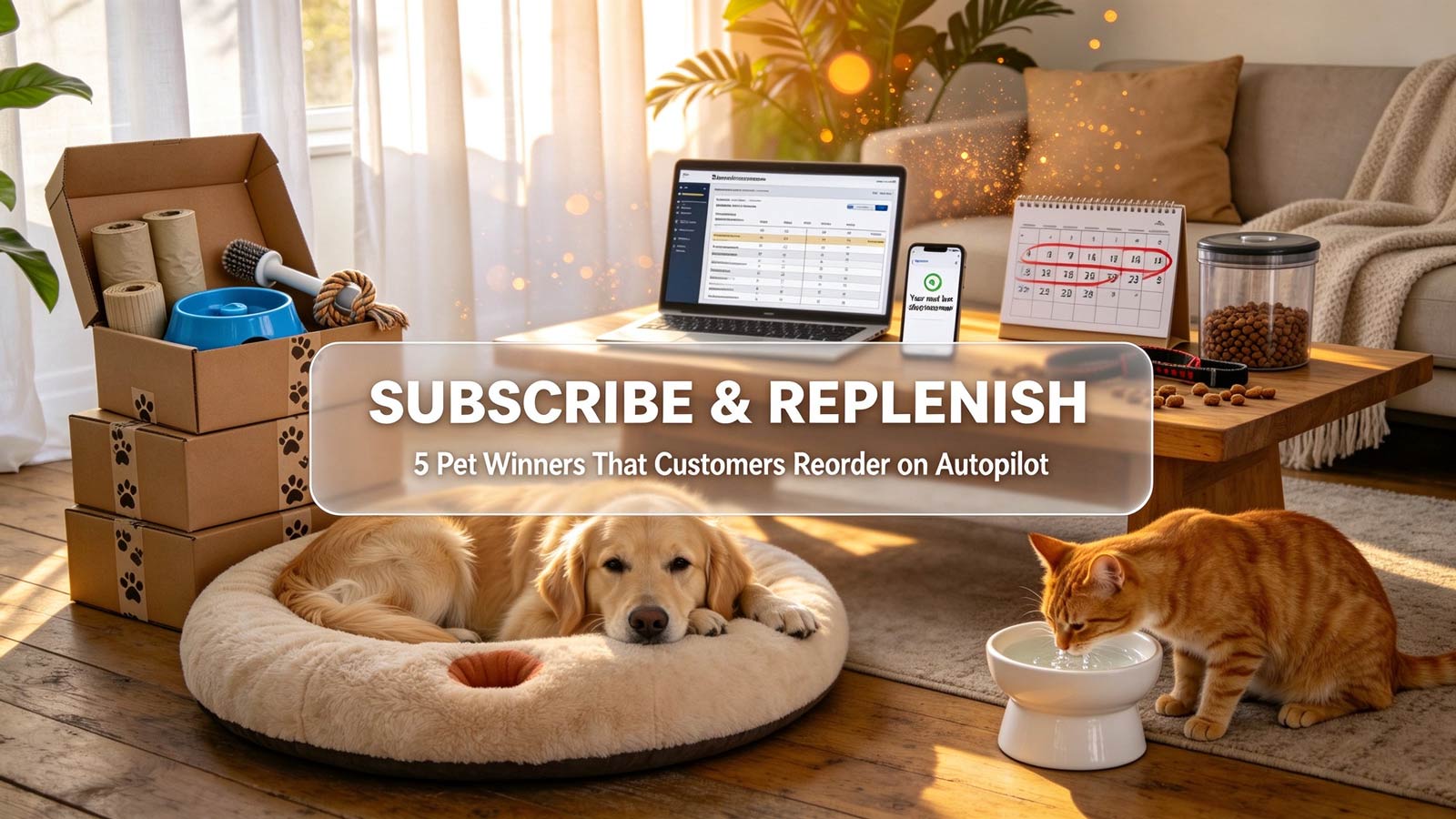
In the ever-competitive e-commerce landscape, converting one-time buyers into loyal, recurring customers is the holy grail of sustainable business growth. While flashy viral products may generate short-term spikes, the real winners are those that create ongoing value, transactions so essential that customers gladly opt into automatic monthly deliveries. The pet category makes this easier than most: American pet owners spent $158 billion in 2025, and 95 million U.S. households now own at least one pet. More importantly for sellers, pet supplies achieve repeat purchase rates of 35-45%, compared with an e-commerce baseline of 25-30%. This article explores five pet product categories that uniquely lend themselves to subscription models due to their consumable nature, pet owner psychology, and practical utility. (All cost and margin figures are industry benchmarks. Always verify quotes with your own suppliers.)
The Psychology Behind Pet Subscription Success
Pet owners exhibit three behavioral traits that make them ideal subscription candidates: emotional spending patterns, aversion to supply disruptions, and proactive care tendencies. Unlike discretionary human purchases where consumers might delay or substitute, pet parents prioritize consistent access to trusted products. Running out of a pet's preferred item feels like a personal failure, not a minor inconvenience.
The convenience factor becomes particularly potent when paired with personalization. Modern pet owners increasingly view their animals as family members deserving customized care, and products framed around the individual pet's breed, age, or habits convert far better than generic replenishment pitches.
-
Recurring Need: Items consumed at predictable rates (waste bags, filters, treats)
-
Performance Trust: Products where brand consistency matters (feeders, calming gear)
-
Emotional Reward: Purchases delivering shared joy and visible comfort
Top 5 Subscription-Ready Pet Product Categories
-
Biodegradable Poop Bags: Every dog owner buys waste bags on a fixed schedule, and that schedule is the business model. With sourcing costs of $2-$4 per 120-count pack and retail prices of $15-$24, margins reach 65-75%. The winning angle isn't the bag; it's the subscription framing. Market it as a "60-day supply" with 15% off autoship, and lead ads with the eco angle ("240 bags = 3 months of guilt-free walks") while the replenishment cycle handles retention.
-
Cat Water Fountains and Replacement Filters: The classic hardware-plus-consumables play, adapted for cats. Fountains source at $8-$15 and retail at $32-$49 (55-65% margin), while replacement filters, needed every 2-4 weeks, source at $0.50-$1 per unit and retail at $12-$19 per 4-pack (80%+ margin). Vets and pet creators constantly push hydration content, giving you free ad angles. Bundle "fountain + 12 filters" at $59.99 to lift AOV, then run replenishment emails timed to filter life.
-
Slow Feeders and Lick Mats: Vets recommend slow feeders for fast eaters, and anxious owners buy on the spot. Emotional trigger plus health justification equals conversion. Sourcing runs $3-$8, retail $19-$35, margins 60-70%. The content hook is built in: film a dog inhaling a bowl in 20 seconds, then working a slow feeder for 15 minutes. That before-and-after clip is your entire ad. Pair feeder, lick mat, and calming spray as a "mealtime anxiety kit" to push AOV from $24.99 to $44.99; silicone wear creates a natural 4-8 month replacement cycle.
-
Calming Beds and Anxiety Relief: Separation anxiety, fireworks, and vet visits make this a year-round problem with a permanently guilty buyer on the other end. Calming beds source at $9-$18 and retail at $45-$79 (55-65% margin). Demand spikes predictably around July 4th, New Year's Eve, and storm season, so build your ad calendar around those events. Offer two sizes to trigger the "one for the car" second purchase, and follow checkout with a 7-day care email series ending in a 20% reorder offer.
-
Reusable Pet Hair Removers: The lint roller is a consumable in disguise, and multi-pet households burn through them. Sourcing costs $2-$5, retail $16-$29, margins 70-80%. Roughly two-thirds of pet product customers never return after a first purchase, so this product fights churn two ways: as a cheap, visual gateway product demonstrable in a 5-second video, and through a refill and brush-head model plus household bundles (couch, car, office) that manufacture second and third orders from one acquisition.
Optimizing Your Subscription Strategy
Successful pet subscriptions transcend simple autoship by delivering ongoing discovery. A native Shopify subscription app and a few operational habits will do it, no warehouse or custom software required. Implement these best practices:
-
Flexible Cadence Controls: Allow customers to adjust delivery frequency as their pet's needs change. Rigid schedules are the top cancellation trigger.
-
Value-Stacked Tiering: Offer add-ons like digital grooming guides or a free toy in the third shipment at premium levels.
-
Replenishment Alerts: Proactive notifications before shipments process reduce skipped cycles, which kill retention silently.
-
Surprise and Delight: A sample treat or handwritten care tip in the first box turns a transaction into a relationship, and relationships don't churn.
Conclusion
The most lucrative pet products transform transactional purchases into enduring care partnerships. By focusing on categories where consistency creates tangible value, whether through health outcomes, convenience, or emotional connection, brands build revenue moats that competitors can't easily breach. Remember: in the subscription economy, you're not selling products monthly; you're earning the privilege to continually solve problems for creatures owners hold dear. If you're sourcing pet products and want to validate competitor performance before spending on ads, ShopFindBiz connects you directly with source factories. Those who master this paradigm won't just capture wallets; they'll capture hearts.