Introduction
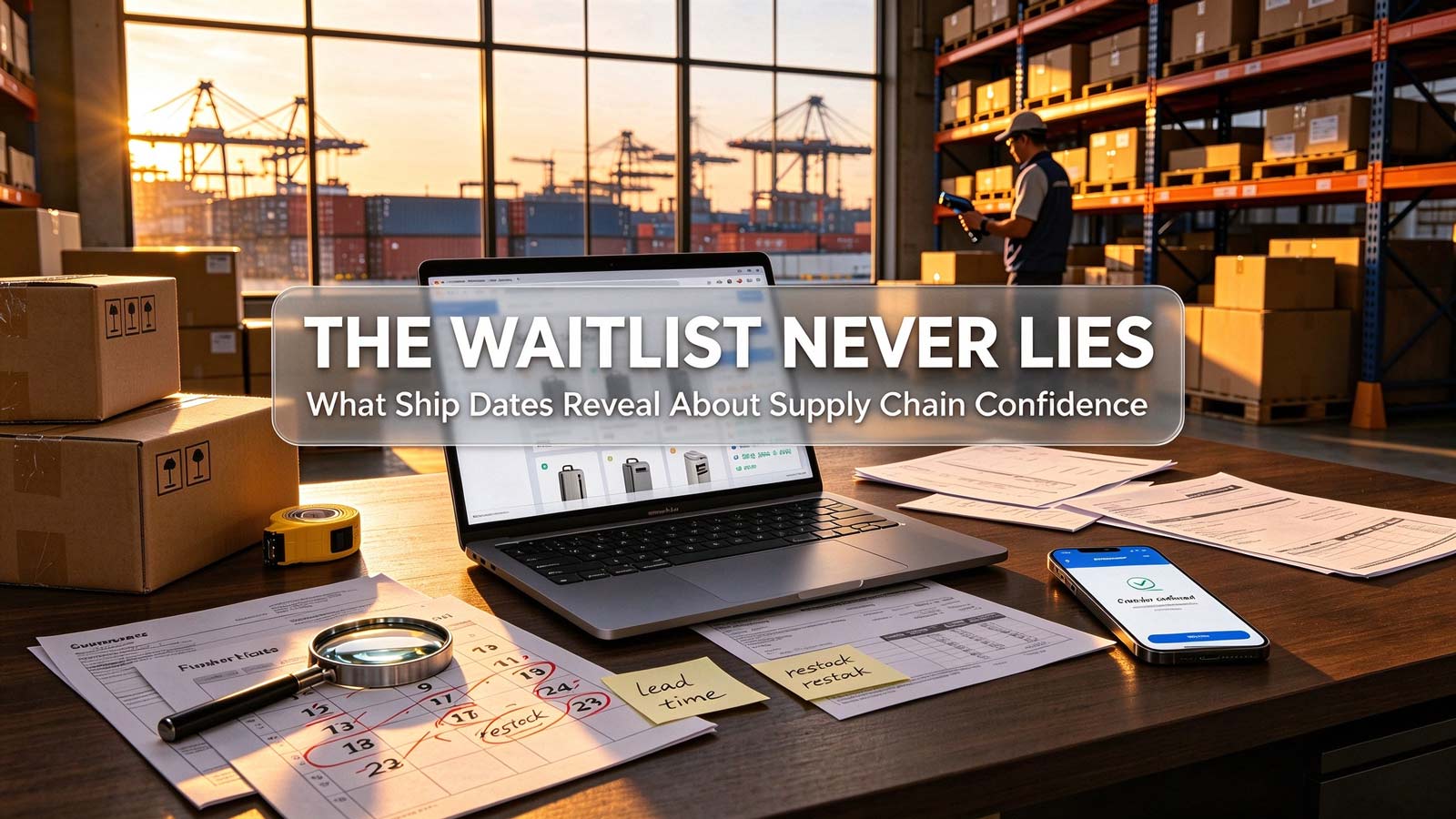
A store opens preorders for a product that does not exist in its warehouse yet. The waitlist fills in forty-eight hours — or it takes six weeks. Either way, the store has just published something its homepage never will: how much confidence it actually has in its own supply chain. As fulfillment delays and inventory risk squeeze e-commerce margins in 2026, preorder timing has become one of the most honest diagnostics available to sellers. This article breaks down what a store's waitlist cadence reveals about its sourcing, cash flow, and operational maturity — and how you can read the same signal in any competitor.
Why Waitlist Timing Is a Supply Chain Signal
A preorder is a loan from your customers. They hand over money today for a promise of delivery tomorrow — and the length of that promise is set entirely by the store's upstream reality. Factories quote lead times, freight adds weeks, and customs adds more. A store offering a two-week delivery window either holds stock locally or has done this rodeo before. A store offering a three-month window is telling you it is ordering against demand it cannot yet fulfill.
The signal is strongest in the gap between marketing push and delivery promise. Aggressive ads paired with distant ship dates mean the store is using preorders to finance production — a classic cash-flow play that works until one supplier slips. Tight windows on repeat launches suggest the opposite: negotiated terms, reserved capacity, and inventory discipline.
-
Short windows, repeat launches: The store has supplier relationships and predictable replenishment cycles.
-
Long windows, heavy promotion: Revenue is funding production, and every delay lands directly on customer trust.
-
Windows that shrink between launches: Operations are maturing — the store is learning its real lead times.
Reading the Preorder Window
The window itself is only half the story. What the store does inside it reveals even more. Watch how ship dates move: a date that slips once is logistics; a date that slips twice is a store that quotes aspiration, not capacity. Check whether the waitlist converts to in-stock sales quickly after launch — fast sell-through after delivery means the store sized demand well and ordered close to the right quantity.
Payment structure is another tell. Full payment upfront signals either strong demand or weak financing. Small deposits signal a store hedging its own risk. Free waitlist sign-ups with no commitment signal demand validation, not sales.
How to Use Preorder Intelligence
You do not need a storefront of your own to read this signal — competitors publish it for free.
-
Benchmark launch cadence: A competitor whose preorder windows shrink every quarter is building supply chain muscle. Match their pace or out-position them on delivery certainty.
-
Price the delay: When a rival sells preorders at full price with long windows, undercutting with in-stock availability at a small premium often wins the sale.
-
Watch for the stall: A store that stops launching preorders entirely may have burned its audience with missed dates — and its customers are looking for a replacement.
-
Track ship-date movement: A single store's shifting delivery estimates across launches is a free supplier-health report for its entire niche.
Measuring What Preorders Predict
To make this diagnostic useful rather than anecdotal, track it like any other metric. Log launch date, promised window, actual ship date, and sell-through speed for every preorder campaign you run or observe. Over two or three cycles, patterns emerge: which product categories tolerate long windows, which customer segments abandon when dates slip, and what refund rate a broken promise actually costs.
Compare the economics honestly. Preorders improve cash conversion cycle and reduce unsold-inventory risk, but they transfer operational risk to the customer relationship. Measure the repeat-purchase rate of preorder buyers against regular buyers — if it lags, your window is too long or your communication too thin.
Conclusion
A store's homepage sells confidence. Its preorder timing proves it. Every waitlist window, ship date, and deposit structure is a public disclosure of sourcing strength, cash position, and operational honesty — for your store and every competitor you track. The stores winning in 2026 are the ones treating preorders not as a sales gimmick but as a supply chain instrument: sized honestly, communicated precisely, and measured relentlessly. Read the signal in others, and make sure yours reads well.