Introduction
The fastest way to lose a customer used to be selling a bad product. The faster way now is selling a good product that becomes useless after one broken hinge, one lost cap, one cracked seal, or one battery that no longer holds charge. The customer does not always blame the original purchase. They blame the category. If replacement feels easier than repair, they replace. If repair feels simple, affordable, and dignified, they come back to the brand that made the original product feel worth keeping.
That shift has created a strange opening. The most durable winners are not always the newest gadgets. They are the small products that make existing gadgets last: replacement blades, seals, cords, feet, lids, batteries, hinges, filters, pads, screens, screws, grips, valves, covers, chargers, and repair kits. These products are easy to underestimate because they look too small to matter. In practice, they sit at the moment when a customer is most emotional and most ready to pay.
A broken product creates urgency. A repair option creates relief. Sellers who understand the difference stop competing only for first purchases and start competing for the second decision: keep it or replace it.
Why Repair Is Becoming a Premium Signal
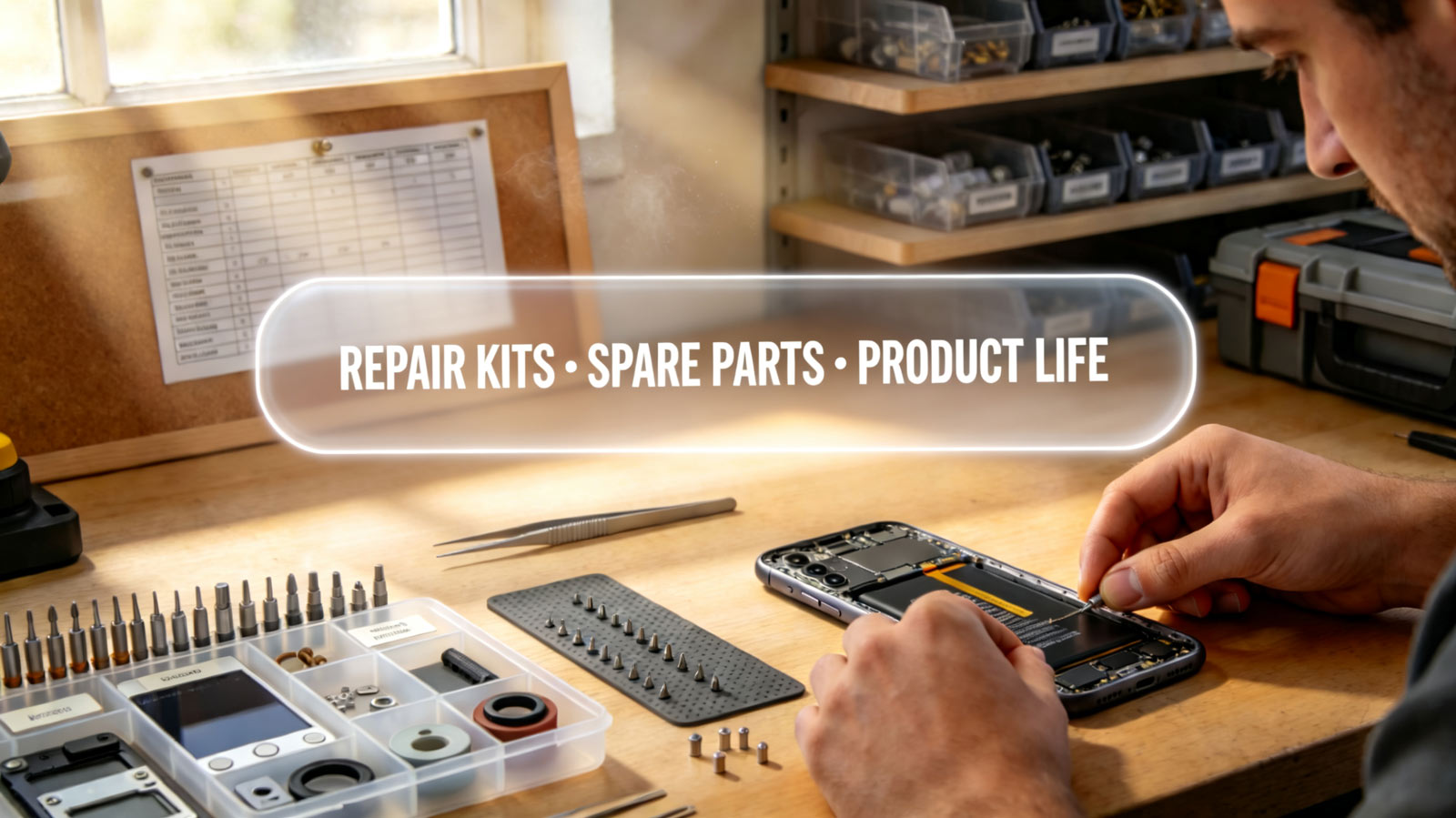
Repair used to signal inconvenience. It meant manuals, tools, technical confidence, and shipping delays. That model is changing because customers now interpret repairability as respect. A brand that offers parts is saying the product was built to last and the buyer was not meant to discard it after a minor failure.
-
Replacement Has Become Expensive: New versions are rarely just replacements. They are upgrades, bundles, and subscriptions wearing the same face. A repair part lets the customer fix the exact problem without paying for features they do not want.
-
Waste Now Has a Visible Cost: Sustainability language is easy to doubt, but repair behavior is concrete. A spare part reduces the number of products entering the trash and gives the claim something physical to stand on.
-
Longevity Builds Trust: When customers know parts exist, the original purchase feels lower risk. That trust can lift conversion before the product is even bought.
-
Small Parts Carry Real Margin: Replacement components are often inexpensive to source, easy to ship, and hard to commoditize when compatibility matters. The winner is not the cheapest part. It is the part that clearly fits and works.
The repair market rewards clarity. A customer does not want a philosophical statement about circularity. They want to know which part fits their model, how hard the fix is, and whether the result will feel like the product again.
The Broken Product Moment
The best repair products are found at the point of failure, not in a trend list. A person with a leaking bottle does not search “premium hydration accessory.” They search “replace lid,” “stop leak,” “seal ring,” or the product name plus “fix.” A person with a flickering lamp searches for the exact driver, switch, cord, or bulb holder. The search is narrow, impatient, and highly monetizable.
-
Search Becomes Specific: Repair queries carry model numbers, dimensions, photos, and error language. That specificity is a gift. It tells the seller exactly what the customer owns and what went wrong.
-
Urgency Is Already Present: The customer is not browsing. They are trying to restore something they use. Conversion is often faster than for discretionary products.
-
Failure Creates Attachment: A product that breaks after six months may still be loved. Repair lets the customer keep the version they already understand.
-
The Competitor Is Often Silence: Many stores sell the original item and ignore the afterlife. That silence creates a marketplace gap for parts, kits, tools, and guides.
The winning repair product does not need to be glamorous. It needs to arrive with confidence, fit as promised, and remove the embarrassment of being stuck with a broken thing.
What Makes a Repair SKU Win
Not every spare part deserves inventory. The best ones share a pattern.
-
The Failure Is Common: Look for repeated complaints that are narrow and mechanical: cracked, loose, missing, worn, bent, leaking, not charging, not sealing. Broad dissatisfaction is hard to fix. Mechanical failure is often fixable.
-
The Fix Is Explainable: If the repair can be shown in three steps, the product can be sold with confidence. If it requires specialized skill, the opportunity shifts toward service rather than parts.
-
The Part Is Identifiable: Compatibility is the whole game. Clear model matching, measurements, photos, and “does not fit” warnings reduce returns and increase trust.
-
The Customer Can Verify Success: A new seal stops the leak. A new blade restores the cut. A new battery brings the device back. Immediate proof creates reviews that sell the next part.
-
The Brand Can Build Around It: One successful repair can introduce refill filters, upgrade accessories, protective cases, tools, and maintenance kits. The part becomes an entry point into a longer relationship.
This is where the premium appears. Customers pay more when the part saves them from replacing the whole product, when instructions reduce fear, and when compatibility removes guesswork. The value is not only material. It is certainty.
How Sellers Find These Winners
Repair demand hides in plain sight. It sits inside reviews, support tickets, returns, warranty claims, comment sections, and competitor product pages.
-
Mine Returns for Mechanical Failure: “Arrived broken” is logistics. “Stopped working after two months” is often a fixable component. Separate the two.
-
Read Reviews for Repair Language: Customers volunteer exact failure points when they complain. They name the hinge, zipper, lid, seal, strap, tip, pad, blade, socket, or cable.
-
Check Search Suggestions: Autocomplete reveals the exact phrases people use when something breaks. These phrases are often more specific than category keywords.
-
Study Competitor Silence: If a competitor sells a complex product but offers no parts, the after-sale market is open. Their missing support page becomes your product roadmap.
-
Bundle the Fix: The winning offer may include the part, the tool, the guide, and a cleaning step. Repair customers buy confidence, not components.
The goal is to treat breakage as research. Every failure is a message from the market explaining what people want to keep.
The Store That Sells Repair Wins Differently
A repair-first catalog changes the economics of a store. Instead of depending only on new customer acquisition, the store earns from existing owners, repeat failures, preventive maintenance, upgrades, and trust.
-
Lower Pressure on Ads: Repair traffic arrives with intent. The customer already owns the product and needs the solution.
-
Higher Review Quality: Successful fixes produce grateful, specific reviews. Those reviews reduce doubt for the next buyer.
-
Better Customer Memory: A brand that saves a product from the trash is remembered differently from a brand that merely sold it.
-
More Honest Product Development: Parts sales reveal which failures repeat. That feedback improves the next version.
The repair premium is not about making products break. It is about respecting what happens after they do. In a market trained to chase novelty, the seller who helps customers keep what works is selling something rarer than newness: continuity.
Conclusion
Repair products win because they solve a problem customers already feel. They turn frustration into relief, waste into retention, and a broken object back into a trusted tool. The opportunity is hiding in reviews, returns, searches, and support tickets, repeated every day by people who want their purchase to last. Sellers who source the right part, prove compatibility, explain the fix, and respect the moment of failure are not just selling spare components. They are selling a reason to stay. In 2026, the premium belongs to products that make replacement feel unnecessary.