Introduction
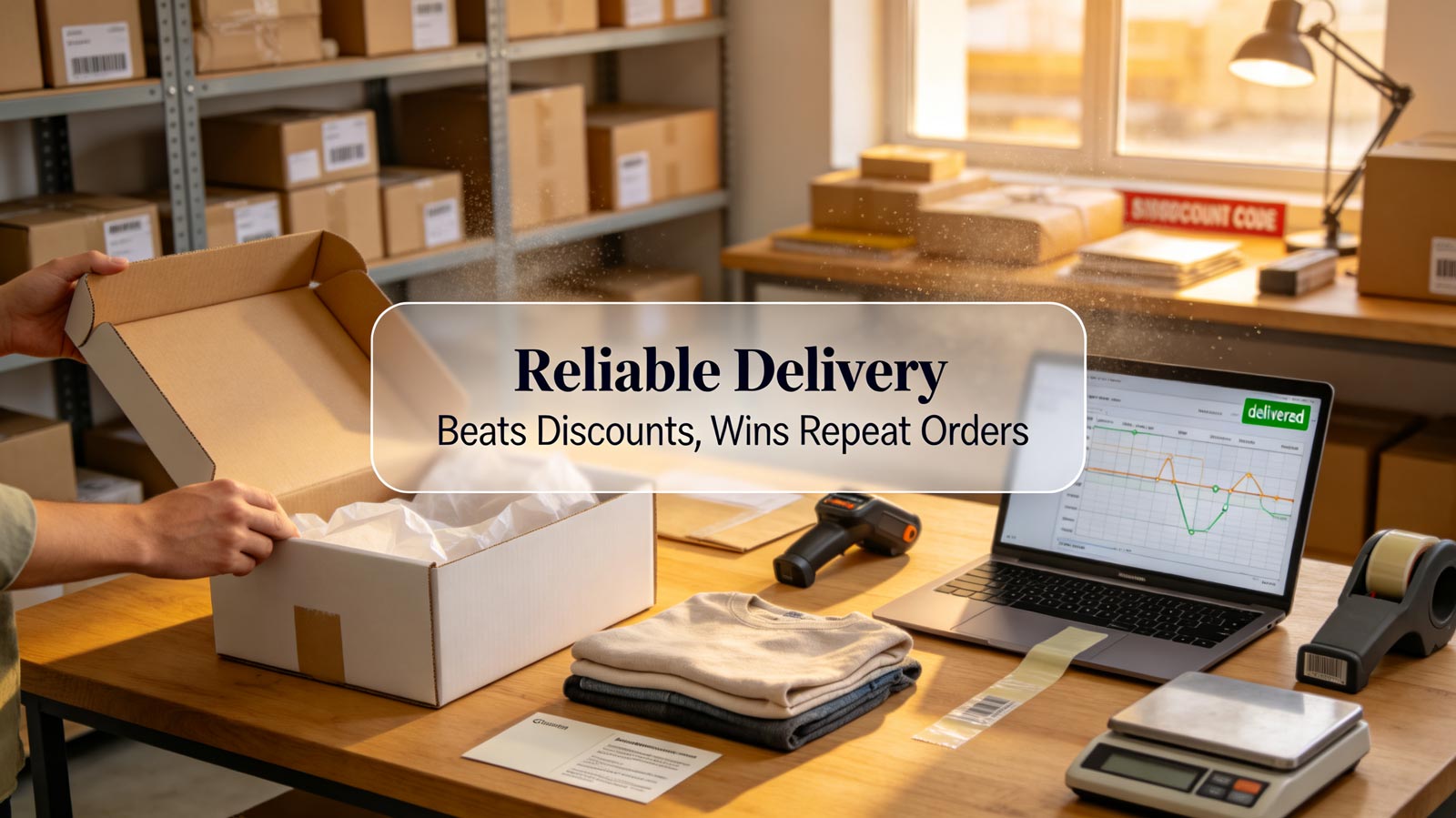
A discount can convince a stranger to buy once. It rarely convinces them to buy again. After the first order, the customer is no longer comparing your price against an ad; they are comparing your promise against reality. Did the package arrive when you said it would? Did tracking make sense before it got there? Did the box open cleanly? Was the return path obvious? Those moments decide whether the first purchase becomes a habit or a cautionary review. The retailers that win repeat business are not always the ones with the deepest coupons. They are the ones that make fulfillment feel certain.
The Delivery Promise Is the Real Offer
Every online store makes two promises. The first is the product promise: this item will solve a problem, fit a need, or deliver a feeling. The second is the logistics promise: it will reach the customer intact, on time, and without turning the buyer into a support ticket. The product promise gets the sale, but the logistics promise sets the emotional price of the next one.
Shoppers forgive a plain box. They rarely forgive a broken promise. A missed delivery window is not experienced as a courier failure; it is experienced as a breach of trust. Suddenly the customer is not remembering the discount that brought them in. They are remembering the day they waited around, the vague tracking scan, and the refund they had to request. Reliability is the part of the offer that must be boring. When delivery works, it disappears. When it fails, it becomes the whole story.
The strongest delivery promises share a few traits:
-
Clarity: the customer knows the cutoff time, the expected date range, and what happens if the estimate slips.
-
Visibility: tracking updates arrive before the customer feels the need to ask.
-
Control: delivery options and address changes are easy while the order is still movable.
-
Accountability: exceptions trigger proactive messages, not silence.
None of these require luxury packaging or premium shipping on every order. They require a store to treat the delivery window as part of the product, not as a back-office afterthought.
Why Experience Compounds and Discounts Fade
Discounts have a half-life. A 15% code feels exciting for minutes and irrelevant by the next campaign. Worse, frequent discounts teach customers to wait. If the first order was easy to defer until a coupon appeared, the second order usually waits too. Discounting trains the customer to compare you against your own promotions.
Delivery experience works in the opposite direction. It compounds. A reliable first order lowers the perceived risk of the second. The customer has proof that your store does what it says, so the next purchase requires less research, less hesitation, and less incentive. A good unboxing moment adds memory to that proof. It turns an abstract merchant into a physical thing the customer held, opened, used, and maybe photographed.
The economics are simple even when the execution is not. A discount changes the price of the next conversion. A reliable delivery experience changes the conversion rate itself. One reduces margin on demand the store may already have earned. The other increases the probability that demand comes back without being bought again.
This is why fulfillment should be read as a retention asset rather than a cost center. Support teams already know this: many delivery problems are not ultimately about the package. They are about uncertainty. Customers can handle a delay if they understand it. They struggle with a silent one. The most valuable message in e-commerce is often not “your order shipped.” It is “we know where your order is, and here is what happens next.”
The Unboxing Moment: Where the Brand Becomes Physical
Online retail has a strange problem: the brand is experienced before it is touched. The customer sees photos, reads claims, watches a video, and imagines the product. Then the physical object arrives inside a box, and the brand finally has a body. That box is not packaging around the product. For a few seconds, it is the product.
The unboxing moment works when it answers four questions without asking the customer to think. Is this the right item? Is it undamaged? Is it easy to open without destroying what I might need to return? Does the store seem competent in the small details? Premium tissue paper and branded tape can help, but they are not the point. A clean insert, clear care instructions, an obvious return label, and a package sized to the item often create more confidence than luxury extras.
Packaging also carries information competitors can read. Review photos show whether a store uses excessive void fill, whether fragile items are protected, whether garments arrive wrinkled, and whether electronics are secured properly. Repeated mentions of “smaller than expected,” “arrived dented,” or “return instructions were buried” are not cosmetic complaints. They are signals about the cost of trusting the store again.
The best unboxing experience is not the most theatrical one. It is the one that reduces doubt fastest. A customer who opens the box and immediately understands what they bought, how to use it, how to care for it, and how to send it back is a customer whose next decision got easier.
Reading the Signals From Any Store
For analysts and operators, the first-order experience is visible if you know where to look. The storefront tells you what the store wants to emphasize. The delivery experience tells you whether the store can keep its promises. Work through the same four passes on competitors or your own operation.
-
Promise audit: compare stated shipping times with review language. If the site says “fast” but reviews keep mentioning “late,” the gap is the story.
-
Failure audit: cluster negative reviews around courier, packaging, damage, and returns. Repeated wording around the same failure points to a process problem, not a few unlucky orders.
-
Packaging intelligence: use customer photos to assess right-sizing, protection, inserts, and presentation. Packaging is one of the few operational details customers voluntarily document.
-
Return friction: read reviews for the return journey. Easy returns are rarely praised loudly, but difficult returns are remembered in detail.
The point is not to copy a competitor’s box. It is to identify which stores convert fulfillment into trust and which ones treat it as a cost to be squeezed. The first group gets repeat orders with fewer incentives. The second group keeps buying demand back with discounts.
Best Practices for Making Fulfillment a Growth Asset
Start by making the promise smaller if necessary. An accurate three-to-five-day window usually beats an optimistic two-day window that occasionally becomes six. Reliability creates expectations customers can plan around. Optimism creates exceptions they have to manage.
Then invest in exception communication before investing in more branded inserts. Customers often care more about knowing than about speed. A delayed order with a clear update can retain goodwill. A delayed order with silence usually cannot.
Design packaging for the second order, not only the first. That means protecting the product, opening cleanly, storing easily if needed, and making returns straightforward. A reorder cue can help, but it should not feel like a flyer begging for attention. The most persuasive reminder is the product itself arriving exactly as expected.
Finally, measure what happens after the box. Track repeat purchase intervals, delivery-related support tickets, damage claims, return initiation, return completion time, and review language that mentions shipping or packaging. Tie those signals to cohorts, not only campaigns. A promotion can make a week look good. Fulfillment quality shows up in whether the same customers are still there a month later.
Conclusion
Discounts are loud and short-lived. Delivery experience is quiet and cumulative. After the first online purchase, shoppers are not really asking whether they saved money. They are asking whether the store made life easier or created one more thing to manage. The box is where that question gets answered. Retailers that treat the delivery promise as part of the product do not have to repurchase every customer with a coupon. They let the first order prove the second one is safe.