Introduction
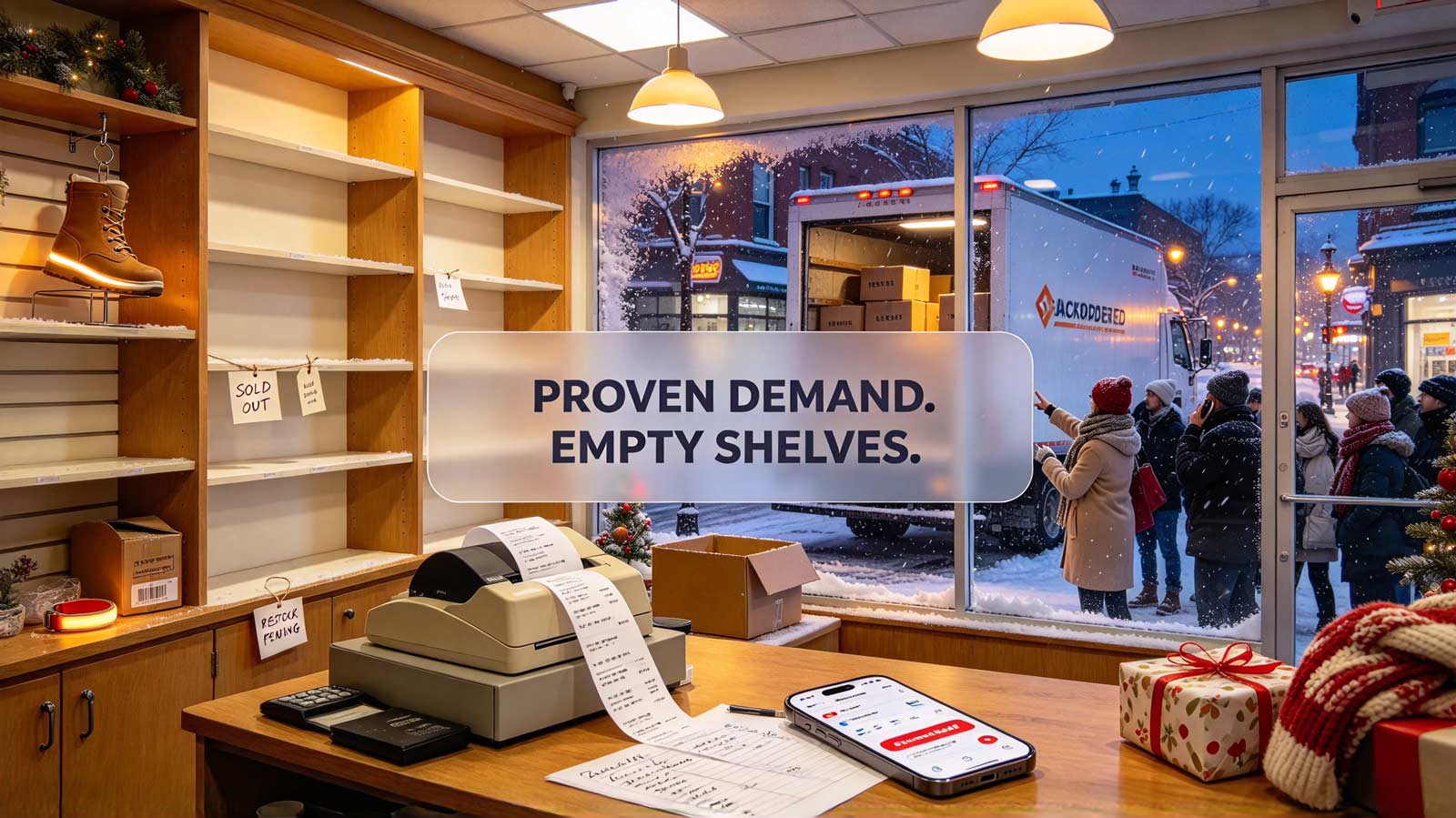
Every dropshipper refreshes the same trend reports, watches the same viral product videos, and ends up bidding on the same ten items. The result is predictable: a race to the bottom on price within weeks of a product's peak. Yet some of the most durable winners are never on those lists at all — they reveal themselves in a different place entirely: the gap between what buyers want and what the market actually stocks. Sold-out bestsellers, three-week shipping estimates, forum threads full of unmet requests — these are supply signals, not noise. Products sourced from supply gaps face thin competition from day one, because the gap itself is the moat. This article breaks down what supply-gap sourcing looks like in practice, five places these gaps hide, and how to turn them into listings competitors can't easily copy.
The Supply-Gap Sourcing Phenomenon
Trend-based sourcing starts from demand that's already visible — which means it's already crowded. Supply-gap sourcing starts from demand that's proven but unserved, a fundamentally weaker competitive position for everyone except the first seller to arrive. Three forces make these gaps persist:
-
Assortment blind spots: Big sellers optimize for broad appeal and ignore niche combinations — a product that serves two specific needs at once rarely fits any retailer's standard taxonomy.
-
Logistics friction: Items that are bulky, fragile, or certification-heavy get skipped by trend-chasers, leaving proven demand to whoever tolerates the paperwork.
-
Slow incumbent response: When a gap is filled by a small player, large retailers take months to react — enough time for an early dropshipper to own the search results and reviews.
The compounding advantage is timing. A product entered via a supply gap reaches profitability before the trend reports ever mention it, and by then, rankings and review volume are already defense.
Top 5 Places Supply Gaps Hide
Five signals recur across successful supply-gap finds — each undervalued for a specific, fixable reason.
1. "Currently unavailable" on bestseller pages
Amazon's Best Sellers pages are public, and the #1–#5 slots in niche subcategories periodically go dark. An unavailable bestseller is proven demand with zero active supply — the purest gap that exists.
-
Why sellers miss it: They read bestseller pages as "taken," not as temporary vacancies. A listing ranked #1 with no inventory is an open door, not a wall.
-
Margin tip: Reproduce the product with one visible improvement (better materials, an added accessory) so your listing inherits the demand narrative while standing apart from the original.
2. Shipping-time outliers
Sort a niche by bestseller and you'll often find the top three results quoting 15–30 day delivery. Buyers clicking "Buy Now" anyway are telling you they'd pay for faster fulfillment.
-
Why sellers miss it: Long shipping reads as a red flag to source elsewhere, when it's actually the demand signal — buyers are accepting the delay because nothing better exists.
-
Margin tip: A US or EU warehouse placement on a product like this justifies a 30–40% price premium over the slow-shipping incumbent.
3. Forum and subreddit wish threads
Niche communities publish sourcing briefs for free. Recurring "does anyone know where to find X" threads — especially ones with hundreds of upvotes and no good answer — are validated product requests.
-
Why sellers miss it: Forums feel like marketing channels, not research tools. Sellers post there to promote and leave, never reading the wish lists the community maintains on their behalf.
-
Margin tip: The thread itself becomes your launch content — answer it with your product, then screenshot the exchange (with permission) as social proof.
4. Bundles the market hasn't formalized
Watch co-purchase data ("frequently bought together") in a niche. When two items are consistently paired but nobody sells them as one SKU, the bundle is the product — and it carries a convenience premium.
-
Why sellers miss it: Bundling looks like a pricing tactic rather than a product, so it never gets the listing investment a "real" new product would.
-
Margin tip: Price the bundle at 90% of the two items' combined cost — buyers perceive a deal while your margin per order climbs.
5. Regional category vacuums
Products mainstream in one market (Japanese storage solutions, German garden tools, Nordic baby gear) often have no dedicated presence in another. The demand travels with cultural trends; the supply doesn't.
-
Why sellers miss it: Sellers search domestic marketplaces for gaps, never considering that an entire proven category could be missing from their market entirely.
-
Margin tip: Localize the listing copy and sizing/usage conventions to the target market — the gap closes fastest for whoever translates first.
Validation burden: Manageable across all five. Every gap above is validated by existing demand behavior — purchases, accepted shipping times, community upvotes — not by forecasting. You're confirming supply, not guessing demand.
Marketing Strategies for Supply-Gap Products
Supply-gap products don't compete on trend traffic; they convert on relevance and scarcity. Three approaches work consistently:
-
Search-term ownership: Gaps often come with low-competition keywords the original product never optimized for. Build listings around the exact phrases buyers use in wish threads and review complaints — these convert at multiples of generic head terms.
-
Scarcity without gimmicks: A genuine gap lets you say "the only X that does Y" truthfully. Use it in headlines and ad copy — this is positioning, not fake urgency, and it survives ad-platform policy reviews.
-
Community-first launches: Introduce the product where the demand was found — the subreddit, the Facebook group, the forum thread. Early adopters from the gap's own community become review engines and word-of-mouth that trend-chasers can't replicate with ad spend.
Inventory and Fulfillment Considerations
Supply-gap products reward decisiveness and punish hesitation — the gap won't stay open indefinitely.
-
Move before the gap closes. A visible gap invites competitors on the same timeline you found it. Order test inventory immediately after validation; "waiting for a better price" is how second-to-market happens.
-
Protect the listing moat. Once ranked, invest in review velocity and content depth (comparison charts, usage guides) so that when copycats arrive, your listing is the established answer — the gap's first filler holds an advantage that compounds.
-
Scale with the signal, not the forecast. Expand inventory when the original gap indicators (sold-out incumbents, shipping-time complaints) persist or widen — not against a spreadsheet projection. The gap itself is your demand dashboard.
-
Prepare for the gap to close. Have the adjacent product ready — the improved version, the bundle extension, the next subcategory — so revenue rolls forward instead of collapsing when competitors eventually arrive.
Conclusion
Supply gaps are the most underexploited sourcing signal in dropshipping because they require reading the market's failures — stockouts, delays, unanswered requests — instead of its successes. The five gap types above repeat across every category, every season, for the same reasons: big sellers overlook niches, trend-chasers avoid friction, and incumbents react slowly. Sellers who learn to find demand where the shelves are empty enter markets with no price war to fight, no trend cycle to time, and a moat measured in months of uncontested sales. Trend reports tell everyone the same story at the same time. Empty shelves tell you a story nobody else has heard yet.