Introduction
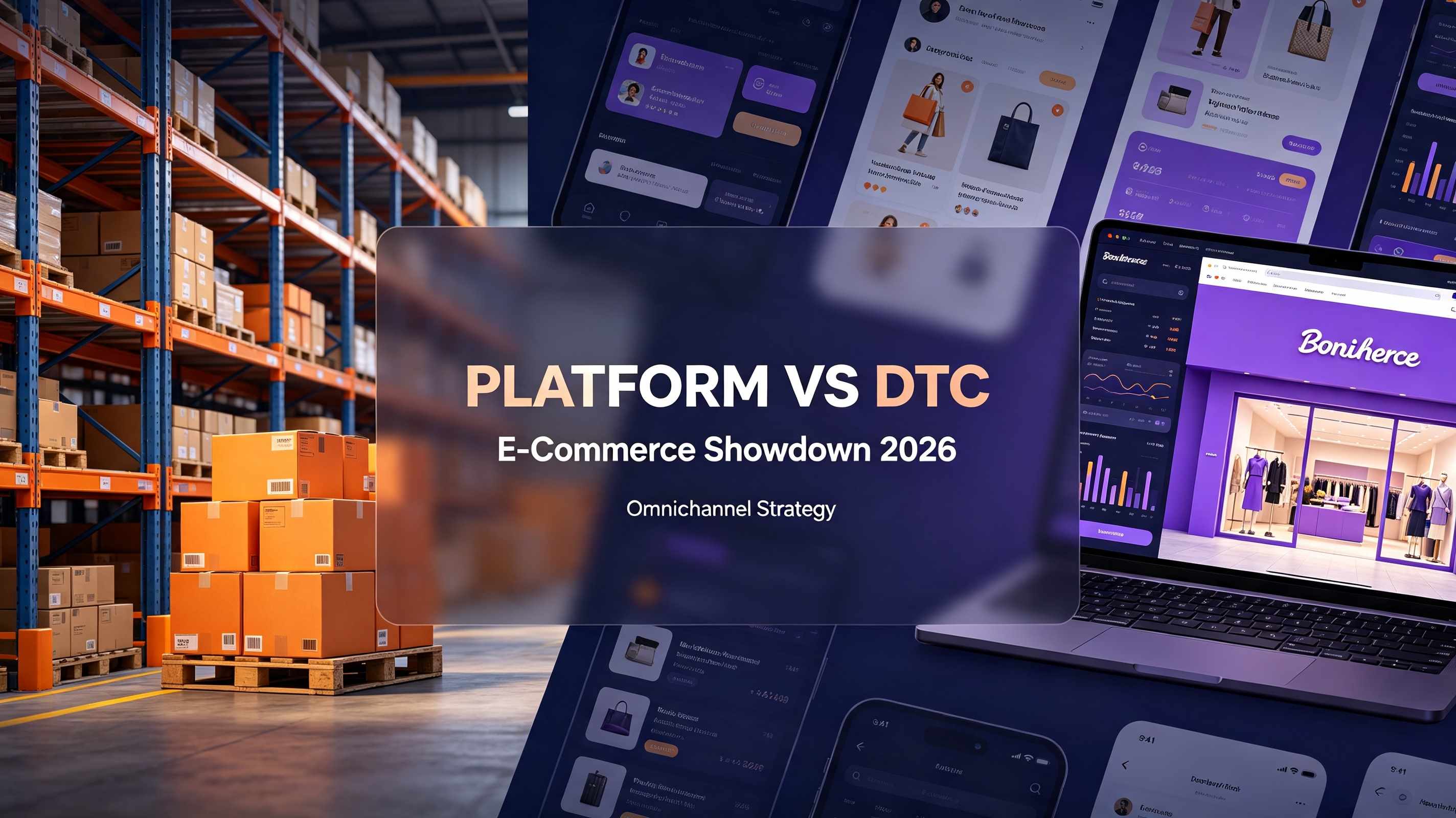
The e-commerce competitive landscape in 2026 is staging an ultimate showdown between “platform hegemony” and “DTC rebellion.” On one side, Shopify’s 2026 GMV reached 378.4 billion US dollars, representing the continued growth of the independent store ecosystem; on the other, Amazon’s 2024 net sales of 638 billion US dollars demonstrate the crushing scale of the platform giant. When Amazon’s Haul low-price channel achieved 2 billion US dollars in GMV shortly after launch, and when TikTok Shop and Instagram Shopping compressed the purchase path to within 3 steps, independent store sellers face not the simple choice of “whether to join platforms” but the strategic challenge of “how to find the optimal solution in multi-channel competition.”
Core Capability Comparison: Platforms vs Independent Stores
Amazon’s core advantages are built on four pillars: traffic scale, Prime member loyalty, logistics infrastructure (FBA), and trust endorsement. Amazon’s 2024 net sales of 638 billion US dollars make it one of the world’s largest e-commerce traffic entry points. The Prime membership system creates extremely high user stickiness and repurchase rates, the FBA logistics network ensures ultimate delivery experiences, and the Amazon brand’s inherent trust in consumers’ minds provides sellers with natural conversion endorsement. These advantages make Amazon an efficient channel for new product cold-starts and scaled sales.
The core advantages of independent stores lie in four dimensions: data ownership, brand asset accumulation, pricing autonomy, and direct customer relationship control. Unlike the “rented traffic” model on platforms, independent store sellers own complete user behavior data, purchase data, and contact information, enabling them to build private traffic pools and user lifecycle management systems. Brand asset accumulation frees sellers from the constraints of “platform shelves,” establishing independent brand awareness and user loyalty. Pricing autonomy means sellers can flexibly develop pricing strategies without compromising on platform commissions and price wars. Direct customer relationship control enables sellers to implement refined operations and personalized marketing to maximize user lifetime value.
Multiple Challenges Facing Independent Stores
However, the advantages of independent stores do not come without costs. The core challenges facing independent store sellers in 2026 include continuously rising traffic acquisition costs, the profound impact of iOS privacy policies on ad tracking, and ongoing platform commission increases. Rising traffic acquisition costs stem from intensified competition for social media and search engine ad placements, with year-over-year increases in CPC and CPM continually reducing independent stores’ customer acquisition efficiency. Changes in iOS privacy policies have fundamentally undermined the precise targeting capabilities of digital advertising, creating structural pressure on independent store sellers’ advertising ROI.
Meanwhile, platform commission increases are also squeezing sellers’ profit margins. Platforms like Amazon have been incrementally raising commission rates and FBA fees across various categories, continually narrowing sellers’ actual profit margins. This “pincer attack” dilemma is forcing more and more brands to rethink their channel strategies: continue to “trade volume for profit” on platforms, or “trade brand for premium” on independent stores?
Dual-Channel Strategy Becomes the Mainstream Choice
Faced with the respective advantages and challenges of platforms and independent stores, an increasing number of brands are choosing an “Amazon plus independent store” dual-channel strategy. The core logic of this strategy is to use Amazon’s traffic scale and trust endorsement for new product cold-starts and scaled sales, while using independent stores to accumulate brand assets and user data to build long-term competitiveness. The key to the dual-channel strategy lies in clearly defining each channel’s positioning: Amazon as the “customer acquisition channel” responsible for acquisition and conversion, and independent stores as the “brand stronghold” responsible for retention and repurchase.
The development trajectory of DTC brands also confirms the necessity of dual- channel strategies. Formerly pure-online DTC brands such as Warby Parker and Glossier have transitioned from pure online to omnichannel deployment, building more complete brand experiences and user touchpoints through the synergy of physical stores and online independent stores. This transformation indicates that the pure-online DTC model, under the pressures of high traffic costs and upgrading consumer experience demands, can no longer sustain brands’ long-term growth.
Social Commerce: The Third Pole Reshaping the Competitive Landscape
The biggest variable in the 2026 e-commerce competitive landscape is the rise of social commerce platforms. Social commerce platforms such as TikTok Shop and Instagram Shopping are changing the binary opposition of “platform vs independent store,” becoming the “third pole” in competition. Social commerce platforms, by integrating payment, logistics, and after-sales processes, have compressed the purchase path from 6 steps to within 3 steps, enabling consumers to complete purchases directly in the content discovery scenario without jumping to independent stores or e-commerce platforms.
The implication of social commerce’s rise for independent store sellers is that future e-commerce channel deployment is no longer an “either-or” choice between “platform or independent store” but a “trinity” of “platform plus independent store plus social commerce.” Social commerce platforms serve as both new channels for traffic acquisition and new scenarios for brand building and user interaction. For independent store sellers, incorporating social commerce into the overall channel matrix, driving traffic through content, building trust through social interaction, and completing conversions through platform transactions can build a more efficient consumer journey. Consumers no longer distinguish “where to buy” and only care about “what to buy” and “how to buy most conveniently,” meaning the core of channel strategy is no longer “channel selection” but “experience consistency.”
ShopFindBiz Perspective: Optimizing Channel Strategy with Competitive Intelligence
In the three-way game of platforms, independent stores, and social commerce in 2026, ShopFindBiz provides Shopify independent store sellers with a critical data weapon. By using ShopFindBiz to analyze competitors’ product structures, pricing strategies, and social media performance, sellers can quickly understand leading peer sellers’ channel deployment strategies. For example, analyzing competitors’ product differentiation strategies across Amazon and independent stores can provide reference for their own dual-channel pricing and product selection; analyzing competitors’ content strategies on TikTok Shop and Instagram Shopping can optimize their own social commerce deployment. In an era where consumers “no longer distinguish where to buy,” whoever can provide the most convenient and consistent shopping experience will win the market. ShopFindBiz’s 3-second competitive analysis capability is the key tool for independent store sellers to maintain agile decision-making in multi-channel competition.
Final Thoughts
The 2026 Amazon vs independent store showdown is essentially not a “who replaces whom” zero-sum game but a “who can better satisfy consumers” experience competition. The parallel progress of Shopify’s 378.4 billion US dollars GMV and Amazon’s 638 billion US dollars net sales proves that platforms and independent stores each have irreplaceable value. The rise of social commerce adds new dimensions to this showdown. For cross-border e-commerce sellers, the path to victory in the future lies not in betting on a single channel but in building an omnichannel matrix of “platform scaling plus independent store branding plus social commerce content,” providing seamless, convenient, and consistent shopping experiences at every consumer touchpoint.