Introduction
Buy Now Pay Later (BNPL) has moved from checkout extra to conversion essential. As we move through 2026, flexible payment options are no longer a niche perk—they're reshaping how shoppers evaluate every purchase above $100. The first half of 2026 delivered hard data on how Buy Now Pay Later reshaped e-commerce conversion rates, which shopper segments drive adoption, and what the numbers mean for your Q4 checkout strategy.
The Rise of Buy Now Pay Later: A Conversion Rate Revolution
Between 2022 and 2026, Buy Now Pay Later adoption grew at an unprecedented rate, with global transaction volume increasing by 385%, according to industry payment reports. This surge wasn't merely about payment flexibility—it represented a fundamental shift in how consumers approach online purchases. Psychological studies revealed that removing upfront cost barriers significantly reduces cart abandonment, with merchants reporting 30-45% higher conversion rates when offering Buy Now Pay Later options at checkout. The method particularly resonated with younger shoppers: 68% of Millennials and Gen Z prefer Buy Now Pay Later over credit cards for purchases above $100.
The conversion boost stems from four psychological factors:
- Reduced pain of payment: Splitting costs into installments minimizes the immediate financial impact
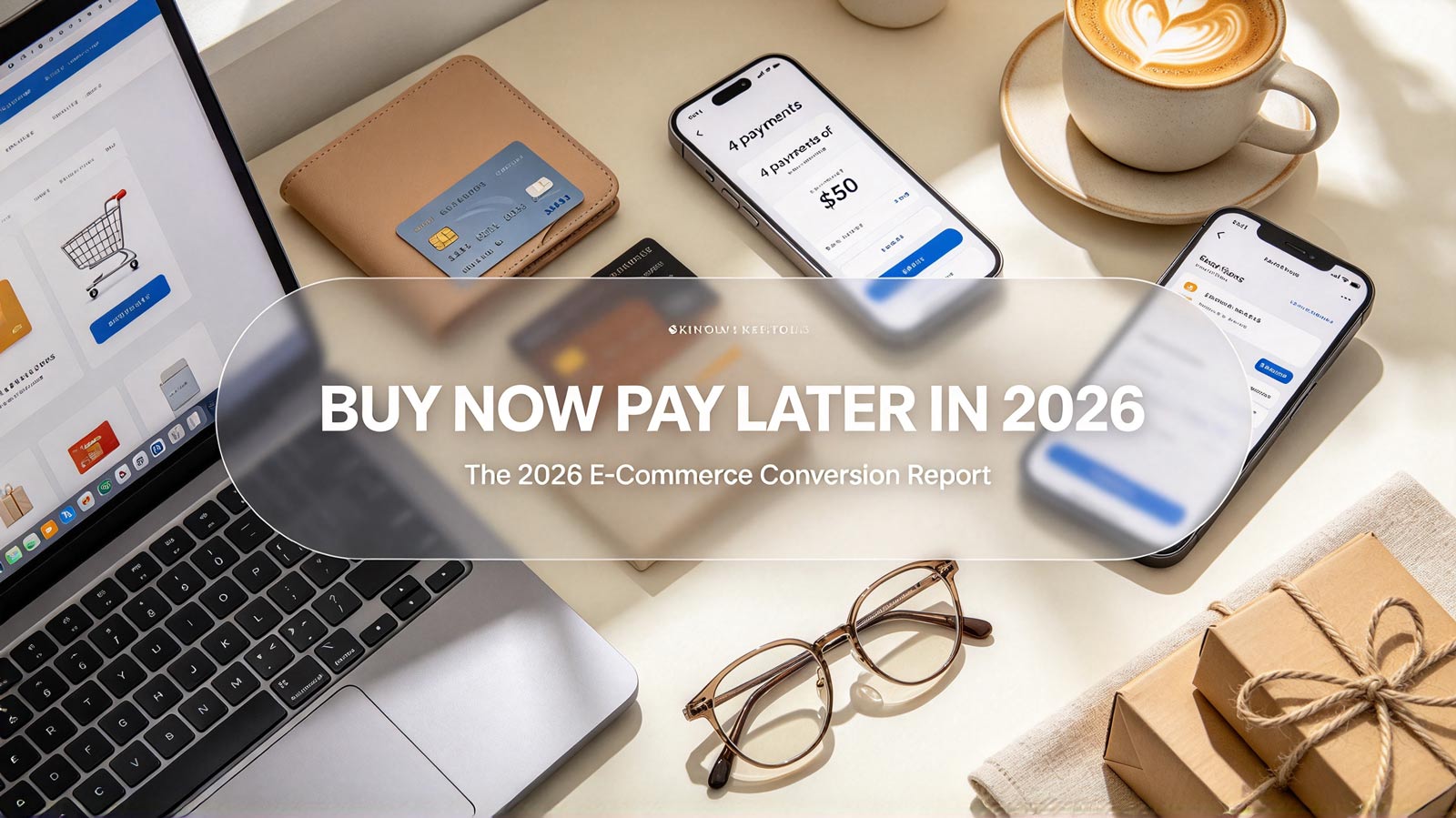
- Increased perceived affordability: $200 feels more manageable as 4 payments of $50
- Psychological ownership: Consumers enjoy products while paying them off
- Trust in transparent terms: No compound interest builds consumer confidence
How Checkout Optimization Multiplies Buy Now Pay Later Adoption
By mid-2026, seamless Buy Now Pay Later integration became table stakes for competitive stores. Advanced APIs enable one-click activation at checkout, removing friction that previously hindered adoption. Machine learning algorithms now personalize payment options in real time based on purchase history, cart value, product category, and regional preferences.
Progressive disclosure refined the experience further. Smart checkout flows surface Buy Now Pay Later at the optimal moment—after price display but before payment method selection—lifting uptake by 27% compared to traditional payment walls. Mobile optimization proved crucial: 73% of Buy Now Pay Later transactions now originate from smartphones, so any flow that buries the option below the fold leaves conversions on the table.
The Revenue Impact: What Buy Now Pay Later Actually Delivers
Forward-thinking retailers didn't just implement Buy Now Pay Later—they built merchandising strategies around it. Performance data from the first half of 2026 shows:
- 25-40% larger average order values compared to traditional payment methods
- 72% repeat usage rate among first-time BNPL customers
- 58% reduction in returns, attributed to more considered buying
- 19% higher customer lifetime value for BNPL users
But the picture isn't all upside. Merchants evaluating BNPL must weigh three costs:
- Merchant fees: BNPL providers typically charge 2-8% per transaction, well above standard card processing rates
- Regulatory exposure: Late-fee rules and disclosure requirements tightened across several markets in 2025-2026
- Cash flow timing: You receive payment minus fees upfront, while the provider carries the installment risk
Retailers seeing net-positive results treat these fees as a customer acquisition cost and track margin per order against conversion lift—not just top-line revenue.
What This Means for Your Store
The data points to four practical actions for Q4:
- Decide if it fits your price point. Buy Now Pay Later delivers the strongest conversion lift on orders between $50 and $1,000. Below $50, installment messaging adds little; above $1,000, shoppers typically need longer financing terms.
- Integrate at the product page, not just checkout. Showing "4 payments of $50" on product pages increases perceived affordability before the cart stage. Most major BNPL providers offer Shopify apps with one-click installation and no code changes.
- Model the fees against your margin. If your gross margin is 30% and the provider charges 6%, you're effectively paying a fifth of your margin for the conversion lift. Run the numbers on your top 20 SKUs before rolling out storewide.
- Measure before and after. Track checkout conversion rate, average order value, and return rate for 30 days pre- and post-implementation. Store analytics tools can surface these shifts at the SKU level, so you know exactly which products benefit from flexible payment messaging.
What to Watch in Q4
Three developments will shape Buy Now Pay Later through the holiday season. First, account-to-account payment options that bypass card networks could reduce processing fees while improving transaction security. Second, loyalty integrations that reward on-time repayment are emerging as a retention lever. Third, market consolidation means providers with the deepest retail integrations will set the terms—merchants who negotiate rate tiers now will be better positioned than those who wait.
Conclusion
The first half of 2026 confirmed that Buy Now Pay Later is no longer a checkout convenience—it's a conversion strategy. Retailers who mastered installment pricing and frictionless checkout flows gained measurable advantages in conversion rate, order value, and repeat purchase behavior. As Q4 approaches, the opportunity isn't simply adding another payment button. It's removing the psychological barriers that stop customers from completing their purchase—and measuring whether the numbers actually move.