Introduction
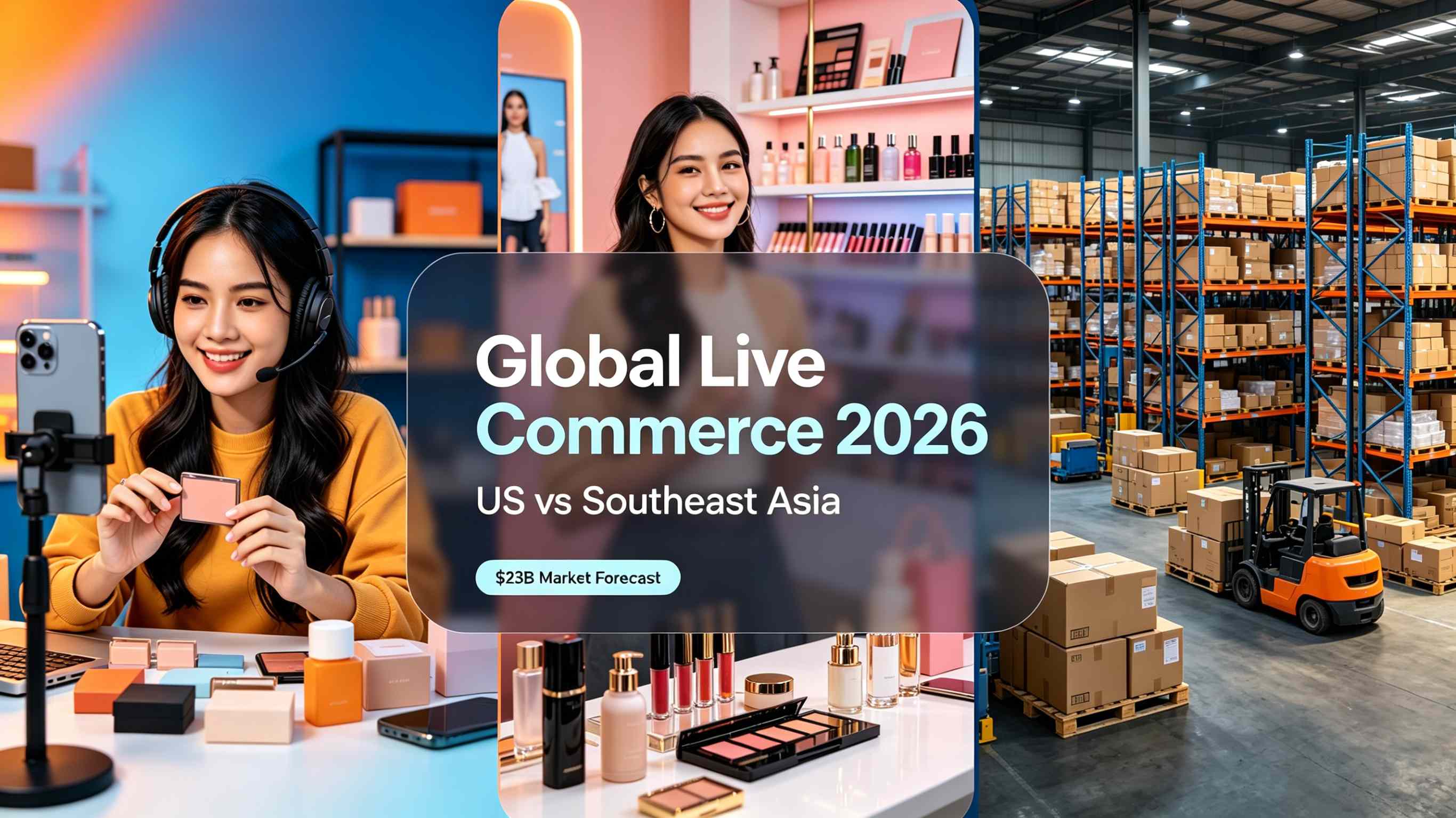
As traffic growth on traditional e-commerce platforms gradually plateaus, a more immersive and instantly convertible sales format is rapidly gaining traction worldwide: live commerce. According to the latest research report from QYResearch, the global live commerce market is projected to reach $23.028 billion by 2026, with a staggering compound annual growth rate of 41%. This growth rate far exceeds the single-digit expectations for traditional e-commerce and signals a profound shift in consumer shopping behavior from search-based purchasing to discovery-driven buying. Within the live commerce landscape, the US and Southeast Asian markets exhibit distinctly different growth logics. In the United States, live commerce sales are expected to hit $14.6 billion in 2025, marking a nearly 50% year-over-year increase that demonstrates strong consumer interest in real-time interactive shopping within a mature market. Meanwhile, in Southeast Asia, the explosive growth of TikTok Shop has become the single biggest variable in regional e-commerce. The platform achieved a global GMV of $62.305 billion in 2025, surging 95.5% year over year, with Indonesia contributing $14.875 billion and accounting for 23.87% of the global total, making it the undisputed largest market.
The growth momentum behind live commerce derives from three interconnected layers. At the platform level, traffic allocation strategies favor live content, with TikTok Shop serving as the core vehicle for ByteDance’s global e-commerce strategy. By deeply integrating short-form video content with closed-loop transactions, TikTok Shop has successfully replicated the China-validated “content as shelf” model on a global scale. At the consumer level, behavioral migration is clearly visible among younger demographics, who increasingly prefer to complete purchase decisions within entertainment contexts. The immediacy and social nature of live commerce align perfectly with this shift. At the supply chain level, operational efficiency gains are substantial. Live commerce reduces inventory pressure through pre- sale and bulk-shipping models while giving small and medium-sized merchants unprecedented exposure opportunities. However, regulatory differences across regions present significant challenges to global expansion. Indonesia, despite its massive GMV volume, has experienced frequent policy fluctuations ranging from a 2023 social commerce ban to subsequent conditional reopening, forcing platforms to navigate a delicate balance between compliance and growth. The United States faces more complex antitrust scrutiny and data privacy regulations, which demand higher operational capabilities from platforms.
A deeper analysis of TikTok Shop’s regional deployment reveals that Indonesia’s success is no accident. As the most populous country in Southeast Asia with over 270 million people, Indonesia has seen continuous growth in its internet user base and rapid improvement in mobile payment infrastructure over recent years. Perhaps more importantly, Indonesian consumers rely heavily on social recommendations and word-of-mouth when making purchase decisions, which aligns precisely with the core logic of live commerce. According to in-depth interviews with Southeast Asian e-
commerce practitioners conducted by Xiaoyuzhou FM, the average customer acquisition cost for local merchants on TikTok Shop is only one-third of that on traditional e-commerce platforms, while return rates remain below 5%, significantly outperforming industry averages. This efficient cost structure has attracted a large influx of Chinese supply chain merchants into the Indonesian market, who achieve deep localization through local warehousing and indigenous livestreamer teams. At the same time, while the US live commerce market started later, its growth momentum should not be underestimated. SMZDM research data shows that American consumer acceptance of live shopping increased by 22 percentage points between 2024 and 2025, with beauty, fashion, and home categories emerging as the three most popular segments. Unlike the Southeast Asian market, American consumers place greater emphasis on brand credibility and product quality, requiring merchants entering the US market to invest more heavily in brand building and after-sales service.
From a broader macro perspective, the global expansion of live commerce is fundamentally a competition for time and attention. In an era of information overload, consumer attention has become increasingly scarce, and live commerce succeeds by creating scarce time windows and immediate interactive experiences that capture users’ focused moments. The essence of this business model is transforming traditional shelf-based e-commerce from “people finding products” to “products finding people,” while using the personal charisma and professional endorsement of hosts to lower consumers’ decision-making barriers. For cross-border sellers, this represents a fundamental shift in operational logic. In the past, sellers focused primarily on search rankings and keyword optimization. In the live commerce era, content creation capabilities, host resource integration capabilities, and rapid supply chain responsiveness have become the core competitive advantages. It is worth noting that the globalization of live commerce is not without obstacles. Cultural differences, language barriers, logistics distribution, and varying consumption habits across regions all demand deep localization capabilities from platforms and service providers. Those enterprises that can effectively combine China’s mature live commerce experience with the unique characteristics of local markets will be best positioned to gain advantages in this global competition.
Final Thoughts
Live commerce is fundamentally reshaping the global retail landscape. From the projected $23 billion market size to TikTok Shop’s dominant performance in Southeast Asia, this format has evolved far beyond simple sales channel innovation into a new form of consumer infrastructure. For cross-border e-commerce practitioners, live commerce represents both a massive window of opportunity and a comprehensive test of content capability, supply chain speed, and localization depth. Whether targeting the quality-conscious US market or the price-sensitive Southeast Asian market, the key lies in understanding the decision-making logic of consumers in different regions and precisely matching the interactive advantages of live commerce with compelling product value propositions. Over the next two to three years, competition in live commerce will transition from a traffic dividend phase to an operational refinement phase, and sellers who establish complete live commerce capability matrices early will gain the upper hand in the coming industry shakeout.