Introduction
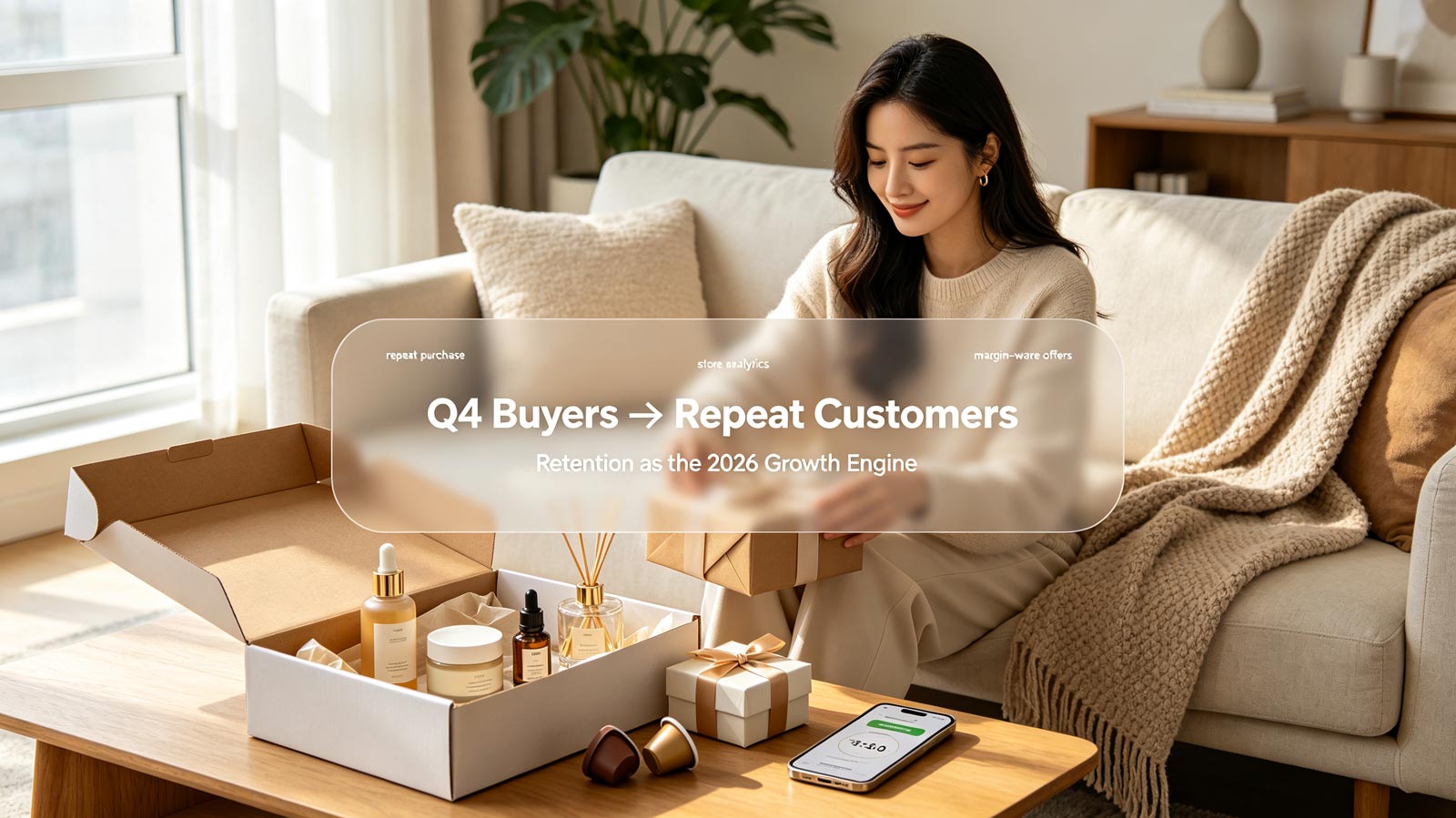
Q4 can look like a growth story while quietly creating a retention problem. Brands spend heavily to win holiday buyers, then watch too many disappear after the first delivery. The orders are real, but the relationship often is not.
In 2026, the advantage will not come from renting more attention through paid ads. It will come from converting Q4 buyers into repeat customers through better timing, clearer segmentation and margin‑aware offers. The real question is not whether you acquired enough customers in Q4. It is whether you can turn that already‑paid audience into next year’s most reliable growth engine.
Why Q4 buyers are not automatically loyal
Holiday shoppers are not one segment. Some are gift buyers who may never need the product again. Some are discount‑driven shoppers who were trained to wait for a coupon. Others are high‑intent category buyers who simply discovered your brand during peak season.
Treating all of them the same leads to two mistakes: over‑discounting buyers who only wanted a deal, and under‑serving buyers who were ready to come back.
- High‑margin, multi‑category buyers are usually the strongest candidates for cross‑sell, loyalty and early access.
- Replenishment buyers respond better to timed reminders, subscriptions and bundle offers.
- Gift buyers need a different message, such as “treat yourself,” accessories or next‑occasion reminders.
- Discount‑only buyers should receive value‑led messaging, not deeper markdowns that destroy contribution margin.
The goal is not to retain everyone. It is to identify which Q4 buyers have a logical reason to return.
Store analytics signals to pull before re‑engagement
Store analytics should tell you who deserves follow‑up, when to send it and what offer protects margin. Before building your 2026 retention flow, review the signals that separate likely repeat buyers from one‑time holiday traffic.
Pull these signals first:
- Days from first order to second order by category
- SKU margin tier and discount depth at first purchase
- Product affinity across categories
- Refund, return and support‑ticket risk
- Email and SMS engagement after purchase
- First‑touch channel and competitor promo movement during the same period
This is where store analysis becomes a growth tool. You are not guessing who might return. You are building a ranked list based on behavior, margin and timing.
Segment Q4 buyers by intent, not just spend
A high Q4 order value does not always mean high future value. A customer who bought one discounted premium gift set may be less valuable than a customer who bought two mid‑margin consumables.
Use RFM‑style segmentation as a starting point, then adjust it for category behavior.
- Recency: tells you how close the buyer is to the first experience.
- Frequency: shows whether Q4 was a first interaction or part of an existing pattern.
- Monetary value: should be read after discounts, shipping and returns, not as gross order value.
Margin matters even more, because a repeat order at a loss is not real retention. Affinity completes the picture: what the customer browsed, wish‑listed or bought next often reveals the second purchase before it happens.
Your highest‑value retention cohort is usually the group with strong category affinity, acceptable margin, no return red flags and a reasonable probability of a second purchase.
The 30/60/90‑day re‑engagement window
Timing matters. Follow up too early and you look desperate. Wait too long and the purchase memory fades.
Days 0–7: confirm the purchase, do not push another sale
Send order care content, usage tips, setup guidance or a thank‑you note. If the product is giftable, include care instructions or a gift receipt. Ask for a review only after delivery and use are confirmed. Avoid leading with a discount unless margin is strong and the category has a natural second purchase.
Days 8–30: introduce the next logical product
This is the best window for complementary products, bundles and loyalty enrollment. Show the customer what people commonly buy after their first item. If your analytics show a typical replenishment cycle, begin educating them before the reminder becomes urgent. Suppress buyers who show return risk, complaints or clear one‑time purchase behavior.
Days 31–60: trigger replenishment, bundles or early access
For consumables, send a replenishment reminder close to the expected usage window. For durable goods, shift toward accessories, care products, upgrades or “complete the set” offers. Loyalty points and early access often work better than coupons because they create status without resetting price expectations.
Days 61–90: win back carefully
If there is still no second purchase, move into a lighter win‑back sequence. Use a preference survey, a best‑seller roundup or a low‑frequency email. Do not train these buyers to wait for bigger discounts. If they remain inactive, reduce frequency and protect your sender reputation.
Offers that protect margin
Retention should improve profit, not just repeat purchase rate. Build offers around margin floors before you scale them.
- Bundles can increase order value without a straight percentage discount.
- Threshold gifts create perceived value without training customers to expect site‑wide coupons.
- Loyalty points work best when they create future value rather than immediate markdowns.
- Early access fits high‑margin cohorts, while subscriptions make sense for replenishment categories.
- Product care content also matters because it reduces returns and increases satisfaction.
At the same time:
- Avoid blanket “come back” coupons for every Q4 buyer.
- Do not give deeper discounts to customers who only respond to price.
- Do not run retention campaigns without a holdout group.
- Do not send re‑engagement messages that ignore return or refund risk.
A repeat order at a loss is delayed churn, not retention.
Measure retention like a growth channel
Do not judge the campaign only by open rate or revenue per email. Track the metrics that show whether Q4 buyers are becoming owned demand:
- Repeat purchase rate by cohort
- Time to second purchase
- 90‑day and 180‑day customer value
- LTV:CAC after retention efforts
- Contribution margin after discounts, shipping and returns
- Refund, unsubscribe and complaint rates
- Incremental lift versus a holdout group
Keep a holdout group of similar Q4 buyers who do not receive the retention flow. This tells you whether the campaign truly created incremental repeat purchases or simply gave discounts to customers who would have returned anyway.
Conclusion
Q4 gives you a rare asset: a large group of customers who already know your brand, already trusted your checkout and already paid to acquire. Most businesses let that asset expire after the holiday rush. The better move is to treat retention as a 2026 growth channel.
Start by segmenting last year’s Q4 cohorts in your store analytics dashboard. Identify the buyers with the strongest reason to return, message them at the right moment, and protect margin while you do it.
The cheapest growth in 2026 may already be in your customer list. Stop renting attention. Start compounding it.