- Introduction
The global home fitness equipment market is undergoing a quiet but profound consumer shift. According to P&S Intelligence, the global home fitness equipment market reached $9.34 billion in 2024, is projected to grow to $10.11 billion in 2025, and will climb to $20.56 billion by 2034, with a compound annual growth rate (CAGR) of 8.21% from 2025 to 2034. The United States remains the core market throughout this period. Yet behind this steady expansion, consumer preferences are changing in fundamental ways.
The smart fitness devices that once dominated the conversation are losing their luster. Peloton continues to experience user churn, and Mirror — acquired by Lululemon — has been reduced to an abandoned asset after the premium subscription model left consumers fatigued. In their place, a powerful return is underway: consumers are re-embracing traditional portable equipment, and they increasingly prefer tools priced under $20 that work instantly without any subscription commitment. This shift reflects the full rise of “fragmented fitness” — people squeezing in ten-minute sessions at their desks, in living room corners, or on bedroom floors, rather than committing an hour to a gym visit or an expensive online class.
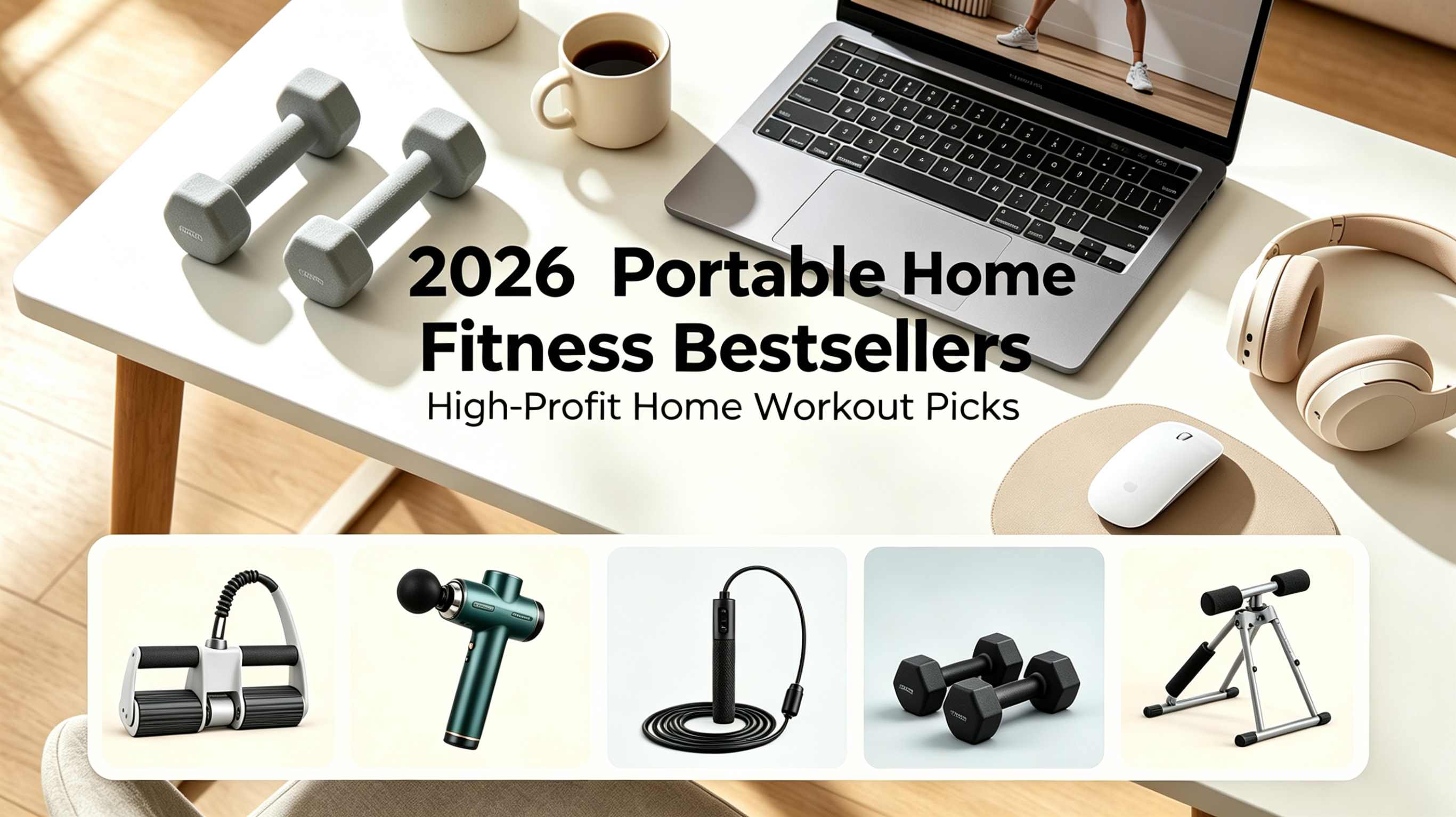
The short-video ecosystems of TikTok and Instagram have amplified this trend further. Hashtags such as #deskworkout, #myhomegymsetup, and #fitnessunder50 continue to gain traction, and portable equipment has an inherent visual demonstration advantage — how to use a foot pedal resistance band or how to relax muscles with a massage gun can be conveyed in a ten-second clip. This is the opportunity window that cross-border sellers should pay the closest attention to in 2026. Below we have selected five high-profit, content-friendly portable fitness product categories, each accompanied by its 1688 sourcing price, Amazon price range, and profit margin estimate.
Foot Pedal Resistance Exerciser
This is currently one of the most explosive portable fitness products on TikTok. According to TT123 Cross-Border E-Commerce and Ebrun, a foot pedal resistance exerciser sold 31,100 units on TikTok within 30 days, generating $340,600 in sales (approximately 2.36 million RMB), with 76% of revenue coming from video and live content. The factory price on 1688 for the same product is approximately 5 RMB (around $0.70), while the Amazon price range sits between $9.89 and $15.61, yielding a profit margin of 70% to 80%.
The core selling points are remarkably clear. First, the usage scenarios are extremely broad — it can be used seated, lying down, or standing, targeting arms, abdomen, and legs with a single product. Second, the price barrier is extremely low, with most retail prices falling between $10 and $15, well within the consumer’s psychological comfort zone of under $20. Third, the visual demonstration effect is outstanding, as the dynamic stretching of resistance bands is perfectly suited to the distribution logic of short-video platforms. For content marketing, TikTok campaigns themed around “5-minute desk stretches” and “pre-bedtime ab workouts” paired with the #deskworkout hashtag are highly recommended. When sourcing, pay attention to the elasticity and durability of the resistance cord material and the anti-slip design of the foot pedals — inferior materials break easily and lead to negative reviews. TPE material with widened foot plates is the preferred configuration.
Mini Massage Gun (Fascia Gun)
The massage gun has evolved from a professional sports recovery tool into a mass consumer electronics product, and the mini version has become a hot cross-border category thanks to its portability and competitive pricing. The 1688 sourcing price for a mini massage gun is approximately 85 RMB (around $12), while Amazon prices range from $29.99 to $59.99, yielding a profit margin of 50% to 65%.
The core selling points center on portability — mini massage guns are typically palm-sized, fitting easily into a commuter bag or office drawer, solving the bulk problem of traditional massage guns. Additionally, as remote work and sedentary lifestyles increase, shoulder, neck, and lower back relief has become a high-frequency daily need, expanding the use scenario from post-workout recovery to everyday relaxation. Finally, Type-C charging and long battery life have become key purchase parameters, and products with both features show noticeably higher recommendation rates. For content marketing, Instagram posts and Reels themed around “office worker shoulder and neck rescue guides” are effective. When sourcing, prioritize motor noise control (below 45 decibels recommended), battery capacity (no less than 2000mAh), and accessory richness — multiple replacement heads can effectively increase average order value and positive review rates.
Smart Jump Rope
Jump rope is one of the oldest and most efficient forms of cardio, and the smart jump rope upgrades this traditional tool with Bluetooth connectivity to a mobile app for counting, calorie tracking, and workout logging. The 1688 sourcing price ranges from 30 to 60 RMB ($4 to $8), while Amazon prices range from $19.99 to $49.99, yielding a profit margin of 55% to 70%. For reference, the Xiaomi smart jump rope is priced at $39.50 (original price $49.50), validating market acceptance in this range.
The core selling point is that the smart jump rope transforms mindless jumping into a data-driven training experience, with app logging allowing users to track count, duration, and calories burned per session, satisfying the fitness community’s demand for data visualization. Additionally, jump rope requires minimal space — a rope and a phone are enough for efficient cardio on a balcony or in a living room. Furthermore, the inclusion of cordless weighted balls eliminates ceiling height restrictions for indoor use, a design detail that has become a high-frequency keyword in positive reviews. For content marketing, TikTok “30-day jump rope challenge” series with the #myhomegymsetup hashtag work well. When sourcing, pay close attention to app compatibility and stability — Bluetooth disconnection and inaccurate counting are major sources of negative reviews, so batch pairing tests before shipment are recommended.
Adjustable Water Dumbbell
The adjustable water dumbbell is a high-potential category in the home strength training space. By filling the dumbbell with water to adjust weight, it is lightweight and portable when empty and provides substantial training load when full, perfectly suited for young consumers living in small spaces or moving frequently. The 1688 sourcing price ranges from 20 to 45 RMB ($3 to $6), while Amazon prices range from $19.99 to $34.99, yielding a profit margin of 55% to 70%.
The core selling points begin with the “one bottle, multiple weights” adjustable design — users do not need to buy multiple dumbbell sets, as water volume alone switches the load from light warm-up to medium-high intensity training, saving both money and space. Second, the handle design and kettlebell shape give it dual dumbbell and kettlebell functionality, enabling swings, presses, squats, and other compound movements. Third, when empty the product is compact and lightweight, making shipping costs extremely low — a critical advantage for cross-border sellers who essentially ship an empty shell, with freight far lower than traditional cast-iron dumbbells. For content marketing, the #fitnessunder50 hashtag is recommended, with “full-body workout with one water dumbbell” tutorial series highlighting the convenience of adjustable weight. When sourcing, prioritize seal integrity (leaking is a fatal review killer), BPA-free materials, and accurate maximum weight labeling — silicone sealing rings and thickened walls are the preferred configuration.
Thigh Exerciser (Inner Thigh Toner)
The seated thigh exerciser is a rapidly growing sub-category in the women’s fitness market. Domestic brand Merach has already sold 43,100 units of its thigh exerciser, validating demand in this category. The 1688 sourcing price ranges from 8 to 15 RMB ($1 to $2), while Amazon prices range from $9.99 to $19.99, yielding a profit margin of 65% to 80% — one of the highest among the five products.
The core selling points are precise — the thigh exerciser targets the inner thigh shaping need that is difficult to fully stimulate with traditional squats and running. Second, the seated usage method is extremely simple: sitting in a chair or on a couch and performing squeezing motions requires almost zero learning curve, making it ideal for fitness beginners and sedentary office workers. Third, the compact size allows it to be stored under a desk and used anytime, perfectly matching fragmented fitness scenarios. For content marketing, Instagram and TikTok campaigns themed around “leg slimming check-ins” and “secret desk workouts” are effective. Since the unit price is extremely low, a bundle strategy is worth considering — combining the thigh exerciser with a foot pedal resistance band into a “home shaping kit” can effectively increase average order value and logistics efficiency. When sourcing, check whether the spring tension has adjustable levels and whether the outer shell material is comfortable and durable — silicone-wrapped metal frames are currently the best-reviewed configuration.
Final Thoughts
Looking across these five products, three common characteristics emerge for portable fitness equipment sourcing in 2026. The first is extreme portability — every product can be used at a desk, on a sofa, or within a one-square-meter space, which is the baseline requirement of the fragmented fitness era. The second is affordable pricing — all five products retail under $50, with three under $20, precisely matching the budget preferences of consumers who have shifted away from smart devices back to traditional equipment. The third is strong content demonstration properties — each product can be fully showcased in a ten-second video, which in an era deeply tied to TikTok and Instagram traffic dividends, is the most critical competitive barrier.
For cross-border sellers, all five categories feature extremely low sourcing costs, mature 1688 supply chains, and logistics-friendly profiles (small volume, light weight), with profit margins generally above 50%. When sourcing, do not focus solely on price — material safety, functional stability, and packaging experience matter even more. In low-price categories, review rates and return rates are the core variables that determine final profitability. The home fitness market continues to grow rapidly in 2026, fragmented fitness has shifted from trend to norm, and the dividend period for portable equipment has only just begun.