Introduction
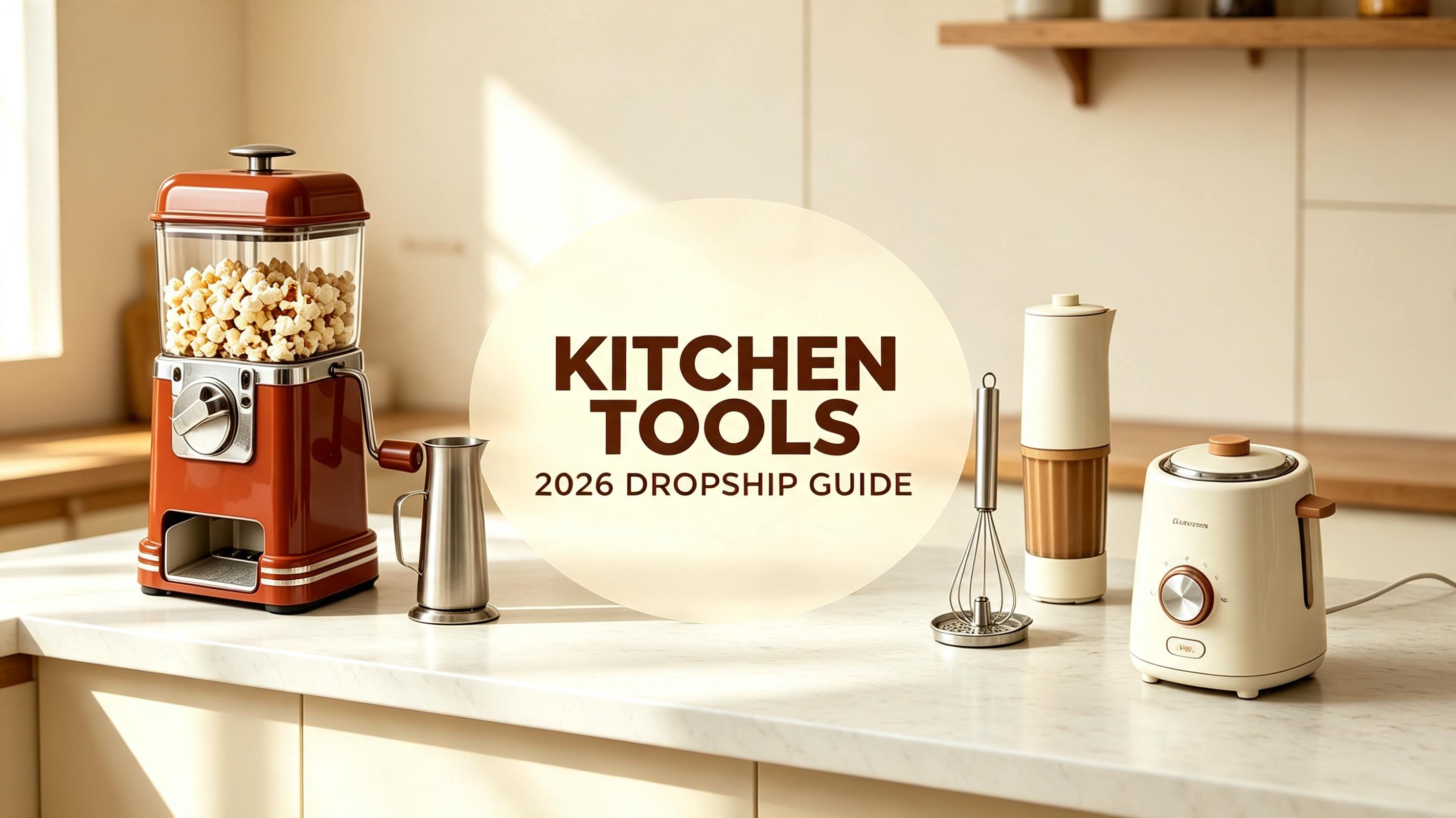
Food vlogging continues to dominate social media in 2026, and it is quietly reshaping the logic behind small kitchen appliances. When creators point their cameras at the kitchen counter, consumers no longer just want a machine that works. They want a device that performs the moment it is turned on, one that looks good on camera and fits into a lifestyle narrative. From smoothie art to breakfast flat lays, from vegetable chopping close-ups to slow-motion popcorn bursts, every kitchen tool has become a content prop.
According to the QuackCart 2026 Winning Product Report, small kitchen appliances have climbed to the number one position in dropshipping categories, leading both in search volume and repurchase rates. ShipToTheMoon’s kitchen selection guide confirms this trend, listing kitchen products as one of the most reliable directions thanks to their moderate size, logistics-friendly profiles, and clear usage scenarios. Sell The Trend kitchen data adds another layer, showing that kitchen gadgets priced between 15 and 40 dollars convert at notably higher rates than most other categories.
For independent store owners, the kitchen niche offers a rare combination of advantages. These products are inherently demonstrable, which makes them perfect for short-video seeding. Their functions are clear, which keeps return rates low. And their price bands are flexible, covering everything from a 10- dollar impulse buy to a 40-dollar gifting scenario. Below we break down five kitchen gadget directions that stand out in 2026, with their sourcing costs, pricing windows, and content hooks.
Handheld Blender
The handheld blender is a star category for kitchen dropshipping in 2026. Sourcing prices on 1688 sit between 59 and 79 RMB, roughly 8 to 11 dollars, while Amazon prices range from 24.99 to 39.99 dollars, keeping profit margins steady at 45 to 60 percent.
Its popularity is closely tied to food vlog creators. On TikTok, influencers use it live to make baby food, avocado smoothies, and creamy soups. The shot of the blender gliding into a pot and instantly smoothing the ingredients is deeply satisfying, and these videos consistently pull high view counts. Creators love it because it replaces a bulky countertop blender with a one-hand tool that keeps the surface clean and the frame tidy.
When selecting, focus on three keywords: multifunctional (soups, smoothies, mincing), BPA-free food-grade materials, and detachable cleaning. Detachable cleaning is the pain point buyers care about most. If the blending shaft cannot be rinsed clean in seconds, negative reviews are almost guaranteed. We recommend including a disassembly diagram on the product page along with a 15-second clip of rinsing it under a tap, which noticeably lifts conversion.
Electric Egg Cooker
The electric egg cooker is a classic small, high-turnover kitchen winner. The 1688 sourcing price is only 25 to 45 RMB, about 3.5 to 6.5 dollars, while Amazon sells it for 16.99 to 29.99 dollars, yielding profit margins of 55 to 70 percent. The product is lightweight and logistics-friendly, with almost zero breakage risk in international shipping.
The core scenario is breakfast. TikTok videos themed around “perfect breakfast” continue to drive demand, as creators assemble an entire aesthetic breakfast spread using an egg cooker, a toaster, and a coffee machine in under 15 minutes. The selling points are crisp: auto shut-off to prevent dry burning, a capacity of 6 to 7 eggs per batch for family needs, and one-button operation with no supervision required.
For marketing, position it as a “lazy breakfast essential” or a “dorm room must-have,” targeting renters, students, and office workers. The product page should emphasize “just add water, no flame watching,” and include a comparison image showing runny, soft, and hard-boiled results so buyers instantly see controllable outcomes. Given the low ticket price, bundle strategies work well, such as pairing it with an egg rack or measuring cup.
Electric Milk Frother
The electric milk frother has one of the highest profit margins in the kitchen category. The 1688 sourcing price is 15 to 30 RMB, about 2 to 4 dollars, while Amazon prices range from 9.99 to 19.99 dollars, with margins reaching 60 to 75 percent. The full-blown rise of home coffee culture is its biggest growth engine. As more people recreate the cafe experience at home, a tiny tool that turns milk into dense foam becomes a necessity.
Its selling points center on three traits: portable (pen-sized, travel friendly), USB rechargeable (no battery swapping), and stainless steel whisk head (durable and easy to clean). Because the price is low and the size is small, it is perfect for bundling. Pair it with a coffee cup or a bag of beans to form a “home cafe kit,” which raises average order value and tells a complete usage story.
For content seeding, latte art videos on TikTok are a natural traffic pool. A 20- second sequence of heating milk, pressing the frother, watching foam expand instantly, and pouring it into coffee to form art converts almost without copy. Embedding this kind of UGC video on your store is far more persuasive than static images for impulse buyers.
Multifunctional Vegetable Chopper
The multifunctional vegetable chopper is the quintessential visual-impact product of the short-video era. The 1688 sourcing price is 20 to 40 RMB, about 3 to 6 dollars, while Amazon prices range from 14.99 to 29.99 dollars, with margins of 55 to 70 percent. Its viral spread on TikTok and Instagram is remarkable. A single video showing “an entire onion chopped in three seconds” can pull millions of views.
The content explodes because the chopper compresses the most tedious prep step into one satisfying click. When selecting, lock in three selling points: stainless steel blades (rust-resistant and sharp), multiple cut styles (julienne, slices, dices, wavy cuts in one tool), and a safety hand guard. The guard is critical for keeping negative reviews low. Choppers without a guard see noticeably higher complaint rates.
For store operations, use a before-and-after comparison image as the main visual, plus a 10-second video of switching blade discs in sequence. Since this category is easily copied, highlight blade material certifications and warranty commitments on the product page to build quality trust.
Home Popcorn Maker
The home popcorn maker rides twin drivers of home theater and party scenarios. The 1688 sourcing price is 35 to 60 RMB, about 5 to 9 dollars, while Amazon prices range from 19.99 to 34.99 dollars, with margins of 50 to 65 percent. After the NOSTALGIA brand went viral in 2026, the retro small-appliance trend is unmistakable. Vintage-styled gadgets are becoming kitchen decor for younger buyers.
Its selling points include hot-air oil-free popping (a healthy snacking concept), fast popping (2 to 3 minutes), and retro design (doubling as a kitchen display). The “oil-free” angle is especially important in 2026, as healthy eating trends keep search volume for “oil-free popcorn” climbing.
For content marketing, the popcorn maker naturally fits “movie night” themed videos. A scene of dim lighting, the machine starting, kernels bursting into the bowl, and pouring into a retro carton perfectly captures weekend ritual. We recommend concentrating ads before the Q4 holiday season and bundling it as a “home theater kit” or “party snack kit” to significantly lift conversion.
Final Thoughts
The explosion of small kitchen appliances in 2026 is, at its core, a victory of content-driven consumption. Every product is not just a tool but a lifestyle scene that can be filmed, shared, and imitated. For independent store owners, selection should weigh three dimensions at once: sourcing cost and profit space, logistics friendliness, and content demonstration potential. These five product directions satisfy all three conditions, with clear 1688 supply chains, stable Amazon price anchors, and visual hooks built for short-video seeding. We advise sellers to treat content assets as the “second packaging” of a product. A seller who knows how to shoot video will outperform one who only runs ads in the kitchen niche.