Introduction
In 2026, global environmental consciousness has reached an all-time high. The Ellen MacArthur Foundation’s Circular Economy Report reveals that 78% of consumers worldwide are willing to pay a premium for sustainable products, a figure that has climbed nearly 20 percentage points since 2020. This is no longer a moral preference but an irreversible commercial trend. Simultaneously, plastic bans have been implemented in over 100 countries, creating a replacement market worth hundreds of billions of dollars.
The WWF consumer survey further indicates that Millennials and Gen Z factor sustainability into their core purchasing decisions, with over 60% of young consumers actively seeking biodegradable and reusable alternatives. For Shopify independent store owners, the eco-friendly category sits in a golden window where demand is surging but supply has not yet saturated. The following five product directions have been validated by data and offer high margins, strong content virality, and sustained growth potential.
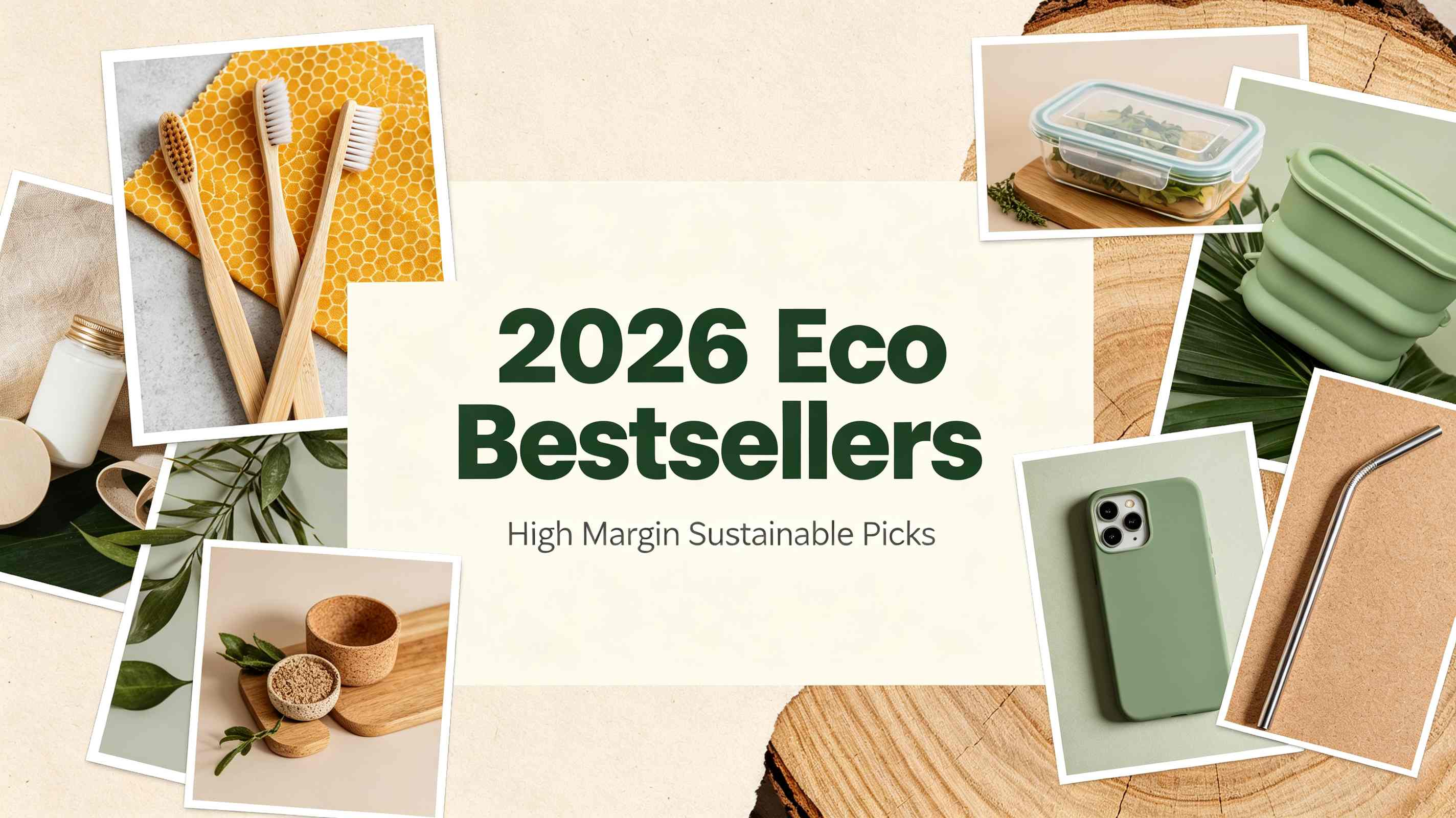
Bamboo Toothbrush Set
The world generates approximately 50,000 tons of plastic toothbrush waste annually, taking centuries to decompose. Bamboo toothbrushes have emerged as the go-to alternative. On 1688, a bamboo toothbrush set costs merely ¥3-8 ($0.5-1.2), while Amazon prices range from $9.99 to $16.99 for a four-pack, yielding 60-75% profit margins. Key selling points include fully biodegradable natural bamboo handles, mildew-resistant bristles for extended use, and family set configurations. Sellers should emphasize the “family eco-upgrade” concept with recyclable kraft paper packaging. Google Trends shows steady year-round demand for “sustainable toothbrush” with no seasonal dips.
Beeswax Food Wrap
Beeswax food wraps replace single-use plastic cling film using natural cotton infused with organic beeswax, tree resin, and jojoba oil. Each wrap can be reused over 100 times. The 1688 sourcing cost is ¥8-18 ($1.2-2.5), with Amazon prices at $12.99-$24.99 and profit margins of 55-70%. TikTok’s “zero waste kitchen” hashtag has accumulated over 500 million views, with creators demonstrating how to mold wraps around bowls using palm heat. Sellers should include tutorial videos showing usage, cleaning, and maintenance. Multi-size combo packs covering everything from half a lemon to large salad bowls are recommended. Note that beeswax wraps are not microwave or oven safe, and this limitation must be clearly stated to avoid negative reviews.
Collapsible Silicone Container
Collapsible silicone containers solve the storage problem of traditional lunch boxes, compressing to just 2-3 centimeters in height while expanding to 500- 1200 milliliters. The 1688 sourcing cost is ¥12-25 ($1.7-3.5), Amazon prices reach $14.99-$29.99, and profit margins stand at 55-70%. Made from food- grade silicone, these containers are microwave-safe, freezer-safe, and dishwasher-safe. The product directly targets users of disposable plastic containers, appealing particularly to office workers, campers, and fitness enthusiasts. Marketing should revolve around the “a whole week of meal prep in one drawer” storage concept with before-and-after folding demonstration videos. Multi-size sets can further boost average order value.
Stainless Steel Straw Set
Global plastic bans have put straws front and center, with the EU, Canada, and India fully prohibiting single-use plastic straws. Stainless steel straw sets have become the ideal replacement. The 1688 sourcing cost is ¥5-12 ($0.7- 1.7), Amazon prices range from $9.99 to $16.99, and profit margins reach 60-75%. The most popular format is a complete set including straight and bent straws, a stainless steel cleaning brush, and a portable carrying pouch. Food-grade 304 stainless steel ensures safety with no metallic taste, while a frosted finish improves grip. Sellers can segment by scenario: family sets for home use and compact sets for on-the-go. Google Trends shows “reusable straws” searches peaking during summer and holiday seasons.
Biodegradable Phone Case
Phone cases are a classic high-margin e-commerce category, and biodegradable cases merge this proven model with the sustainability trend. Made from bamboo fiber and wheat straw composite, these cases decompose naturally within 6-12 months under composting conditions. The 1688 sourcing cost is ¥8-20 ($1.2-2.8), while Amazon and independent store prices reach $19.99-$34.99, yielding 50-65% margins. Brands like CASETiFY have already validated the high-premium phone case model, with their eco lines commanding higher prices and sustained growth. The key strategy is rapid coverage of new device models. Launching cases within two weeks of iPhone and Samsung releases captures significant long-tail search traffic. Product pages should emphasize the “say goodbye to plastic cases” narrative while assuring drop protection. Customizable pattern versions allow users to upload photos or choose design templates.
Final Thoughts
The sustainable category has moved from niche to mainstream in 2026. All five products share common traits: extremely low sourcing costs, ample profit margins, built-in content virality through eco-narratives, and demand driven by policy tailwinds. When selecting products, evaluate three dimensions: whether the product is genuinely biodegradable or reusable, whether it addresses a clear usage pain point, and whether it lends itself to short-form video demonstrations. Do not simply slap an “eco-friendly” label and double the price. Consumers are increasingly discerning, and product quality combined with authenticity is the foundation for repeat purchases.