Introduction
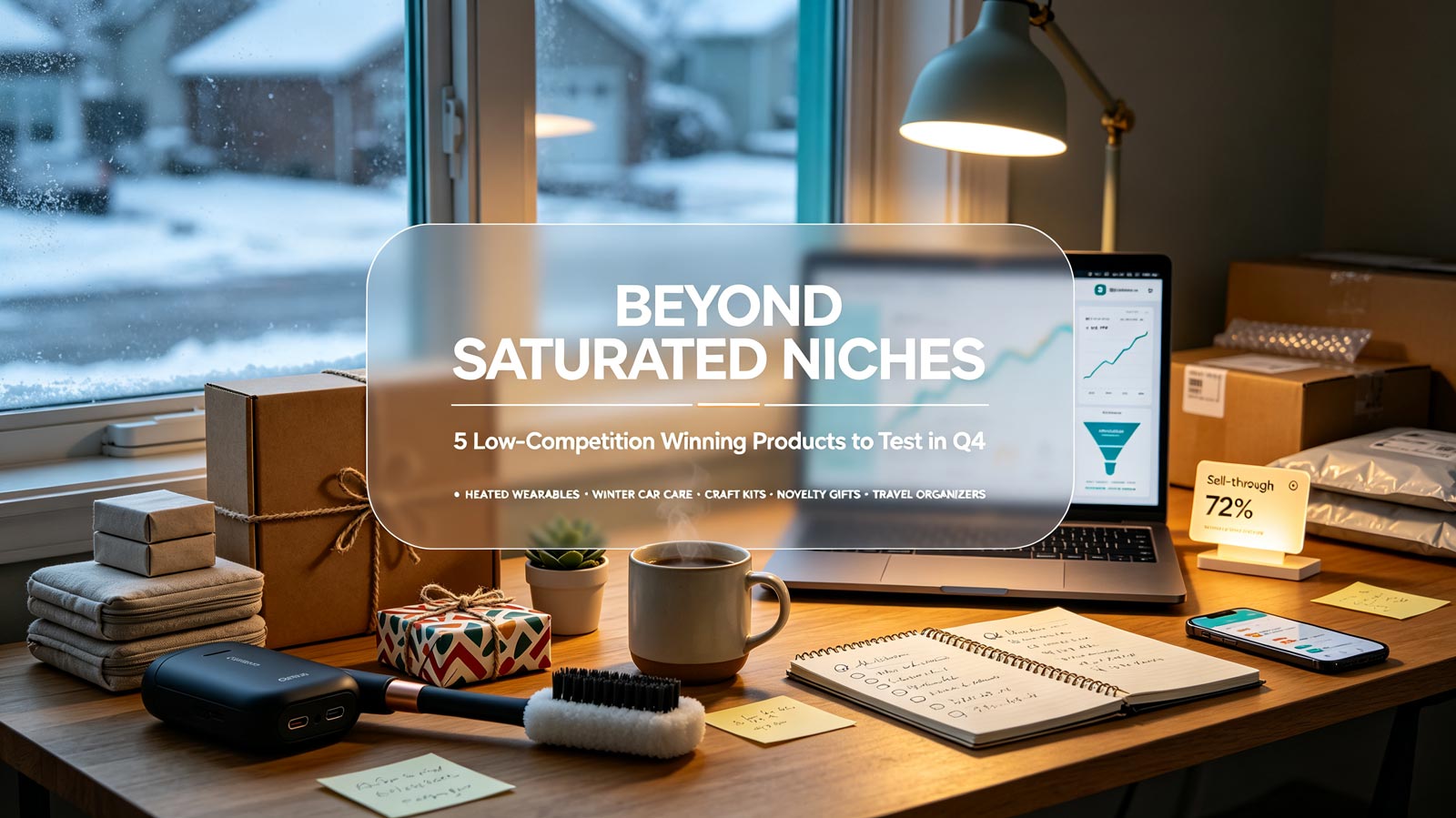
Low-competition Q4 products surface where live competitor signals, margin filters, and demand velocity overlap. For Shopify sellers heading into the 2026 holiday season, the highest-risk move is committing inventory to the same crowded niches everyone else is chasing. The lower-risk move is testing five candidate categories where demand is rising faster than seller supply—validated through small batches, with sell-through, ad cost, refund rate, and repeat purchase tracked before any real inventory commitment. The five categories below fit that profile.
Heated Wearables
Rechargeable heated vests, hand warmers, and thermal socks solve a narrow functional problem, and buyers purchase them for utility rather than brand—keeping competition thin and listing quality poor. Search interest builds from late October with precise, functional queries that make ad targeting efficient. Unit costs are low and perceived value is high, though battery quality makes supplier vetting essential. Test one hero SKU such as a rechargeable hand warmer with 50–100 units; if refund rates stay low in the first two weeks, expand into vests and socks as cross-sells.
Winter Car Accessories
Extendable snow brushes, portable de-icers, and heated seat cushions sit inside a large category where most sellers chase year-round items, leaving seasonal winter tools underserved with sparse listings and weak imagery. Demand is geographically concentrated and weather-driven, so ads can target early-snowfall regions instead of national audiences. Hard goods mean simple logistics, low returns, and strong bundle economics. Build one bundle, target two or three high-snowfall regions, and read results within days—sell-through above 70% in ten days validates the play.
Holiday DIY Craft Kits
Pre-packaged ornament, wreath, and candle kits serve buyers who want the finished holiday look but prefer the activity—an adjacent space to saturated finished decor. Interest follows two curves: parents and teachers planning November activities, then mid-December gift buyers. Process-focused content earns organic distribution that decor listings rarely get, while curation and packaging support premium, giftable pricing. Launch one kit with video creative showing the making process, tested against two angles—"family activity" versus "gift for crafters"—and let the winner guide December inventory.
White Elephant and Novelty Gifts
Gag gifts and under-$25 novelties suit gift exchanges, where each event demands something new and no single product dominates for long—a fragmentation large sellers avoid and agile sellers can exploit. The exchange-gift window compresses into the two weeks before Christmas, and social traction ("tag a coworker" reactions) converts directly into purchases. Low unit costs and impulse price points make ad efficiency the entire game, with low refund rates since expectations are humorous rather than functional. Test three to five candidates at small volume simultaneously, kill anything without a purchase in the first 3–5 days, and scale whatever gets shared organically.
Holiday Travel Organizers
Compression cubes, leak-proof toiletry bottles, and cable organizers are sold year-round, but almost no listings position for holiday travel—Thanksgiving trips, family visits, winter packing—leaving that angle open. Demand arrives in two waves: gifting-adjacent queries in November, then self-purchase ahead of New Year travel. Soft goods keep damage and shipping costs predictable, and bundles such as a "holiday travel kit" outperform single items. List one three-piece bundle with holiday-specific creative and run it against generic travel creative; a clear margin of victory validates the positioning itself.
Closing Notes
The validation logic is identical across all five: small batch first, then decide on sell-through, ad cost, refund rate, and early repeat purchase within ten to fourteen days. Order small but early—December stockouts erase validated demand—and favor supplier consistency over the lowest unit price, because Q4 leaves no recovery window for quality failures. Q4 2026 does not require fighting in the most crowded categories; for sellers who test early and read the data fast, the quieter corners of the market offer the better trade.