Introduction
Gen Z shoppers decide in seconds whether a brand is worth their money, and sustainability claims often tip the scale. In 2026, vague green promises drive customers away, while verified, specific claims win trust, higher conversion, and lasting loyalty.
For e-commerce sellers, this shift is no longer a branding nuance — it's a revenue variable. And it arrives at the exact moment regulators start treating unverifiable green claims as a legal liability.
The Gen Z Trust Test Is Already Deciding Purchases
The data on Gen Z and sustainability is no longer ambiguous. According to First Insight's consumer research, 62% of Gen Z shoppers prefer to buy from sustainable brands, and 73% are willing to pay more for sustainable products — the highest willingness-to-pay premium of any generation.
But that trust cuts both ways. This cohort grew up with climate change as a defining issue, and it applies the same research instinct to green claims that it applies to everything else: check the comments, check the certifications, check whether the claim survives scrutiny.
The message is blunt: for this cohort, sustainability isn't a bonus. It's a pass/fail filter — and the pass bar is rising.
Vague Claims vs. Verified Claims
The gap between what brands say and what buyers believe is where conversion is won or lost. It's also, according to regulators, enormous: an EU market study found that 42% of "green" claims were exaggerated, false or deceptive, and 59% were vague or misleading, with 37% offering no supporting evidence at all.
What Gen Z tunes out:
- "Eco-friendly" with zero supporting detail
- Generic leaf icons and green color schemes
- Claims with no certification, no data, no sourcing story
What earns trust:
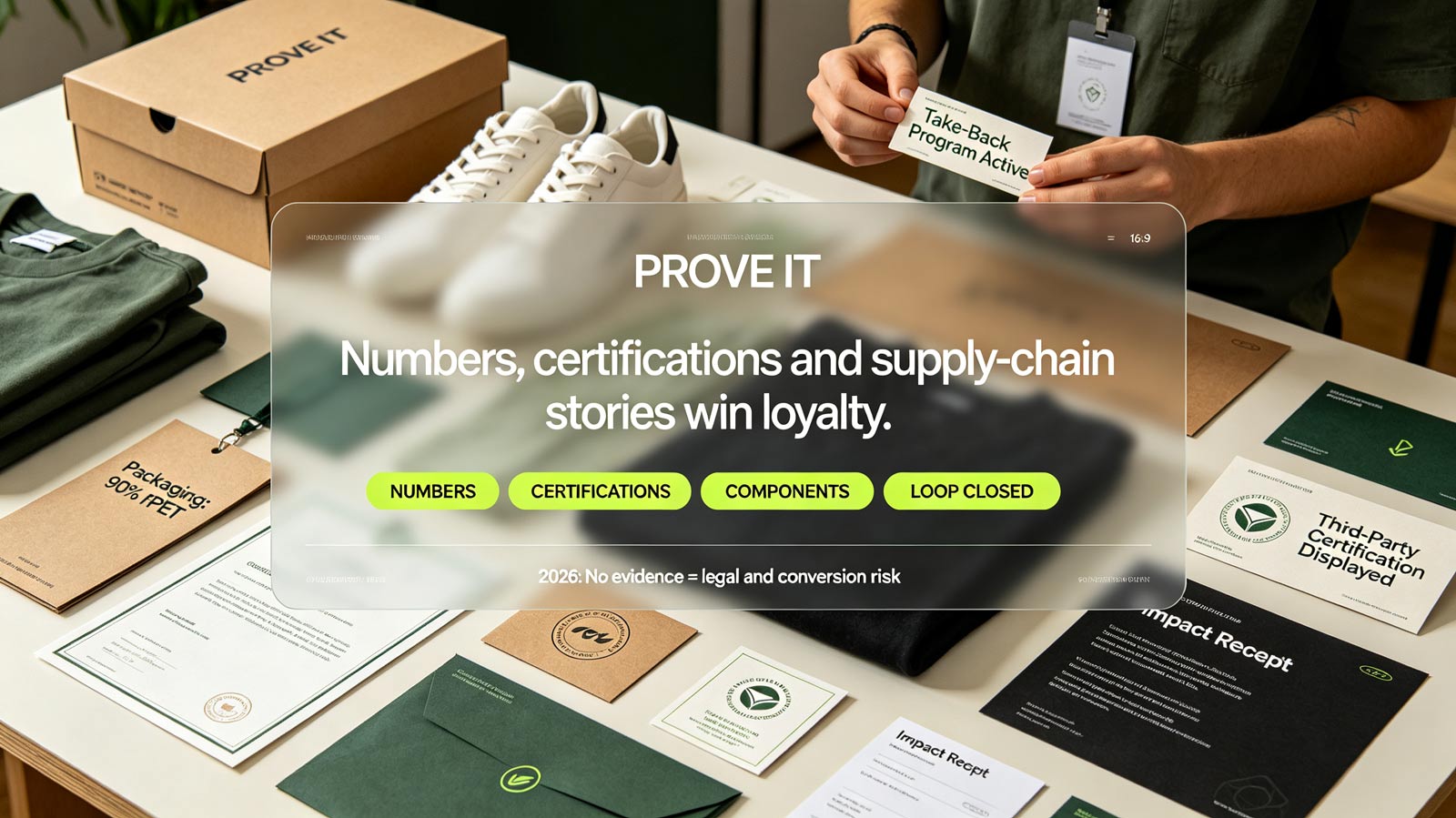
- Specific, measurable claims ("packaging made with 90% recycled PET" — naming the component and the percentage)
- Third-party certifications displayed prominently (EU Ecolabel, GOTS, FSC)
- Transparent supply-chain storytelling on the product page
When a claim is specific and verifiable, it does double duty: it converts skeptical buyers, and it survives the screenshot-and-share test that now defines brand reputation among under-30 consumers.
The Greenwashing Backlash Now Has Legal Teeth
Here's the risk side of the equation — and it's changed dramatically since last year.
When buyers suspect greenwashing, they don't simply leave. They screenshot, they post, they review. But in 2026, the consequences no longer stop at social media. From 27 September 2026, the EU's Empowering Consumers for the Green Transition Directive (Directive (EU) 2024/825) applies EU-wide, making unsubstantiated environmental claims an unfair commercial practice with penalties of up to 4% of annual turnover in the member state concerned.
What that means in practice:
- Generic, unproven claims like "eco-friendly," "green," or "sustainable" are banned unless backed by recognised certification
- "Carbon neutral" claims based solely on purchased offset certificates are prohibited
- Self-created "eco" badges and sustainability logos without independent certification are illegal
The rules apply to any business selling to EU consumers — regardless of where the company is based — and there's no grace period for existing inventory or live listings.
Enforcement is already moving. By mid-2026, regulators across France, Germany, the Netherlands and Sweden have taken action against major brands including KLM, Shell, Volkswagen, H&M and Danone. In August 2025, a Frankfurt regional court barred Apple from marketing the Apple Watch as a "CO₂-neutral product" in Germany.
Key takeaway: in 2026, an unverifiable sustainability claim is worse than no claim at all — for your conversion rate and your legal exposure.
What Actually Converts: 4 Practices for 2026
Brands winning with Gen Z share a common playbook:
- Show the number, not the adjective. "Carbon-neutral shipping" means little — and is now legally risky in the EU. "Packaging is 100% curbside recyclable" converts and complies.
- Put proof above the fold. Certifications and impact stats belong in the first product image or the first two lines of description.
- Scope every claim to a component. Under the new rules, a recycled-content claim must name the specific component and exact percentage — never let one recycled part imply a recycled whole.
- Close the loop post-purchase. Recycling instructions, take-back programs, and impact receipts turn a one-time buyer into a repeat advocate — the kind of customer 73% premium-willing Gen Z buyers become when they trust you.
Sustainability Is a Retention Engine, Not Just a Hook
The commercial case goes beyond first conversion. When 73% of a generation says it will pay more for products it believes are sustainable, credible claims directly support premium pricing — not just conversion. And Gen Z advocates, users who share a brand's mission, generate outsized referral traffic at zero acquisition cost.
In a market where paid acquisition keeps getting more expensive, trust-driven retention is becoming the cheapest growth channel available.
The Bottom Line
Gen Z isn't asking brands to be perfect. They're asking them to be provable — and from September 2026, EU law will ask the same. The sellers who treat sustainability claims as verified product features, with numbers, certifications, and honest trade-offs, will convert this cohort's skepticism into loyalty. Everyone else will watch them bounce — possibly from a regulator's docket.