Introduction
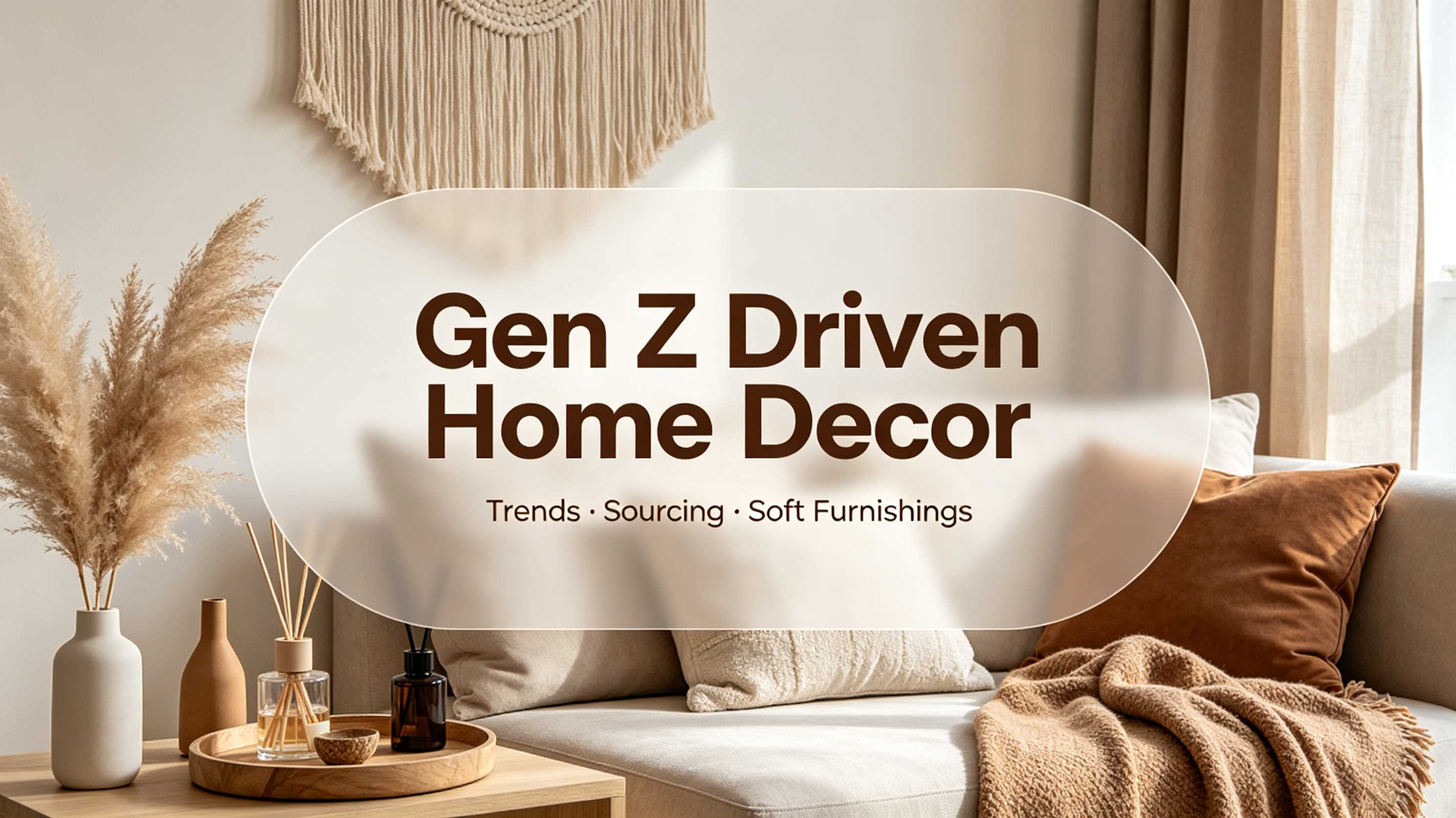
The global home decor market is projected to reach 1.5 trillion dollars by 2030, and Gen Z is reshaping this massive market through their unique aesthetic preferences and consumption habits. Unlike previous generations, Gen Z views living spaces as important vehicles for self-expression, pursuing not mere practicality but decorations that reflect personal style, create specific atmospheres, and deliver visual shareability on social media. This shift in consumer psychology opens entirely new opportunity windows for cross- border ecommerce sellers, because home decor items typically feature high standardization, low transport damage rates, and stable seasonal demand, making them exceptionally suitable for online sales. Minimalist wall decor, scented candles, artificial plants, decorative trays, and soft furnishings currently sit at the intersection of Gen Z consumption dividend release and active design innovation, representing priority sourcing domains.
Minimalist wall decor
Minimalist wall decor ranks among the most visually impactful and socially shareable categories in home decoration. On Instagram and Pinterest, a carefully curated accent wall has become standard content for home influencers. Minimalist wall decor typically features clean lines, restrained colors, and natural materials, including metal line hangings, geometric wooden pieces, woven wall art, and minimalist picture frames. The core selling point of these products lies not in function but in aesthetic value, making consumers relatively less price-sensitive and more willing to pay premiums for unique designs. On 1688, a three-piece or five-piece metal or wooden minimalist wall decor set costs roughly 30 to 65 RMB, depending on material craftsmanship and dimensions. Overseas, design-forward minimalist wall decor sets sell for 24.99 to 39.99 dollars, with quasi-designer or handcrafted positioning reaching 59.99 to 89.99 dollars. At a mid-range price of 39.99 dollars, given the lightweight nature and flat-pack shipping possibilities, logistics costs remain controllable, yielding net margins of 50% to 60%. Marketing success for this category hinges on high-quality scene photography and authentic home environment showcases, consumers need to see how a product transforms an entire wall’s atmosphere.
Scented candles
Scented candles represent the most classic and gift-worthy products in the home fragrance category, displaying clear premiumization and storytelling trends in recent years. Gen Z consumers no longer settle for supermarket- grade unbranded candles, they pursue boutique candles made with natural soy or beeswax, scented with essential oil blends, housed in design-conscious containers, with specific expectations around burn time, wax pool evenness, and cold throw diffusion. From a supply chain perspective, candle production barriers are not high, with core differentiation lying in fragrance formulation, vessel design, and packaging experience. On 1688, a mid-to-high-end scented candle using natural soy wax, approximately 200 grams, with custom glass vessel and gift box packaging, costs roughly 18 to 35 RMB, depending on fragrance quality and container costs. Overseas, boutique scented candles span a wide price range, mass-market products fall between 16.99 and 24.99 dollars, while designer candles with brand narratives and unique scents reach 39.99 to 59.99 dollars. At a mid-range price of 29.99 dollars, net margins typically fall between 45% and 55%. The repeat purchase rate represents this category’s most attractive commercial characteristic, satisfied users typically repurchase the same fragrance after finishing a candle or explore other scents from the same brand, creating ongoing repeat purchase cycles.
Artificial plants
Artificial plants rank among the fastest-growing segments in home decor, particularly suited to urban consumers who love the plant aesthetic but lack time or conditions to care for real greenery. Modern artificial plant technology has advanced significantly, with high-quality faux plants nearly indistinguishable from real ones in both touch and appearance, requiring no watering, pruning, or sunlight, making them ideal for apartment dwellers and frequent travelers. The market offers everything from single small succulents to large artificial monstera and fiddle-leaf fig trees, with materials spanning PE, PU, and silk. On 1688, a medium-sized faux plant approximately 40 to 60 centimeters tall using high-quality PE material with realistic texture molds costs roughly 35 to 70 RMB, with large floor plants running 100 to 180 RMB. Overseas, medium artificial plants sell for 29.99 to 49.99 dollars, with large floor versions reaching 79.99 to 129.99 dollars. At a medium size price of 39.99 dollars, despite larger volume requiring appropriate protective packaging, net margins still reach 40% to 50%. This category’s advantage lies in virtually zero after-sales issues, unlike real plants there are no transport losses or care inquiries, substantially reducing customer service costs.
Decorative trays
Decorative trays represent small boutique items combining storage and decorative functions, widely used in entryways, vanities, coffee tables, and nightstands. This category’s charm lies in serving as both practical organization tools and key accents elevating spatial refinement. A carefully chosen decorative tray can instantly transform scattered keys, perfumes, candles, or jewelry into an aesthetically pleasing lifestyle vignette. Current market offerings span rich material choices including mirrored glass, marble- texture ceramic, rattan weaving, metal, and acrylic, with shapes evolving from traditional rectangles to rounds, irregular forms, and tiered designs. On 1688, a medium-sized marble-texture ceramic or mirrored glass decorative tray costs roughly 20 to 40 RMB, with premium versions using natural stone or handcrafted rattan running 50 to 90 RMB. Overseas, these sell for 19.99 to 29.99 dollars, with uniquely designed or precious-material products reaching 39.99 to 59.99 dollars. At a mid-range price of 24.99 dollars, this compact and non-fragile product delivers net margins of 55% to 65%. Decorative trays particularly suit gift positioning and work excellently as combination pieces bundled with other home products.
Soft furnishings
Soft furnishings encompass a broad but strategically clear category, primarily including throw pillows, blankets, table runners, and curtain tiebacks. These products share the characteristic of quickly transforming a space’s color and atmosphere at far lower cost than renovation or large furniture replacement. Gen Z consumers particularly enjoy refreshing their living spaces by swapping soft furnishings to follow seasonal changes or mood shifts, creating ongoing purchase demand. On 1688, a 45-by-45-centimeter throw pillow cover with original pattern printing and high-quality invisible zipper costs roughly 12 to 25 RMB, with matching pillow inserts adding approximately 15 to 25 RMB. Overseas, design-forward pillow covers sell for 14.99 to 24.99 dollars, with premium materials like linen or velvet reaching 29.99 to 39.99 dollars. At a mid-range price of 19.99 dollars, net margins typically reach 50% to 60%. Blankets deliver similar margins, a 130-by-150-centimeter flannel or knitted blanket costs roughly 25 to 45 RMB to source, retailing overseas for 24.99 to 39.99 dollars. The core competitive strength in soft furnishings lies in pattern design and color coordination, sellers should collaborate with independent designers or purchase original pattern licenses to establish differentiation.
Final Thoughts
The home decor category stands at a historic growth inflection point driven by Gen Z’s aesthetic revolution, this generation views home as an extension of self-expression and invests continuously to create ideal living spaces. Minimalist wall decor, scented candles, artificial plants, decorative trays, and soft furnishings collectively form a complete home aesthetic product matrix spanning visual to olfactory senses and functional to atmospheric qualities. For cross-border ecommerce sellers, success factors in this category differ fundamentally from functional products, the competition is not about specifications and performance but aesthetic insight and scene-creating ability. Sellers need to operate as lifestyle brand builders rather than mere commodity traders. In supply chain management, prioritize factories offering small-batch customization and rapid sampling, because home decor trends shift quickly, the ability to follow latest design directions rapidly is key to maintaining competitiveness. On the marketing front, Instagram and Pinterest serve as this category’s core battlegrounds, high-quality home scene imagery and real user home sharing prove more effective at stimulating purchase desire than any product description. Ultimately, the sellers who win in this category will be those who best understand how to help consumers realize their “dream home” aspirations.