Introduction
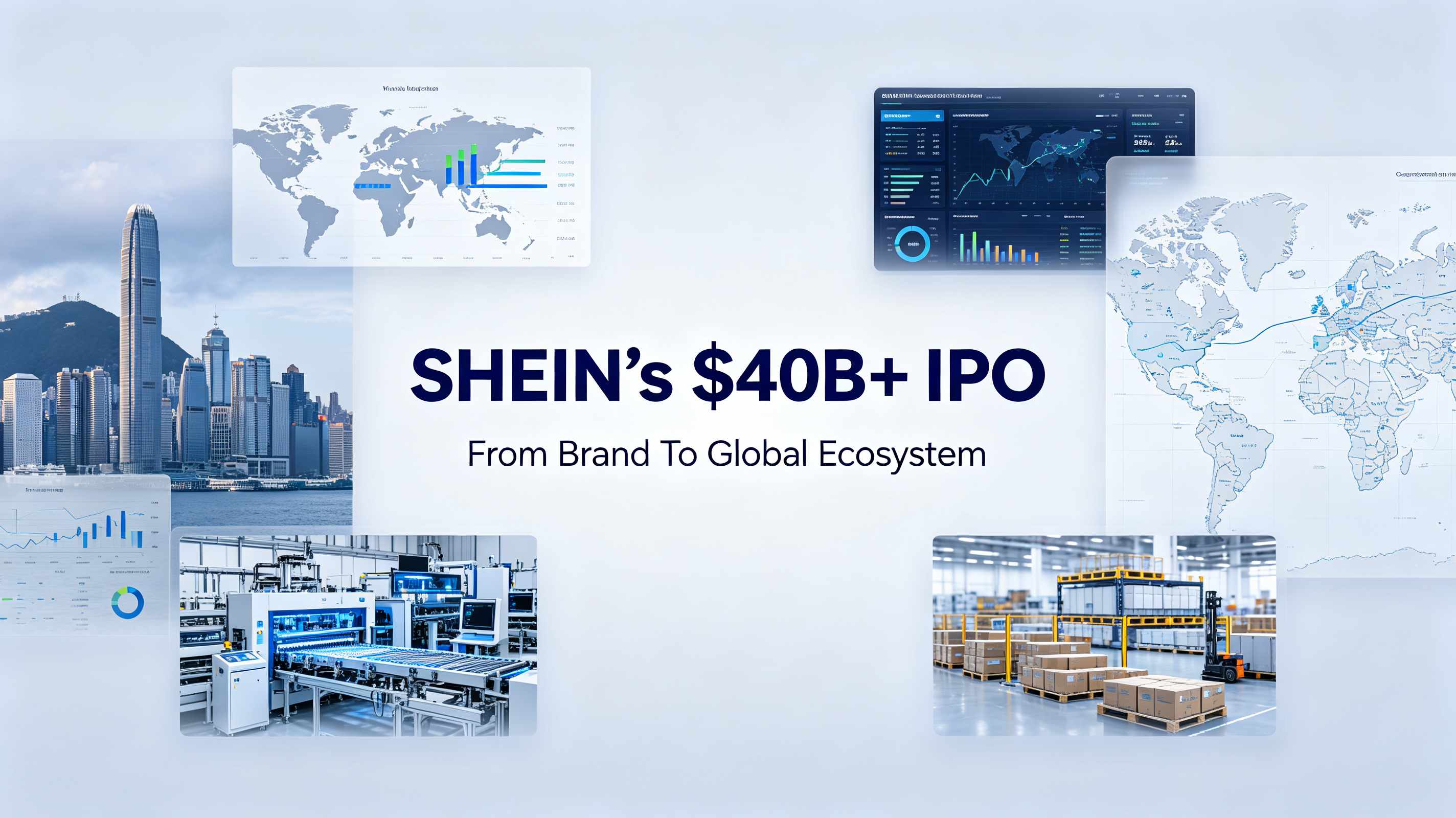
On July 10, 2026, China’s CSRC(China Securities Regulatory Commission)published a long-awaited announcement: SHEIN International Holding Co., Ltd. had received official approval for its overseas listing application. According to multiple media reports, SHEIN is expected to complete its Hong Kong Stock Exchange hearing and launch its IPO as early as Q3 2026, issuing no more than 341.6 million ordinary shares, with a target valuation exceeding $40 billion and an expected fundraising range of $2 to $3 billion. This is undoubtedly one of the most anticipated IPO events on the Hong Kong stock market in 2026, and the largest cross-border e-commerce listing in China since 2021.
SHEIN’s path to the public markets has been anything but straightforward. From initial plans to list in New York, to a pivot toward London, and finally settling on Hong Kong, the company’s valuation has been revised downward along the way: from a peak of $100 billion in 2022, to approximately $66 billion during its 2023 funding round, to the current market expectation of $40 billion-plus. The reasons for this compression are multifaceted, including shifts in global capital markets, growing skepticism about the sustainability of fast fashion, and ongoing geopolitical pressures on Chinese companies listing overseas. Yet even at a $40 billion valuation, SHEIN ranks as the ninth-largest unicorn globally, trailing only ByteDance and Ant Group.
Fundamentally, SHEIN’s growth narrative remains compelling. According to data from GlobalData, SHEIN was named the fastest-growing fashion retailer globally in 2024, leveraging its digital on-demand flexible supply chain to capture 1.53% of the global fashion market share — earning it a place alongside Hermes and Chanel as the biggest winners in fashion that year. This is a remarkable comparison: a Chinese cross-border e-commerce brand barely a decade old, surpassing century-old European luxury houses in growth velocity, is a powerful testament to the efficiency and innovation embedded in its business model.
However, what truly demands the industry’s attention is not the IPO itself, but the profound strategic transformation SHEIN is executing — its evolution from a single-brand fast-fashion retailer into a comprehensive e-commerce marketplace. As early as 2024, SHEIN launched its marketplace model in the United States, expanded it to Brazil, and announced plans to roil it out globally. The core of this platform strategy is onboarding third-party sellers, transforming SHEIN from a site that “sells its own products” into a marketplace where “millions come to sell.” This logic closely mirrors Amazon’s own pivot from first-party to third-party in the early 2000s.
For Chinese sellers, SHEIN’s marketplace strategy represents a new channel for going global. Compared to Amazon, SHEIN commands stronger consumer mindshare and traffic advantages in fashion categories, particularly among young female demographics. Compared to Temu, SHEIN offers clear differentiation of a semi-managed model further lowers the barrier to entry: sellers handle product supply and pricing, while SHEIN provides traffic, logistics, and customer support. This approach preserves sellers’ control over their products and brands while leveraging SHEIN’s global infrastructure to reduce the complexity of international expansion.
From a risk perspective, SHEIN’s platformization faces multiple challenges. First, SHEIN must find the right balance between its own brand and third-party sellers, preventing inconsistent product quality from eroding the overall brand image. Second, becoming a marketplace means transitioning from a lighter asset model to a heavier operational commitment — including seller recruitment, quality control, and dispute resolution — all of which increase operating costs. Third, as markets like the EU impose new tariffs on low-value goods, SHEIN’s core competitive advantage — extreme value for money — is facing institutional erosion.
SHEIN’s founder, Chris Xu, announced in early 2026 that the company would invest over 10 billion RMB in building a smart supply-chain system in Guangdong over the following three years. The “500-City Industrial Belt Going Global” program launched in 2023 had, by 2026, expanded to cover all 21 prefecture-level cities in Guangdong, delivering 1,200 proprietary tools and equipment pieces in Q1 alone and benefiting nearly 8,000 supplier engagements. These investments serve a dual purpose: they underpin SHEIN’s IPO narrative and they form the foundation of the company’s promise to sellers — a stronger supply chain faster delivery, more flexible production capacity, and a lower cost structure.
Final Thoughts
SHEIN’s IPO is not merely a capital-market milestone for one company; it is a signal that the entire cross-border e-commerce industry is entering a new phase. The shift from brand to platform means SHEIN is evolving from a supply-chain-driven fast-fashion company into an ecosystem-driven e-commerce platform. For sellers, this is both an opportunity and a warning: in an increasingly platform-oriented industry, the space for pure supply-chain arbitrage will continue to compress. The real moats going forward will be brand power, product differentiation, and deep understanding of consumer needs. SHEIN’s listing story demonstrates that ecen amid valuation downgrades, a business model built on supply-chain innovation can still earn the confidence of global investors.